

If you’ve lived in Salisbury, MD for any length of time, you know the drill. A hot, humid Delmarva afternoon can turn on a dime. One minute you’re enjoying a quiet backyard barbecue, and the next, a dark wall of clouds rolls in off the Chesapeake, bringing localized downpours, lightning, and those sudden gusts of wind that make your shutters rattle.
While these pop-up thunderstorms are often over as quickly as they began, they can leave behind more than just puddles. For many homeowners, the roof is the first line of defense: and the first to take a hit. Whether it’s a stray hailstone or a microburst of wind, storm damage isn’t always obvious.
At Peninsula Roofing Company, Inc., we’ve been serving Delmarva since 1947. We’ve seen 75+ years of these “pop-up” specials, and we know that a quick post-storm check can be the difference between a minor repair and a major headache. Here is your essential homeowner’s guide to checking your property after the clouds clear.
Safety First: The Golden Rules of Storm Inspection
Before we dive into the checklist, we need to talk about safety. Sean, we can’t stress this enough: do not get on your roof.
After a storm, shingles can be slippery, and the structural integrity of the roof might be compromised by fallen limbs or heavy wind. Additionally, always stay far away from downed power lines or any tree limbs touching electrical wires. Your inspection should be done entirely from the ground and from inside your home. If you suspect damage that requires a closer look, it’s time to call a professional roofer in Salisbury.
1. The Ground-Level Perimeter Walk
Once the rain stops and the lightning has moved on, grab a pair of binoculars and take a slow walk around the entire perimeter of your home. You are looking for visual cues that the wind got under your roofing material.
Look for:
- Missing or cracked shingles: Do you see “bald spots” on the roof or shingles lying in the yard?
- Lifted edges: High winds can break the sealant bond on shingles, causing them to flap or “smile.”
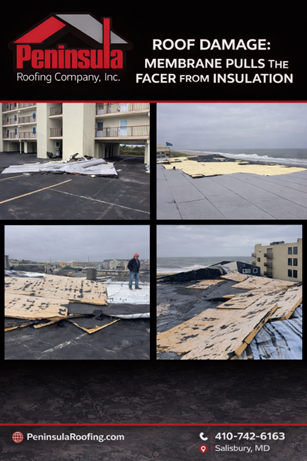
- Fallen debris: Check for tree branches or heavy twigs on the roof surface that may have punctured the membrane.
- Dented gutters: Look at the metal components of your roof: gutters and downspouts: for fresh dings or sagging.
2. The Gutter “Sand” Check
One of the most overlooked signs of hail or heavy rain damage is found at the bottom of your downspouts. Asphalt shingles are coated with granules that protect the underlying material from UV rays. A violent thunderstorm can “scour” these granules off.
Look for a buildup of black, sand-like grit in your gutters or where your downspouts empty. If you see a significant amount of this “shingle sand,” it means your roof has lost a layer of its protective coating, which can lead to premature aging and leaks. As one of the leading roofing companies in Salisbury, MD, we often find this is the first indicator of hail impact.
3. Inspect Flashing and Penetrations
Your roof isn’t just a flat surface; it has “penetrations” like chimneys, vents, and skylights. These areas are sealed with metal or plastic material called flashing.
From the ground, check to see if the flashing looks bent, loose, or if there are gaps where it meets the roof. Pop-up storms often bring swirling winds that can pull flashing away from the structure, creating an easy entry point for water during the next rain.
4. The Attic Flashlight Test
If you can safely access your attic, this is your most powerful tool for finding hidden damage. Head up there during the day with a high-powered flashlight.
- Look for Daylight: If you see pinpricks of light coming through the roof boards, you have a hole that needs immediate attention.
- Check for Moisture: Look at the underside of the roof deck and the rafters. Are there damp spots or active drips?
- Wet Insulation: Sometimes leaks don’t show up on the ceiling right away because the insulation soaks up the water like a sponge. Check for matted or discolored insulation.
- Musty Smells: Even if you don’t see water, a new musty or “wet basement” smell in the attic is a red flag.
5. Interior Warning Signs
Sometimes the damage from a Salisbury roofing emergency doesn’t stay in the attic. Walk through your upper floors and look closely at the ceilings and walls.
Keep an eye out for:
- New water spots: Circular yellow, brown, or gray stains on the ceiling.
- Bubbling paint: Water often gets trapped behind latex paint, causing it to bulge or peel.
- Dampness around windows: If you have skylights or windows near the roofline, check the frames for moisture.

6. Check Siding and Windows
A thunderstorm doesn’t just hit the top of your house; it hits the sides, too. Hail can leave “splatter marks” or dents on vinyl siding, and high winds can crack window screens or even the glass itself. If you see damage on your siding or your air conditioning unit’s metal fins, there is a very high probability that your roof sustained similar impact.
7. Document Everything
If you find damage, don’t touch it! Instead, grab your phone and take clear photos with timestamps. Document the debris in the yard, the shingles on the grass, and the water spots on the ceiling. This documentation is vital if you need to file an insurance claim. Having a clear record of the “before and after” helps roofers in Salisbury, MD provide a more accurate assessment for your adjuster.
8. Why a Professional Inspection is Non-Negotiable
While a DIY ground-level check is a great start, many types of storm damage: especially “bruising” from hail: are invisible to the untrained eye or from a distance. Over time, these small bruises can turn into cracks, leading to rot and mold.
Choosing between the various roofing companies Salisbury, MD has to offer can be tough, but experience matters when it comes to storm response. At Peninsula Roofing Company, Inc., we don’t just look for holes; we look for the integrity of the entire system.

Trust the Delmarva Experts
Whether you’re dealing with a minor leak or a major tree impact, you need a team that knows the local climate. Since 1947, Peninsula Roofing Company, Inc. has been the trusted name for salisbury roofing. We offer 24/7 emergency storm response because we know that disasters don’t wait for business hours.
Our dedicated residential team specializes in finding cost-effective solutions. We won’t automatically tell you that you need a full replacement if a professional repair will do the trick. We believe in building relationships with our neighbors in Salisbury, MD through honesty and high-quality craftsmanship.
Schedule Your Free Post-Storm Inspection Today
Don’t let a “little pop-up storm” turn into a big restoration project. If you’ve had a storm pass through your neighborhood recently, give us a call. We’ll provide a thorough, professional inspection to give you peace of mind.
Contact Peninsula Roofing Company, Inc. at www.peninsularoofing.com/contact-us or call us for 24/7 emergency service. Let our 75+ years of experience protect your home.