

Spring in Salisbury, MD, is a season of transition. While we all welcome the warmer temperatures and the blooming dogwoods, the Delmarva Peninsula is also famous for its sudden, heavy spring downpours. For property owners, these rains are more than just a reason to carry an umbrella; they are a high-stress “stress test” for your building’s most important defense: the roof.
At Peninsula Roofing Company, Inc., we’ve spent over 75 years watching how Salisbury’s unique climate: ranging from humid summers to coastal wind gusts: affects residential and commercial structures. We’ve learned that a roof rarely fails “all at once.” Usually, it whispers its problems long before it screams them. The best time to listen is immediately after a heavy spring rain.
If you aren’t sure what to look for, this “Post-Rain Patrol” guide will help you identify the subtle signs of trouble before they turn into costly emergencies.
The Ground-Level Walkthrough: Keeping Your Feet on the Grass
You don’t need to be a professional roofer in Salisbury to spot the first signs of trouble. In fact, for safety reasons, we recommend starting your inspection from the ground with a good pair of binoculars.
Shingle Health and Debris
After a heavy rain, walk the perimeter of your home. Look for “bald spots” on your shingles. Asphalt shingles are coated with granules that protect them from UV rays. Heavy rain and hail can knock these loose. If you see piles of what looks like coarse sand at the bottom of your downspouts, your shingles are losing their protective layer. This is a common issue that many roofing companies in Salisbury, MD, look for during routine assessments.
The “Saddled” Shingle
Look up at the roofline. Do the shingles look like they are curling upward at the corners or “clawing” (arching in the middle)? High moisture levels followed by quick drying in the spring sun can accelerate this warping. If shingles are lifting, the next windstorm will have an easy time peeling them back.
Metal and Chimney Flashing
One of the most vulnerable points on any roof is where the roofing material meets a vertical surface, such as a chimney or a dormer. This area is protected by flashing: thin strips of metal designed to direct water away from the joint.
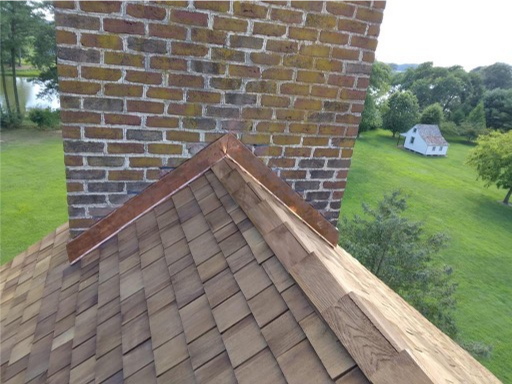
Check your flashing for signs of pulling away from the brick or wood. Even a gap the size of a fingernail can allow hundreds of gallons of water into your wall cavities during a typical Maryland thunderstorm. Proper flashing technique, as shown above, is the difference between a dry home and a mold problem.
The Gutter Story: More Than Just Leaves
Your gutters are the “exhaust system” for your roof’s drainage. After a rainstorm, they tell a very specific story.
- Standing Water: If the rain stopped two hours ago but your gutters are still full of water, they aren’t pitched correctly or they are clogged. Standing water in gutters can back up under the roof’s edge (the eave), rotting the fascia boards and eventually the roof deck itself.
- The “Waterfall” Effect: If you noticed water pouring over the sides of the gutters during the rain, rather than through the downspouts, your system is overwhelmed. This often happens because Salisbury’s spring rains bring down oak tassels and maple “helicopters” that act like a dam.
- Pulling Away: Gutters are heavy when full of water. If you see a gap between the gutter and the roofline, the hardware is failing. This allows water to drip directly down your foundation, leading to basement leaks.
Commercial Roofs: The Flat Roof Challenge
Commercial properties in Salisbury: warehouses, retail centers, and office complexes: often feature flat or low-slope roofs. These systems face entirely different challenges after a spring rain.
The 48-Hour Rule for Ponding
If you manage a commercial property, head up to the roof (or have a professional do it) 48 hours after a storm. If you still see standing water, you have a “ponding” issue. Modern roofing membranes are tough, but they aren’t designed to be submerged indefinitely. Ponding water acts like a magnifying glass for UV rays, breaking down the membrane, and the sheer weight can cause structural deflection over time.
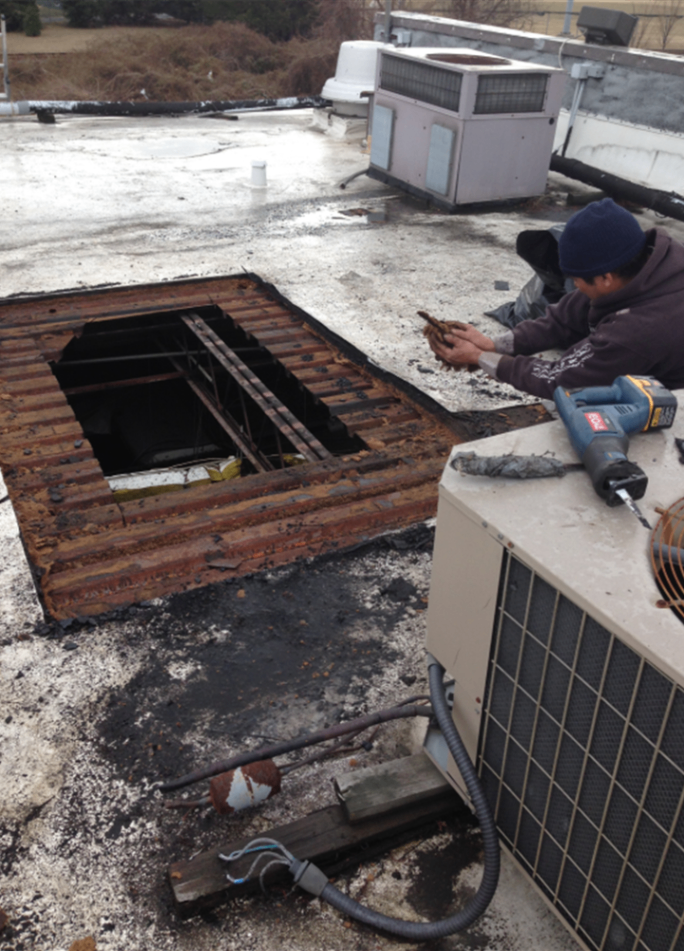
Membrane Punctures and Seams
Spring is often when HVAC technicians are out servicing units for the coming summer. Sometimes, tools are dropped or heavy panels are moved, creating small punctures in the TPO or EPDM membrane. After a rain, look for “bubbles” or soft spots under the membrane. This indicates that water has bypassed the top layer and is now saturating the insulation underneath.
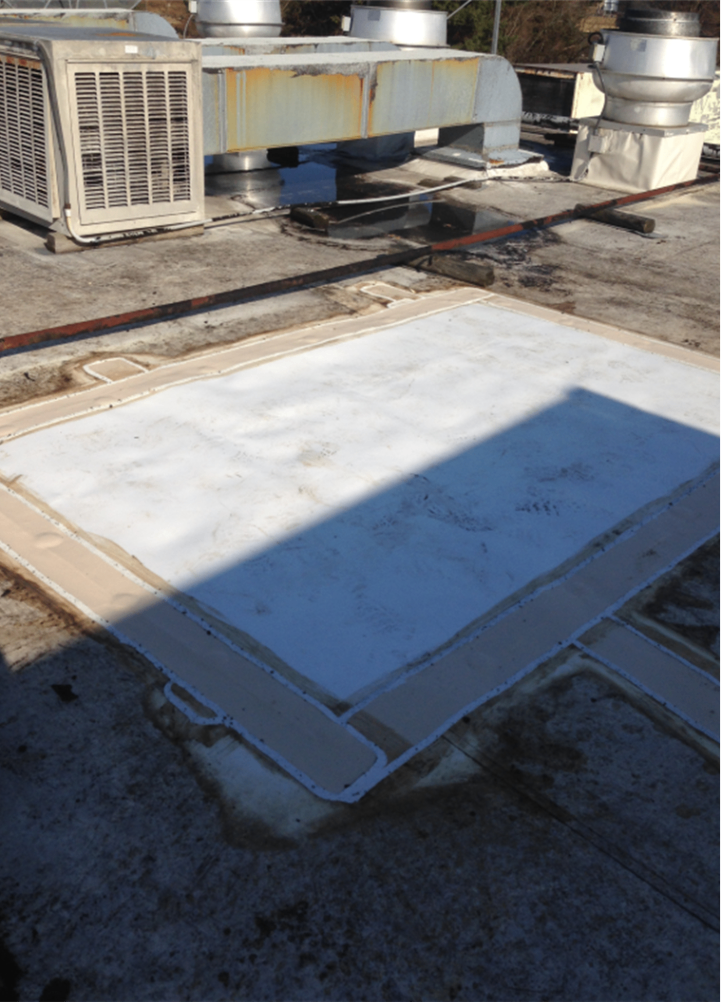
If you find these issues, it doesn’t always mean you need a new roof. Our team at Peninsula Roofing specializes in commercial repairs that can extend the life of your existing system by years.
Moving Indoors: The Attic and Ceiling Investigation
Sometimes the most obvious signs of a roof leak aren’t on the roof at all. Once the rain stops, grab a flashlight and head to the highest point of your interior.
The “Damp” Smell
If your attic or top-floor storage area smells musty after a rain, moisture is getting in. You might not see a drip, but the humidity level is rising because of saturated wood or insulation.
Inspecting the Rafters
In the attic, look at the wooden rafters and the underside of the roof deck. Look for:
- Dark Streaks: These are “pathways” where water has traveled.
- Glittering Tracks: Sometimes, dried water leaves a slight mineral trail that glints in flashlight beams.
- Wet Insulation: Fiberglass insulation loses its R-value (insulating power) once it gets wet. Even if it dries out, it often clumps together, leaving gaps in your home’s thermal envelope.
The Ceiling “Tea Stain”
On your interior ceilings, look for circular stains that look like light brown tea. These are classic indicators of a slow leak. If the stain is in the center of a room, the leak is likely directly above. If the stain is near a wall, the water may be entering at the roof’s edge or through a failing window seal and traveling along a joist.
The Peninsula Roofing Philosophy: Repair First
When you call most roofing companies in Salisbury, MD, their first instinct is to hand you a quote for a total roof replacement. We do things differently. At Peninsula Roofing Company, Inc., we live by a “repair first” philosophy.
We understand that a new roof is a major capital investment. If your roof has life left in it, we will find the specific source of the leak and fix it. Whether it’s a simple shingle replacement, a flashing repair, or a targeted membrane patch on a commercial site, our goal is to keep your building dry without unnecessary expenses.
What to Do if You Find a Major Leak
If your post-rain patrol reveals a serious issue: like a sagging ceiling or a steady drip: time is of the essence. Water damage is progressive; the longer you wait, the more the structural integrity of your building is compromised.
Peninsula Roofing provides 24/7 emergency response for those moments when the Salisbury weather gets the best of your property. We can provide temporary tarping or emergency patches to stop the bleeding while we work with you on a long-term solution.
Conclusion: Don’t Ignore the Whispers
Your roof is a complex system designed to shed thousands of gallons of water every year. After 75 years in the business, we can tell you that the most expensive roofs we see are the ones where the owners ignored the small signs. A missing shingle today is a rotten rafter next year. A clogged drain on a commercial roof today is a collapsed deck tomorrow.
If your post-rain inspection has left you with questions, don’t guess. Contact a trusted roofer in Salisbury to get a professional evaluation. We’ve been serving the Delmarva area since 1947, and we’re here to make sure your home or business stays protected, no matter what the Maryland clouds bring our way.
Whether you need a quick inspection, a minor repair, or a discussion about long-term maintenance programs, the entire team at Peninsula Roofing Company, Inc. are ready to help. Stay dry, Salisbury!