If you own or manage a commercial property in Salisbury, MD, you’ve probably spent more time than you’d like thinking about what’s going on above your head. Flat roofs: or “low-slope” roofs, as we call them in the industry: are fantastic for housing HVAC units, saving space, and providing easy access for maintenance. But they come with a specific set of rules that, if ignored, can turn a simple upgrade into a total nightmare.
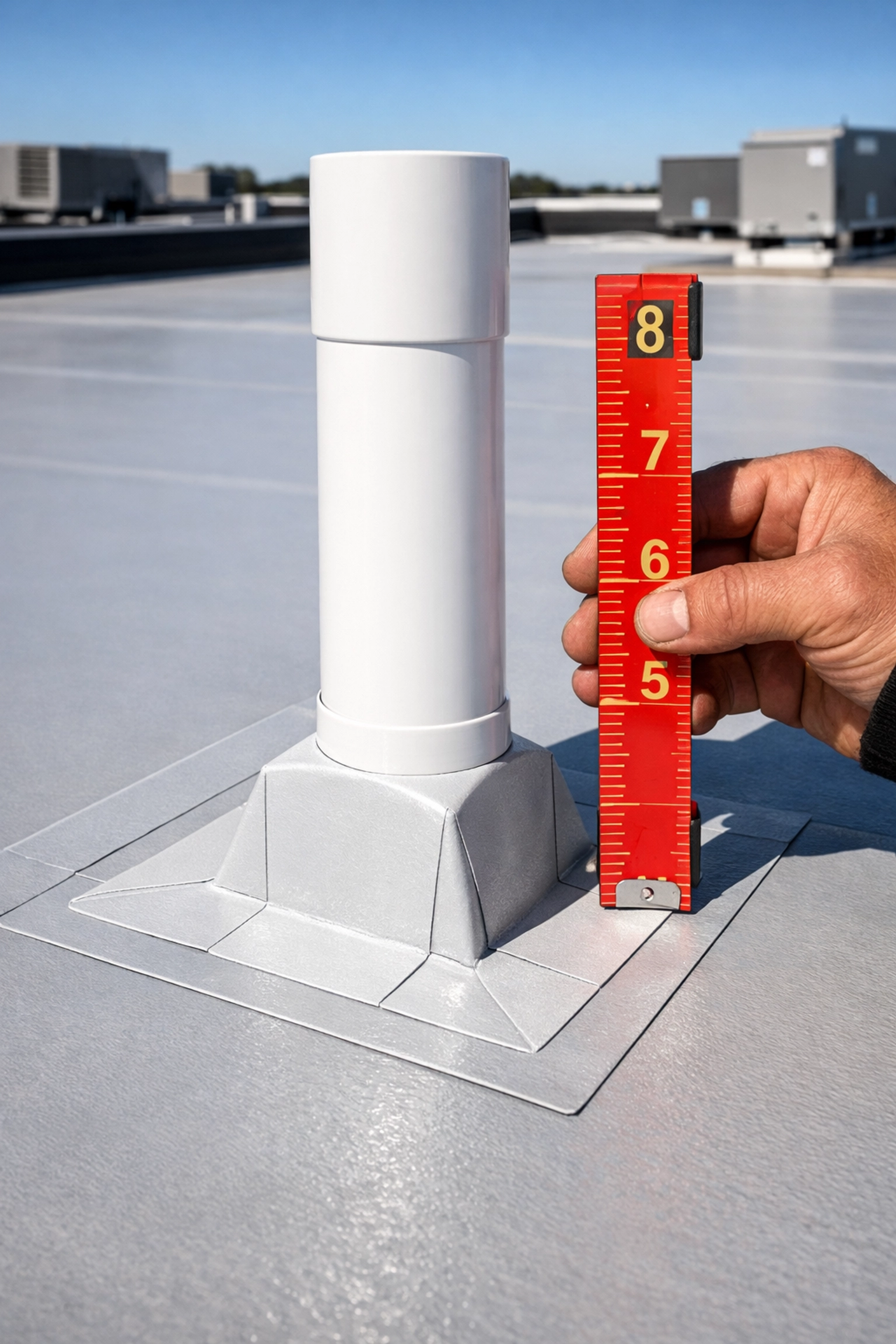
One of the most frequent conversations I have with facility managers is about the “8-inch rule.” It sounds like a minor technicality, but it’s actually one of the most critical standards in commercial roofing. Whether we are talking about vent pipes, skylight curbs, or HVAC equipment, the height of your flashing can be the difference between a dry inventory room and a massive insurance claim.
In this post, I want to pull back the curtain on why manufacturers are so obsessed with that 8-inch mark and why you should be, too.
What is the 8-Inch Rule?
In the world of commercial roofing, the National Roofing Contractors Association (NRCA) and major manufacturers like GAF, Carlisle, and Holcim (formerly Firestone) set very specific guidelines for how penetrations: like those vent pipes sticking out of your roof: should be sealed.
The industry standard requires that all base flashing must extend at least 8 inches above the surface of the finished roof membrane.
This isn’t just a suggestion; it is a requirement for most high-quality installations. If you are working with top-tier roofing companies in Salisbury, MD, this should be a non-negotiable part of their proposal. When we install a new TPO, EPDM, or PVC system, we aren’t just looking at the flat surfaces; we are looking at every single pipe, curb, and wall to ensure they hit that magic number.
Why Does Height Matter? (The Physics of a Leak)
You might be wondering, “Sean, if my roof is flat and the water runs toward the drains, why does it matter if the flashing is 4 inches or 8 inches high?”
It’s a fair question. To understand the answer, you have to think about what happens when things don’t go according to plan.
1. Water “Back-Up” During Heavy Deluges
We get some serious rain here in Salisbury. During a heavy coastal storm, your roof drains and scuppers can become overwhelmed. For a few minutes (or longer, if the drains are clogged), water can “pond” or back up on the roof surface. If your flashing is too low, that rising water level can simply spill over the top of the flashing and head straight down the outside of the pipe into your building.
2. The Snow Drift Factor
While we aren’t the North Pole, Salisbury, MD gets its fair share of snow and slush. When snow accumulates on a flat roof, it doesn’t just sit there; wind blows it against penetrations, creating drifts. As that snow begins to melt from the bottom up (due to heat escaping the building), it creates a pool of water trapped against the vent pipe. If that flashing isn’t high enough, the meltwater will find the top of the seal and bypass your roof membrane entirely.
3. Splashing and Wind-Driven Rain
High winds are a staple of Eastern Shore weather. During a storm, rain isn’t just falling vertically; it’s being whipped around horizontally. Low flashing heights allow wind-driven rain to be forced up and over the termination point of the flashing.
The Warranty Trap: Why 8 Inches Protects Your Wallet
This is the part that property owners really need to pay attention to. When you invest in a new commercial roof, you are usually paying for a Manufacturer’s Warranty (often called an NDL or No Dollar Limit warranty). These warranties are fantastic because the manufacturer: whether it’s GAF or Carlisle: stands behind the work.
However, these manufacturers will only issue that warranty if the roof was installed to their exact specifications. During the final inspection, a manufacturer’s representative will walk the roof with a tape measure. If they see vent pipes or curbs where the flashing only goes up 4 or 5 inches, they may refuse to warrant those specific penetrations.
Worse yet, if a leak occurs three years down the road at a low penetration, the manufacturer can deny the claim because the “8-inch rule” wasn’t followed. This leaves you, the owner, on the hook for repairs that should have been covered. As one of the most experienced Salisbury roofers, Peninsula Roofing Company, Inc. ensures every detail meets these rigorous standards so your warranty remains ironclad.
The Hidden Complexity: Adding Insulation
One of the biggest reasons flashing height becomes an issue is during a roof recover or replacement where we are adding new insulation.
Modern building codes often require higher R-values, which means we might be adding 4, 5, or even 6 inches of rigid foam insulation to your roof deck. If your existing vent pipes were only 10 inches tall to begin with, and we add 6 inches of insulation plus the membrane, you are suddenly left with only 4 inches of clearance.
In these cases, a low-quality roofer in Salisbury might just “make it work” by flashing the short pipe. But a true professional will tell you that those pipes need to be extended. It’s an extra step and a bit more cost upfront, but it’s the only way to do it right.
Don’t Let “Short-Cuts” Ruin Your Investment
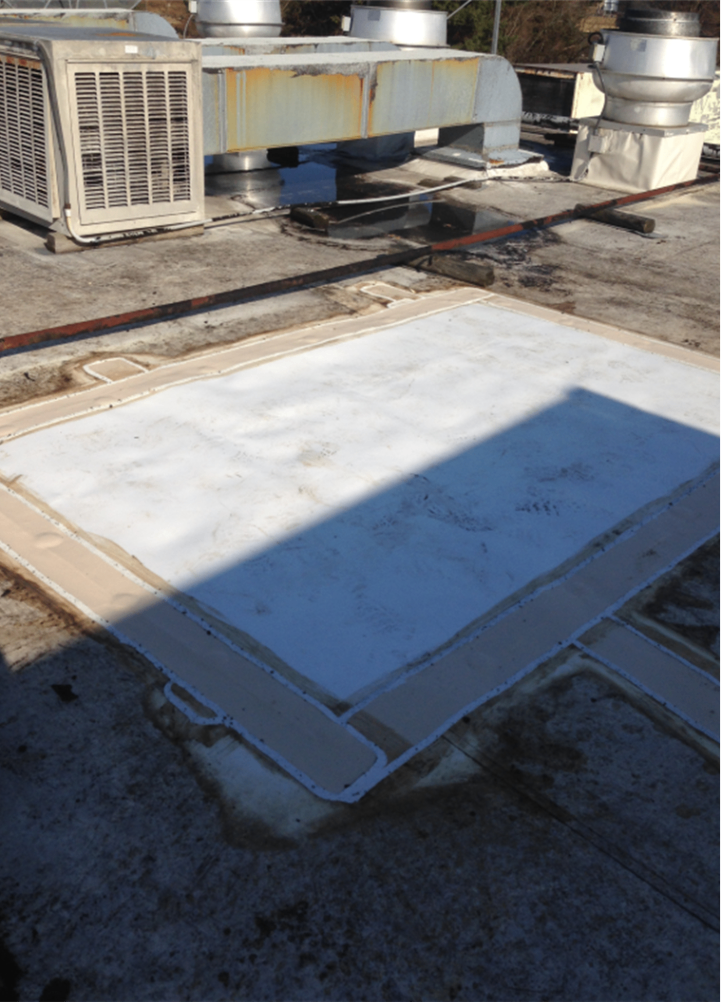
Unfortunately, we see “short-cutting” all the time. When companies are competing for your business, some will try to lower their bid by skipping the “extras”: like extending vent pipes or raising HVAC curbs to meet the 8-inch requirement.
They know that most owners won’t climb up a ladder with a tape measure to check. They get the job, the roof looks great for a year, and then the first major snowstorm hits, and the leaks start. By then, the “cheap” contractor might be hard to find, and your manufacturer’s warranty won’t help you.
At Peninsula Roofing Company, Inc., we’ve been serving the Delmarva area since 1947. We’ve seen what happens when these standards are ignored. Our team is trained to spot these issues during the estimating phase so there are no “surprises” halfway through the project. We believe in doing it right the first time, every time.
What Should You Look For?
If you are reviewing bids for a commercial project or just doing a walk-through of your current facility, keep these things in mind:
- Check the Pipes: Do the vent pipes look “stubby”? If they are barely poking out of the roof, they are likely a leak risk.
- HVAC Curbs: Are the units sitting on curbs that are at least 8 inches above the roof surface? If not, they may need to be raised.
- The Paperwork: Does your contractor’s proposal specifically mention meeting NRCA and manufacturer flashing requirements?
For more information on how we handle these technical details, you can visit our Services page or learn more About Us.
Trust the Salisbury Commercial Experts
Your commercial roof is a massive asset. Don’t let a few inches of flashing height jeopardize the integrity of your building or the validity of your warranty. Whether you need a simple repair or a full-scale replacement, choosing the right roofing companies in Salisbury, MD is the most important decision you’ll make.
If you’re worried about your current roof’s penetrations or you’re planning a new project, give us a call. We’ve spent decades perfecting the art of the flat roof, and we’d be happy to take a look at yours.
Ready to protect your building? Contact Peninsula Roofing today for a comprehensive commercial roof evaluation.