

Storms can damage a roof in a day. Seasonal changes wear on it more gradually. As temperatures rise and fall, roofing materials expand and contract, while moisture, wind, and debris test the small details that keep water out. On Delmarva, coastal humidity and salt air add to that strain.
That means a roof is not a static product. It is a system that flexes through the year. A small gap that seems harmless in October can become a leak path after repeated freezes and thaws.
What temperature swings do to a roof
Sunlight heats roofing materials during the day; cooler air brings temperatures down at night. In summer, the surface of sunlit shingles can reach roughly 150–170°F, depending on the roof, shade, and weather. By winter, nighttime temperatures can fall to freezing or below. Even in fall and spring, a 30–40-degree difference between morning and afternoon is possible.
Each change creates movement. Over many cycles, that movement can fatigue the connections and seals in a roof assembly. Fasteners may loosen as the roof deck shifts; nail holes can widen; sealant joints may crack; and flashing laps can pull apart. Shingle tabs that have lost their seal may lift in the wind.
These changes usually happen gradually, not because one cold night suddenly ruins a roof, but because repeated movement can expose weak points over time. Asphalt shingles also become less flexible as temperatures fall, making existing wear more consequential.
Why cold-weather shingle work requires care
Asphalt shingles are less flexible in cold weather. Below about 40°F, they can be more prone to cracking if someone walks on them, bends them, or lifts a tab for repair. The exact handling guidance varies by product and conditions, but cold shingles generally call for extra caution.
Sealants and adhesives also behave differently in low temperatures. Some may cure or bond more slowly, and shingles may not seal down promptly until they receive enough warmth and sunlight. That is why the repair window matters: work completed before temperatures regularly fall below roughly 40–50°F is often easier to perform without stressing brittle shingles or relying on sealants in unfavorable conditions. Cold-weather work may still be possible, but it requires appropriate methods and care.
For homeowners, the takeaway is simple: do not climb onto a cold or wet roof to check a suspected issue. A ground-level look with binoculars is safer. A roofer can assess whether shingles and sealants can be handled without causing additional damage.
How freeze-thaw cycles turn small gaps into leaks
Water can enter a narrow crack or opening around a flashing joint, exposed fastener, or chimney mortar joint. If temperatures fall below freezing, that water expands as it freezes. When it thaws, more water may enter the enlarged opening. Repeated cycles can gradually widen the path.
The resulting leak may not appear right away. Water can travel along roof decking, framing, or insulation before it shows up as a ceiling stain. By the time it becomes visible indoors, the source may be some distance away.
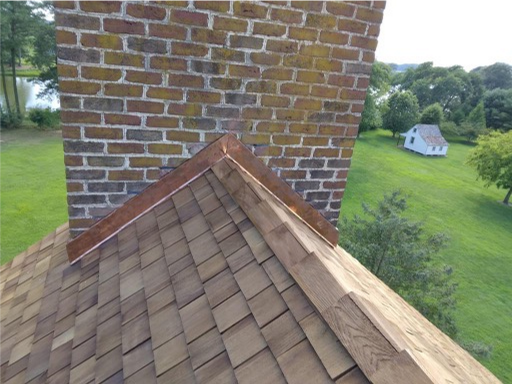
Chimneys, roof valleys, and flashing transitions deserve particular attention because they bring together different materials and joints. A careful roof assessment checks these physical details, not just what can be seen from a distance.
Ice dams start in the attic
An ice dam forms when heat escaping from the home warms the upper roof and melts snow. Meltwater runs toward the colder eave, where it can freeze. As the ice ridge grows, it can block drainage and allow water to back up under shingles.
The main prevention strategy is not a special roofing product. It is controlling heat and airflow in the attic: sealing air leaks from the living space, installing adequate insulation, keeping soffit intake vents clear, and maintaining appropriate exhaust ventilation. Depending on the house and local requirements, an attic insulation target around R-49 to R-60 may be appropriate; the right solution depends on the existing assembly. The U.S. Department of Energy explains the relationship between insulation and cold-climate eaves in its guide to sealed eaves and ice-dam prevention.
Delmarva does not experience the same winter conditions every year, but ice dams remain possible during snow-and-thaw events. And when water gets into an attic, the region’s humidity can make drying less forgiving. Persistent moisture can contribute to wood rot and mold.

Why fall is a critical transition
Fall brings a particular combination of roof stressors:
- Leaves and debris: Leaves can collect in gutters, valleys, and roof corners, holding moisture near the roof edge and fascia. Debris in a valley can impede drainage just as nor’easter season approaches.
- Cool, damp weather: Rain may linger on a roof during cool, overcast stretches, when drying is slower. Persistent moisture favors moss, algae, and deterioration where materials are already compromised.
- A narrowing repair window: As temperatures fall, shingle handling and sealant performance become more challenging. Late October through mid-November can be the last reliable window for many routine repairs on Delmarva, depending on the forecast and the specific materials.
- Coastal exposure: Humidity and salt air can shorten roofing-material lifespans compared with inland conditions. Peninsula Roofing’s experience serving Delmarva suggests that local exposure can reduce expected material life by 15–25%, depending on the material, installation, and property conditions.
Seasonal conditions do not mean every roof needs work. They do mean that minor maintenance issues are worth identifying before winter weather makes them harder to assess or repair.
What homeowners can do now
A short, safe check can help you decide whether to arrange a professional inspection:
- Clear gutters and roof valleys once most leaves have fallen. Make sure downspouts carry water 4–6 feet away from the foundation.
- Look from the ground for lifted or missing shingle edges, damaged ridges, cracked sealant, or flashing that appears separated. Use binoculars if helpful. Never climb onto a wet, icy, or unfamiliar roof.
- Check the attic from a safe location. Look for new stains on the roof decking, damp insulation, obvious drafts, blocked soffit vents, or signs of poor ventilation. Do not step onto exposed ceiling joists or disturb wiring.
- Arrange needed repairs while conditions allow. If you see signs of damage, have the roof assessed before colder temperatures make shingle handling and sealant work more difficult.
For more on what a hands-on assessment involves, read Sean Fahey’s comments on the importance of annual roof inspections. Peninsula Roofing does not rely on drones for roof inspections: sealant condition, loose fasteners, and unsealed shingle tabs may require physical checks.
A roof does not simply “get old”
Age matters, but the wear behind a roof problem is often more specific: it flexed through temperature changes, held moisture, and lost a seal at a vulnerable point. That is why an inspection can help distinguish a repairable issue from damage that calls for a larger project.
Peninsula Roofing Company has served Delmarva since 1947. Our team provides free in-person inspections and honest repair-versus-replacement guidance. If you are looking for roofing companies in Salisbury, MD, choose one that can explain what it found and why a particular solution makes sense, not simply recommend replacement by default.
If you have noticed lifted shingles, a ceiling stain, or a questionable flashing joint, contact Peninsula Roofing to book a free inspection while fall repair conditions are still favorable. We also provide roofing services and 24/7 storm response throughout Delmarva.