

The sky turns a bruised shade of purple over Salisbury, MD. The wind begins to howl through the loblolly pines, and within minutes, a summer hailstorm is pounding against your shingles. As the storm passes and the sun peeks out, you might notice a few missing tabs or a small leak in the attic.
Before you even have time to call your insurance agent, there is a knock at your door. A friendly person in a bright vest points to your roof and says, “I was just helping your neighbor down the street, and I noticed your roof has major damage. We can get you a brand-new roof for free. Just sign here, and we’ll handle the insurance company for you.”
In the roofing industry, we call these individuals “Storm Chasers.”
At Peninsula Roofing Company, Inc., we have been serving the Delmarva Peninsula since 1947. Over our 75+ years in business, we have seen these transient contractors arrive with every major storm and vanish just as quickly. As we move through the 2026 storm season, it is more important than ever for homeowners in Salisbury, MD to know how to spot the difference between a neighborhood expert and a passing stranger.
What is a “Storm Chaser” Roofer?
A storm chaser is a transient contractor who follows severe weather patterns across the country. They monitor radar data to identify areas with hail or high-wind damage. Once a storm hits a city like Salisbury, they descend on the area, set up temporary “offices” (often just a hotel room or a rented PO Box), and hire local laborers to do quick, high-volume work.
Their goal isn’t to build a relationship or a long-lasting roof; it’s to collect insurance checks as fast as possible before moving on to the next storm-damaged town. When a leak appears six months later, these companies are usually hundreds of miles away, their temporary phone lines disconnected.
The Red Flags: How to Spot a Storm Chaser in Salisbury, MD
While some transient contractors are more sophisticated than others, most “chaser” business models rely on the same high-pressure tactics. If you encounter any of the following, proceed with extreme caution.
1. The Knock at the Door
Legitimate local roofers rarely need to go door-to-door after a storm. Our phones at Peninsula Roofing stay busy because of our reputation and long-standing presence in the community. If someone knocks on your door unsolicited, they are likely a storm chaser.
2. The “Free Roof” or “Waived Deductible” Pitch
This is perhaps the biggest red flag. A contractor may offer to “waive,” “absorb,” or “pay” your insurance deductible to make the deal sweeter.
Sean, it is critical to know that in Maryland, this is not just a shady business practice: it is illegal. Under the 2026 updates to Maryland law (HB1351), offering to pay or rebate a homeowner’s insurance deductible is explicitly defined as a fraudulent insurance act. A contractor who offers this is asking you to participate in insurance fraud.
3. Out-of-State Plates and Paperwork
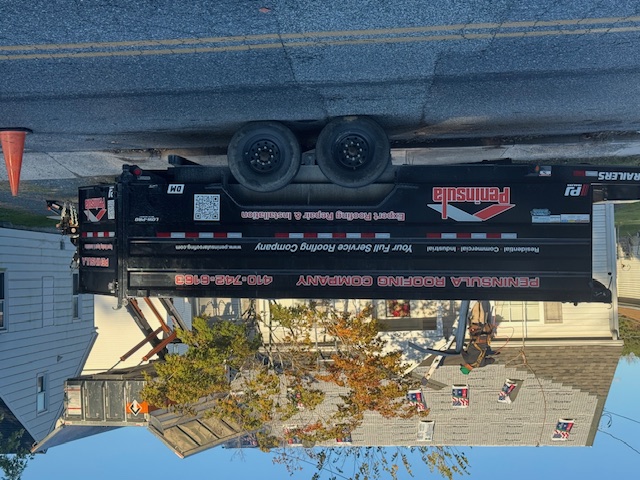
Check the trucks. If the company claims to be “local” but the trucks have plates from Texas, Florida, or Ohio, they are likely a storm-chasing outfit. Similarly, look at their marketing materials. Do they have a local Salisbury address, or is it a generic “1-800” number with no physical office in Maryland?
4. High-Pressure “Sign Today” Tactics
Storm chasers need to lock you in before you can do your research. They will often push an Assignment of Benefits (AOB) form. This document hands over the rights of your insurance claim to the contractor, giving them total control over the money and the repairs. Never sign an AOB or a contract before your insurance adjuster has inspected the damage.
Maryland Law: New Protections for Homeowners in 2026
The Maryland legislature has taken significant steps to protect homeowners from predatory contractors. As of July 21, 2026, we are closely watching the implementation of HB1351, which brings major changes to how disaster mitigation and roofing services are regulated in our state.
Key protections every Salisbury, MD homeowner should know:
- The 5-Day Rescission Period: If you sign a contract for disaster mitigation services (like emergency tarping or storm repairs) after being solicited at your home, you have a 5-day right to cancel that contract. You aren’t stuck just because you signed something in the heat of the moment.
- Mandatory Licensing: Most emergency “disaster mitigation” work: including roof tarping and boarding up: now falls under the Maryland Home Improvement Commission (MHIC) regulations. This means the person climbing on your roof MUST be licensed by the state.
- Deductible Fraud: As mentioned, any roofer offering to cover your deductible is breaking the law. This protection ensures that the insurance process remains transparent and that the quality of your roof isn’t compromised by “corner-cutting” to save on costs.
Why Your Roof Needs a Neighbor, Not a Stranger
Choosing a local roofer like Peninsula Roofing Company, Inc. isn’t just about supporting the local economy; it’s about protecting your largest investment. Here is the “local” advantage:
We Know the Salisbury, MD Climate
We understand the specific challenges of roofing on the Delmarva Peninsula, from the high humidity and salt air to the intense wind loads we face during hurricane season. We don’t just “slap shingles on”; we install roofing systems designed to withstand the local environment.
We Use In-House Expertise
Unlike storm chasers who often hire the cheapest available subcontractors, we maintain dedicated residential and commercial teams. When you see a Peninsula Roofing truck, you are seeing a team that is trained, insured, and committed to our 75-year standard of quality.
We Honor Our Warranties
A “lifetime warranty” from a company that doesn’t exist next year is worthless. Because we have been here since 1947, our customers know exactly where to find us. Whether you need residential roofing services or a complex commercial roof repair, we stand behind every nail we drive.
Practical Steps: How to Hire a Legit Roofer After a Storm
If your Salisbury home has been hit by a storm, take a deep breath and follow these steps to ensure you are working with a professional:
- Verify the License: Ask for an MHIC license number. You can verify it in seconds on the Maryland DLLR website. If they aren’t listed, don’t let them on your roof.
- Get Three Written Estimates: Even in an emergency, it pays to shop around. A legitimate roofer will provide a detailed, itemized estimate that explains exactly what materials are being used and why.
- Wait for the Adjuster: Do not sign a full replacement contract until your insurance adjuster has seen the damage. A local roofer will often offer to be present during the adjuster’s inspection to ensure all damage is documented correctly.
- Follow the 1/3 Rule: Never pay the full amount upfront. A standard practice for reputable companies is to ask for no more than one-third of the total cost as a deposit, with the remainder due upon completion.
- Check Local References: Ask for addresses of homes they have roofed in Salisbury, MD or Fruitland, MD within the last year. A neighbor’s recommendation is worth more than any flashy brochure.
Trust the Experts Who Live Here
At Peninsula Roofing, we take pride in being a part of the Salisbury community. We aren’t here for the “quick buck” that follows a storm; we are here to ensure that your home stays dry for the next 20, 30, or 50 years. Our about us page tells the story of our 75+ years of dedication to Delmarva, but our work speaks for itself.
If you suspect your roof has storm damage, don’t feel pressured by the first person who knocks on your door. Choose the company that has been a fixture of the Salisbury skyline for generations.
Contact Peninsula Roofing Company, Inc. today for a no-pressure, professional storm damage assessment. You can reach us via our contact page or call our office directly to speak with a local expert who actually lives in your zip code.