

For a commercial property owner or facility manager in Salisbury, MD, a leaking roof is more than just a nuisance: it is a financial ticking time bomb. The traditional method of finding a leak often involves a lot of guesswork, “probing” seams, and occasionally tearing up perfectly good sections of a roof just to find a single source of water intrusion. But what if you could see through the surface? What if you could pinpoint exactly where the water is hiding before it rots your decking or destroys your inventory?
At Peninsula Roofing Company, Inc., we leverage infrared thermography to do exactly that. It sounds like something out of a sci-fi movie, but infrared scanning is one of the most practical and cost-effective tools available to a modern Salisbury roofer. By using “thermal vision,” we can identify hidden moisture that the naked eye simply cannot detect.
In this post, we’re going to pull back the curtain on how this technology works, why it is a game-changer for businesses in Salisbury, MD, and how it can save you tens of thousands of dollars in unnecessary replacement costs.
The Science of “Predator Vision”: How Infrared Scanning Works
To understand how we find leaks with a camera, you first have to understand a little bit of physics: specifically, the concept of thermal mass.
Every material on your roof: the membrane, the insulation, the metal decking: absorbs heat from the sun during a typical Salisbury, MD afternoon. As the sun sets and the air temperature drops, these materials begin to release that heat. This is where the magic happens.
Dry roofing materials have relatively low thermal mass. They heat up quickly and cool down quickly. Water, however, has a very high thermal mass. It is a “heat hog.” It takes a long time to warm up, but once it is warm, it holds onto that heat much longer than the dry materials surrounding it.
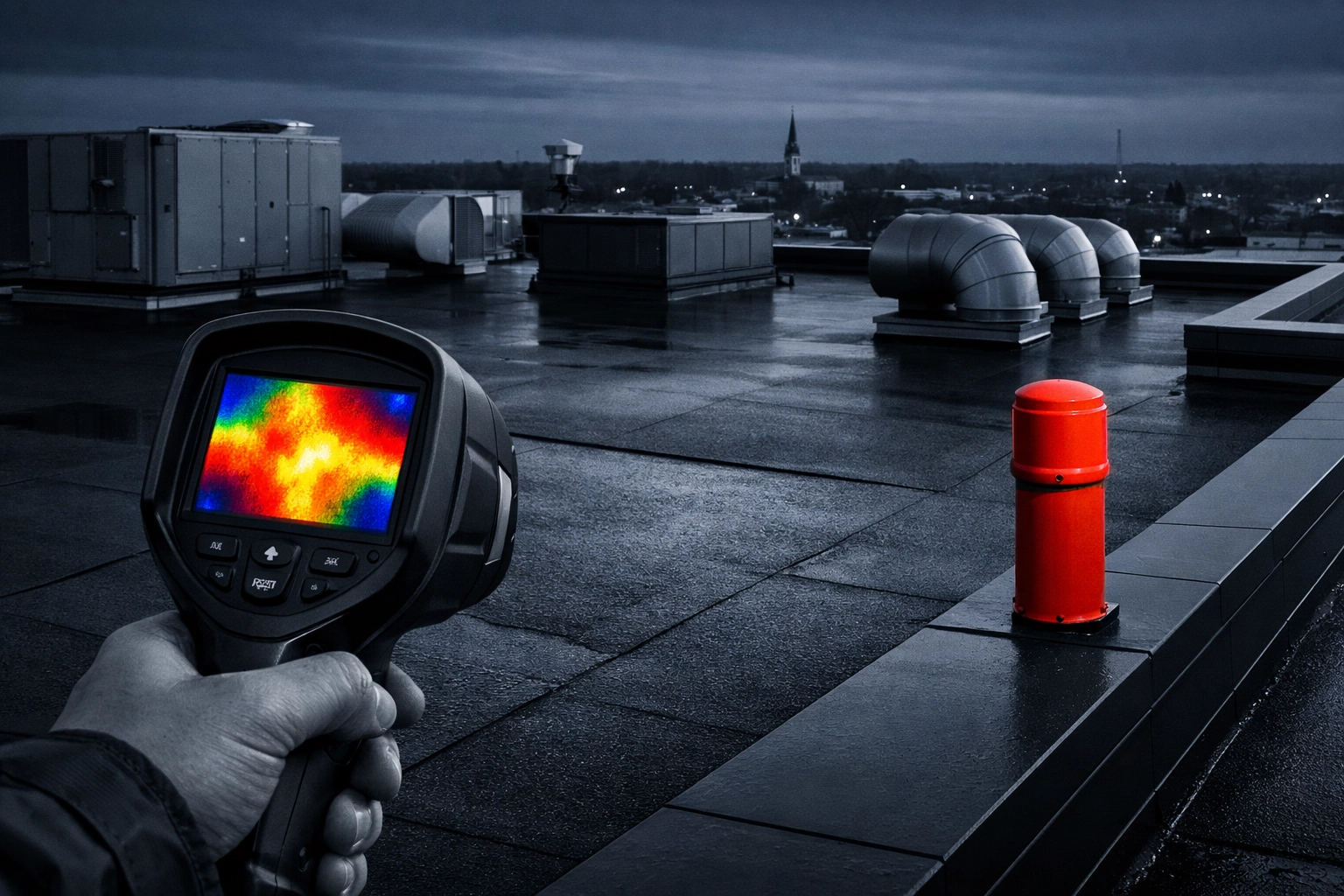
When we conduct an infrared scan (usually at dusk or in the early evening), we are looking for those temperature differences. As the dry sections of the roof cool off and turn “dark” on our thermal imaging cameras, the areas containing trapped moisture remain warm. On our screens, these wet spots literally glow.
Why Timing is Everything
We don’t just show up at noon and start snapping photos. For an infrared scan to be accurate, we need a “thermal loading” event: usually a clear, sunny day followed by a clear night. If it’s cloudy all day, the roof doesn’t soak up enough energy. If it’s raining, the evaporative cooling of the rainwater will mask the heat signatures we are looking for.
By timing our inspections perfectly, your Salisbury roofer can create a high-contrast map of your roof’s health without ever having to cut a single hole in the membrane.
What are Roofers Looking for in an Infrared Image?
When we look at the neon-colored display of a thermal camera, we aren’t just looking for “hot spots.” We are looking for specific patterns that tell a story about the structural integrity of your building.
1. The “Blobs” (Thermal Anomalies)
In the world of roofing, a “blob” is rarely a good sign. If we see an irregular, glowing shape that doesn’t align with any mechanical equipment or structural beams, it’s almost certainly trapped moisture. These anomalies show us exactly where water has bypassed the top layer and saturated the insulation below.
2. Wet Insulation vs. Dry Insulation
Dry insulation is a fantastic barrier; its job is to stop heat from moving. However, when insulation gets wet, it loses its R-value and becomes a conductor. In the winter, we can use infrared to see where heat from your building is escaping through wet spots. In the summer, we see where the moisture is holding onto the sun’s heat.
Identifying wet insulation is critical because once insulation is saturated, it rarely dries out on its own. It stays trapped under the membrane, slowly rotting the roof deck and providing a breeding ground for mold.
3. Tracking Leak Paths
Water rarely travels in a straight line. It might enter through a failed flashing in one corner of your Salisbury, MD warehouse, travel twenty feet along a structural purlin, and finally drip onto a desk in the middle of the office.
By using infrared tech, we can often see the “trail” of moisture. This allows us to trace the problem back to the actual entry point, rather than just patching the spot where the drip is appearing. This precision is what separates an average repair from a long-term solution.
Why This Matters for Commercial Property Owners in Salisbury, MD
If you own a commercial building, you know that a full roof replacement is a massive capital expenditure. Many building owners assume that because they have multiple leaks, the entire roof is “shot.”
This is often a myth.
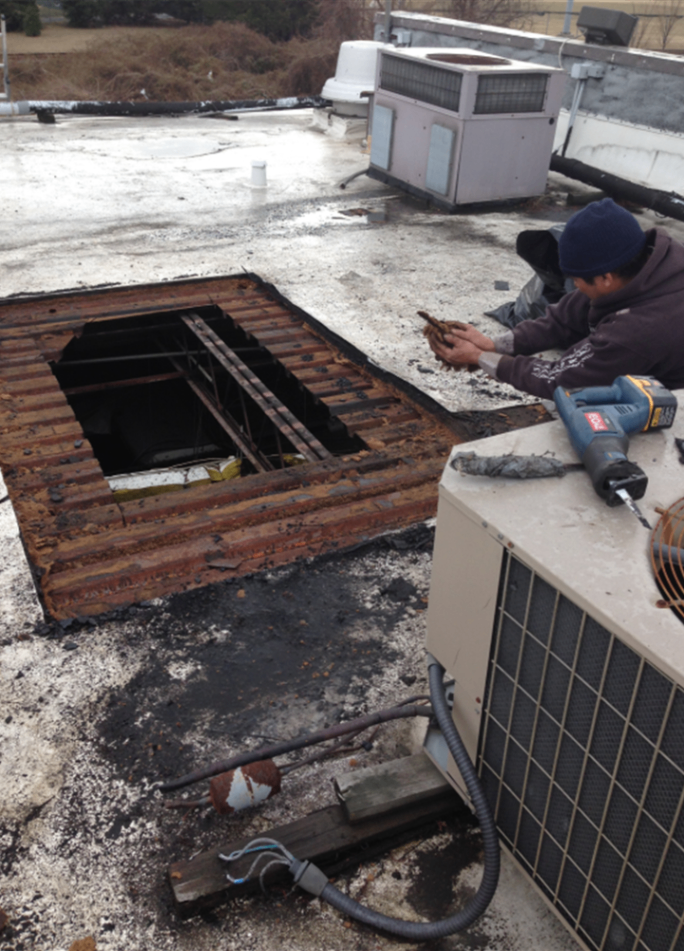
In many cases, a commercial roof might be 80% or 90% dry, with only localized areas of failure. Without infrared scanning, a Salisbury roofer might recommend a total tear-off because they can’t be sure where the “good” parts end and the “bad” parts begin.
Targeted Repairs: The Budget Lifesaver
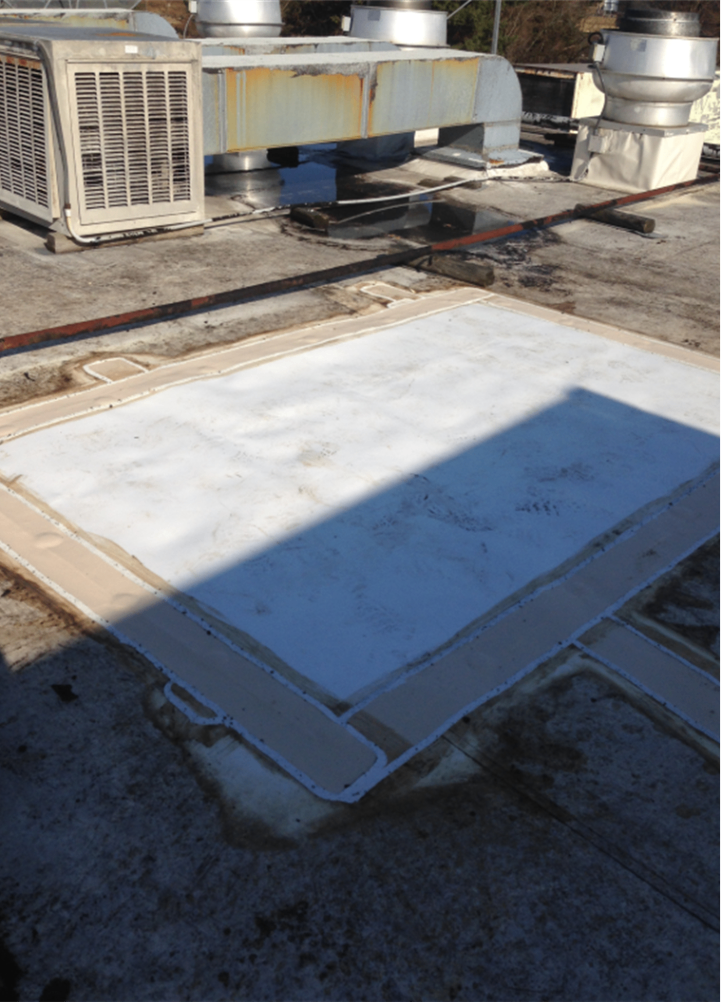
Infrared scanning allows us to perform “surgical” repairs. Instead of replacing 20,000 square feet of roofing, we might find that only 1,500 square feet of insulation is actually wet. We can then remove just those saturated sections, replace the insulation, patch the membrane, and potentially apply a restorative coating to the entire surface.
This approach can save you 50% to 70% compared to the cost of a full replacement. You can learn more about how we handle these specific types of assessments on our services page.
Validating New Installations
We also use infrared scanning to verify that a new roof was installed correctly. If you’ve just invested in a new flat roof, an infrared scan performed a few months later can act as a “quality control” check. If there are any hidden leaks or manufacturing defects, we catch them while the roof is still under warranty.
Insurance and Real Estate Decisions
If you are buying or selling a commercial property in Salisbury, MD, an infrared roof report is an invaluable tool. It provides documented proof of the roof’s condition, which can be used during price negotiations or for insurance claims following a major storm.
The Peninsula Roofing Advantage
At Peninsula Roofing Company, Inc., we’ve been serving the Delmarva area since 1947. We’ve seen roofing technology evolve from simple hot-mop asphalt to the advanced thermographic sensors we use today.
Being a Salisbury roofer means understanding the unique challenges of our local climate. Between the humid Maryland summers and the coastal storms that roll through, our roofs take a beating. Infrared technology isn’t just a “extra” for us: it’s a standard part of how we ensure our clients get the most out of their investment.
If you’re wondering whether your roof is hiding a secret moisture problem, don’t wait for the ceiling to start dripping. Early detection is the difference between a minor repair and a major catastrophe. Sometimes, what looks like a total failure is actually just a small issue that needs a expert eye. For example, even on metal roofs, the smallest details like failing screws can cause major headaches if not caught early.
Conclusion: Don’t Manage Your Roof in the Dark
The days of guessing where a leak starts are over. Infrared scanning provides the data-driven clarity that commercial property owners in Salisbury, MD deserve. It protects your budget, extends the life of your roof, and gives you peace of mind that your facility is dry and secure.
If you’re ready to see what’s really going on with your roof, contact us today. We can schedule a professional infrared survey and provide you with a detailed map of your roof’s health.
Whether you need a minor patch, a specialized coating, or a full replacement, we’ll make sure you have all the facts before you spend a dime.
Ready to get started? Visit our about us page to learn more about our commitment to quality, or check out our sitemap to find more resources on maintaining your property in Salisbury, MD.