

Winter on the Delmarva Peninsula can be unpredictable. One day it’s 50 degrees and sunny, the next you’re scraping ice off your windshield and wondering if your roof can handle whatever Mother Nature throws at it next. Whether you’re worried about your current roof surviving the season or you’re wondering if it’s even possible to get a new roof installed in January, we’ve got you covered.
Let’s break down the cold weather concerns every homeowner should know about, and what Peninsula Roofing does to make sure winter installations go smoothly and safely.
What Winter Does to Your Existing Roof
Your roof takes a beating year-round, but winter brings a unique set of challenges. Here are the big three concerns you should keep an eye on during the colder months.
Ice Dams: The Sneaky Roof Destroyer
We’ve talked about ice dams before, but they’re worth mentioning again because they’re one of the most common, and damaging, winter roof problems around here.
Here’s the quick version: Heat escapes from your attic and warms the roof deck. That warmth melts snow on your roof, which then trickles down toward the eaves. But those eaves? They’re colder because they extend past your heated living space. So that melted water refreezes right at the edge, creating a dam. As more water backs up behind that dam, it can work its way under your shingles and into your home.
The result? Water damage to your ceilings, walls, insulation, and even your home’s structure. Not fun.
Prevention tip: Proper attic insulation and ventilation are your best friends here. And if you’re getting a new roof, make sure ice and water shield membrane is installed extending up the slope well past your exterior wall line. This creates a waterproof barrier right where ice dams typically form. At Peninsula Roofing, we always make sure this critical protection is in place.
Snow Loads: When Weight Becomes a Problem
A fresh blanket of snow might look pretty, but it’s heavy, especially the wet, dense snow we sometimes get here on the Eastern Shore. One cubic foot of packed snow can weigh 20 pounds or more. Now multiply that across your entire roof.
Most roofs are designed to handle typical snow loads, but older roofs, flat roofs, or roofs that have seen better days might struggle. Watch for warning signs like sagging areas, cracking sounds, or doors and windows that suddenly stick. If you notice any of these during a heavy snow, it’s time to call in the pros.
Thermal Shock: The Temperature Rollercoaster
Here’s one that a lot of homeowners don’t think about: thermal shock. This happens when temperatures swing dramatically, say, from the 20s at night to the 50s during the day. Those rapid changes cause your roofing materials to expand and contract repeatedly.
Over time, this constant movement stresses shingles, causing them to crack, curl, and lose granules. It can also compromise flashings and sealants around vents, chimneys, and other penetrations. The freeze-thaw cycle is particularly rough on any existing vulnerabilities in your roof, turning small issues into big leaks.
What to do: Schedule a roof inspection before winter hits, and again in early spring. Catching small problems early saves you from expensive repairs later.
Can You Really Install a Roof in Winter?
Short answer: Yes, absolutely. But it takes experience, the right techniques, and a crew that knows what they’re doing.
A lot of homeowners assume roofing is strictly a warm-weather job. And honestly, there are some extra challenges when the temperature drops. But sometimes you can’t wait until spring: whether it’s storm damage, a leak that’s getting worse, or you’re in the middle of a home sale with a roof contingency.
Here’s what makes winter installations trickier, and how we handle it.
Shingles Get Brittle in the Cold
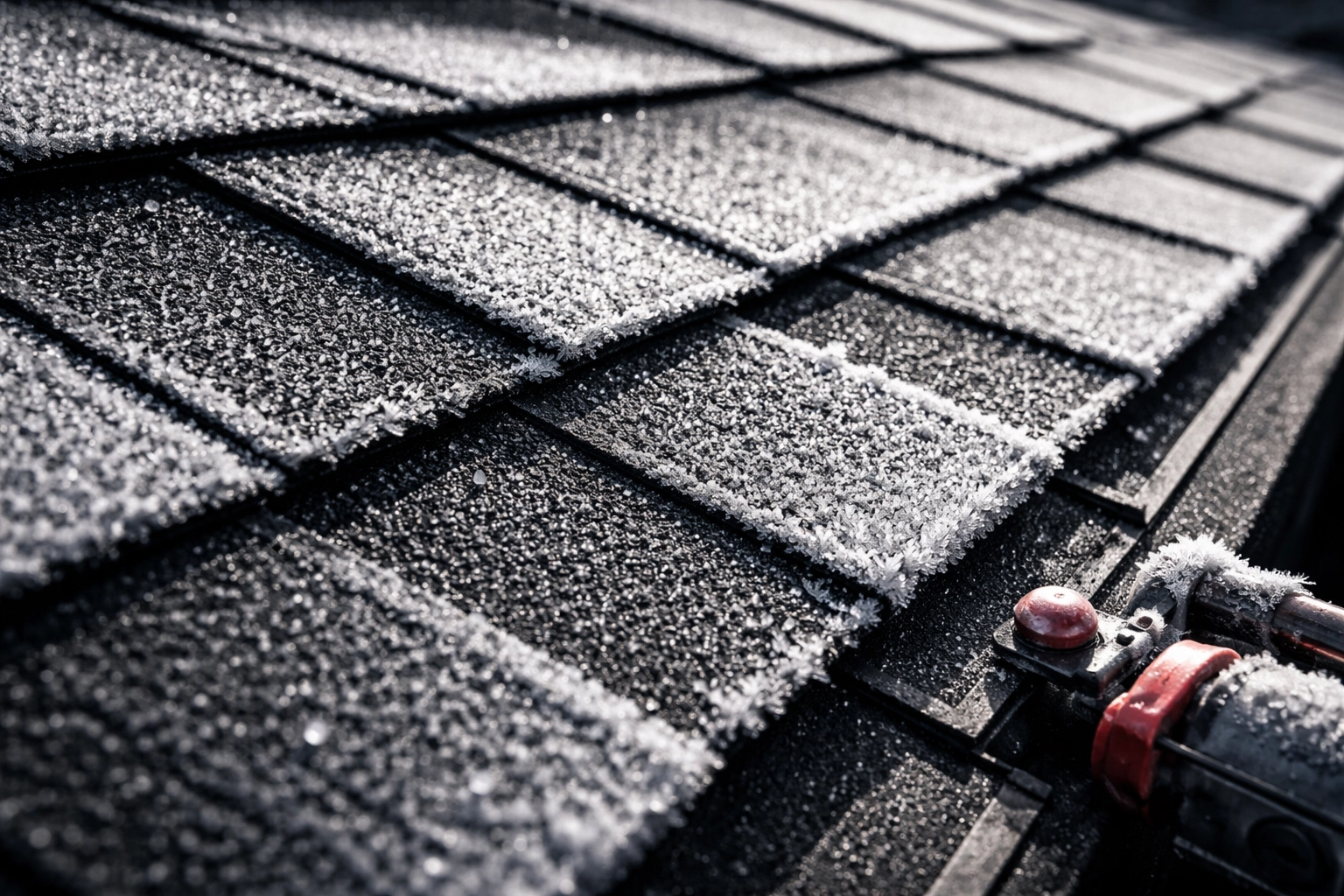
Asphalt shingles are designed to be flexible so they can conform to your roof deck and seal properly. But when temperatures drop below 40°F, shingles lose that flexibility and become brittle. That means they’re more likely to crack when handled, carried, or nailed down.
Our approach: We store shingles in a warm environment before installation day and handle them carefully to minimize breakage. Our crews know exactly how to work with cold materials without compromising the finished product.
Self-Sealing Strips Won’t Activate
Modern asphalt shingles have adhesive strips on the underside that are designed to seal each shingle to the one below it. This creates a wind-resistant bond that keeps your roof watertight. The catch? Those strips need warmth: usually from direct sunlight: to activate and seal properly.
In the middle of winter, with short days and weak sun, that thermal activation might not happen for weeks or even months. That’s a problem if high winds come through before your shingles have had a chance to seal down.
Our approach: When it’s too cold for shingles to self-seal naturally, we hand-seal them. This means our crew manually applies roofing cement to secure each shingle in place. It’s more labor-intensive, but it ensures your roof is wind-resistant from day one: not months down the road.
Safety Risks on the Roof Deck
Ice, frost, and snow on the roof deck create serious slip hazards for roofing crews. And wet or icy decking can’t be covered with underlayment until it’s completely dry: otherwise you’re trapping moisture that can cause wrinkling, buckling, and long-term damage.
Our approach: We monitor weather conditions carefully and plan installation days around dry, clear weather whenever possible. When we do encounter frost or moisture, we take the time to let the deck dry before moving forward. Rushing the job isn’t worth the risk to our crew or your roof.
Winter Roofing Employee Safety: Cold Stress, Warm Breaks & The Buddy System
When you see a roofing crew working in January, it’s easy to think the cold is just “uncomfortable.” The reality is that winter roofing comes with real health risks, especially when you’re on an exposed roof deck with freezing wind hitting you nonstop.
The Real Risks: Hypothermia and Frostbite
- Hypothermia can happen when the body loses heat faster than it can produce it. On a roof, wind chill and sweat can accelerate heat loss fast.
- Frostbite is a risk when skin is exposed (or when gloves/boots are wet) and temperatures are low enough to freeze tissue: most commonly affecting fingers, toes, ears, and nose.
Cold stress can also slow reaction time and decision-making, which increases the chance of slips, trips, and falls: exactly what we’re working to avoid on a winter job site.
Peninsula Roofing’s Cold-Weather Safety Protocols
Keeping our team safe is built into how we run winter projects. Some of the basics we enforce include:
- Proper layering with moisture-wicking base layers (not cotton). Staying dry is a huge part of staying warm.
- Frequent warm-up breaks in heated areas: often in a heated space on site or in warmed trucks, depending on the project.
- Constant hydration, even in cold weather. It’s easier to get dehydrated than people realize when it’s cold and windy, and dehydration makes it harder for your body to regulate temperature.
The Buddy System Matters
We also lean on the buddy system, meaning crew members keep an eye on each other for early signs of cold stress: things like uncontrolled shivering, numbness, clumsiness, confusion, or skin that looks unusually pale. Catching these warning signs early is key.
Why This Benefits Homeowners, Too
Reiterating the obvious: we want our people to go home safe and warm every day. But it also directly impacts the homeowner experience. A crew that’s protected from the elements can work more carefully, communicate more clearly, and keep the job site safer and more controlled.
Cold Weather Flat Roof Installations: Adhesives, Warm Rooms & Winter-Grade Systems
Cold-weather roofing isn’t just a shingle problem. Flat roofing (especially systems that rely on adhesives) can be even more sensitive when temperatures drop, because the chemistry has to be right for the product to flow, flash off, and bond the way it’s designed to.
Here are a few of the technical details we manage on winter flat-roof installs so the roof performs long-term, not just “looks good” on install day.
Flat Roof Adhesives Are Extremely Temperature-Sensitive
Most flat roof adhesives are formulated to work within a specific temperature range. When it gets too cold, the adhesive can thicken, spread unevenly, and lose its ability to properly wet-out the membrane or insulation. That can lead to weak bonds, wrinkles, or areas that lift later when the roof sees wind and thermal movement.
Bottom line: In winter, material handling and temperature control becomes part of the installation itself.
Water-Based vs. Solvent-Based (and “Winter Grade”) Adhesives
Not all adhesives behave the same in cold weather.
- Water-based adhesives generally shouldn’t be used below 40°F. They can struggle to cure and may not develop the bond strength you need when temps are low.
- When temperatures drop below that range, we typically move to solvent-based adhesives or specialized “winter grade” formulations designed to work in colder conditions.
The specific product and cutoff temperature can vary by manufacturer, so we follow the system specs and conditions on site: not guesswork.
“Warm Rooms” Keep Materials Ready Until the Second We Need Them
One common winter best practice on commercial and flat-roof projects is using Warm Rooms: heated storage areas (often on site) where adhesives, membranes, and accessories are kept at a controlled temperature.
That way, materials aren’t sitting in the back of a truck getting cold-soaked all morning. They stay warm and workable, and they only come out when the crew is ready to install them immediately.
Can Warmers & Heated Blankets for Pails and Adhesives
Even with warm storage, adhesives can cool down fast once they’re exposed to winter air. That’s why we may use can warmers or heated blankets on pails and adhesive containers to keep products within a workable range.
This helps the adhesive:
- flow and spread properly,
- maintain consistent coverage rates,
- and bond correctly despite the ambient temperature.
Why This Matters (and Why Experience Counts)
In the dead of winter, a flat roof install can absolutely be done right: but only if the contractor understands these temperature-driven details and plans the job accordingly. At Peninsula Roofing, we’ve been working through Delmarva winters since 1947, and we know the technical nuances that help a winter flat-roof installation last.
The Peninsula Roofing Difference: Winter-Ready Installation
We’ve been roofing on the Delmarva Peninsula since 1947. That’s 78 winters and counting. Safe to say, we know a thing or two about working in cold weather.
Here’s what sets us apart when it comes to winter installations:
Proper material storage. We keep shingles and other materials in climate-controlled environments so they stay workable, not brittle.
Adjusted techniques. From hand-sealing shingles to adjusting nail gun pressure to prevent overdriving fasteners through stiff materials, we modify our approach based on the conditions.
Ice and water shield installation. Every roof we install includes ice and water shield membrane at the eaves, extending up the slope past the exterior wall line. This is your first line of defense against ice dams and wind-driven rain.
Weather monitoring. We keep a close eye on the forecast and schedule work on the best days. If conditions aren’t right, we’ll wait rather than risk a subpar installation.
Experienced crews. Our team has seen it all. They know how to work safely and efficiently in cold conditions without cutting corners.
Don’t Let Winter Scare You Away from a New Roof
Look, we get it. The idea of getting a new roof in January or February might seem crazy. But sometimes life doesn’t wait for perfect weather. And the truth is, a winter roof installation done by experienced professionals is just as reliable as one done in the summer.
What matters most is working with a contractor who understands the unique challenges of cold-weather roofing and has the skills to handle them. That’s what we do every day at Peninsula Roofing.
Whether you’re dealing with an emergency repair, worried about your current roof’s condition, or just ready to cross “new roof” off your to-do list, don’t let the cold stop you. Contact us today to schedule a consultation. We’ll assess your situation, explain your options, and make sure your home stays protected: no matter what the thermometer says.
Stay warm out there, Delmarva. And remember: if your roof needs attention, we’ve got you covered( even in the deep freeze.)