When most homeowners in Salisbury, MD, think about their roofs, they picture the shingles. They think about the color, the style, and how those shingles look from the curb. While shingles are the most visible part of your home’s defense system, they aren’t the only thing standing between your living room and a torrential Delmarva downpour.
There is a hidden component: an “unsung hero”: that does the heavy lifting in the most vulnerable areas of your home. It’s called roof flashing.
If you’ve ever wondered why a roof that looks perfectly fine from the ground suddenly starts leaking during a storm, the answer is almost always the flashing. At Peninsula Roofing Company, Inc., we’ve seen how a small strip of metal can be the difference between a dry home and thousands of dollars in water damage. In this guide, we’ll break down everything you need to know about roof flashing, why it’s critical for your Salisbury roofing system, and how to spot a problem before it becomes a disaster.
What Exactly Is Roof Flashing?
In the simplest terms, roof flashing is a thin material: usually galvanized steel, aluminum, or copper: that professionals install to direct water away from critical areas of the roof. Think of it as the “connective tissue” of your roof.
Shingles are great at shedding water on flat, sloped surfaces. However, roofs aren’t just flat planes; they have joints, chimneys, vents, and walls. Anywhere the roof surface is interrupted or meets another structure, a gap is created. Gravity and wind will naturally push water into these gaps. Flashing acts as a seal, bridging those gaps and ensuring that water continues its journey down to the gutters rather than seeping into your attic.
Materials Matter
The choice of material for flashing is vital for long-term durability. While some cheaper options exist, most high-quality roofing companies in Salisbury, MD, prefer metals that can withstand our coastal humidity and temperature swings.
- Galvanized Steel: Popular for its strength and cost-effectiveness.
- Aluminum: Lightweight and resistant to corrosion.
- Copper: The gold standard for longevity and aesthetics, often used on historic Salisbury homes or high-end residential projects.
The Most Vulnerable Spots on Your Roof
Water is patient. It will find the path of least resistance. To protect your home, flashing must be meticulously installed in specific “high-risk” zones.
1. Chimneys
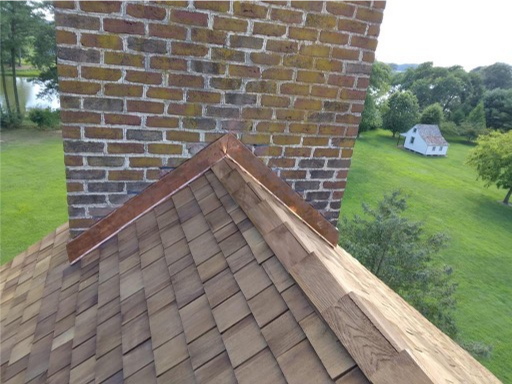
Chimneys are perhaps the most common source of roof leaks. Because a chimney is a heavy masonry structure that sits independently of the roof’s wooden frame, the two structures actually move and settle at different rates. This requires a complex system of “step flashing” (interwoven with shingles) and “counter-flashing” (embedded into the chimney mortar) to keep the joint watertight.
2. Roof Valleys
A valley is where two roof slopes meet to form a “V” shape. During a heavy rain in Salisbury, MD, these valleys act like a high-speed highway for water. If the valley flashing is undersized or improperly installed, the sheer volume of water can back up under the shingles.
3. Dormers and Side Walls
Wherever a roof meets a vertical wall: such as a dormer or a second story: flashing is required. Without it, water running down the siding would go directly behind the shingles and into the wall cavity, leading to hidden rot and mold.
4. Plumbing Vents and Pipes
Every home has pipes poking through the roof for kitchen and bathroom ventilation. These penetrations require specialized “boots” or flashing sleeves. Over time, the rubber seals on these boots can crack due to UV exposure, making them a prime candidate for minor but persistent leaks.
The “Sandpaper Effect”: A Common Cause of Failure
One specific issue we often encounter as a Salisbury roofer involves the physical movement of metal components. Metal expands when it gets hot in the summer sun and contracts when it cools down at night.
When metal panels or long strips of flashing are installed directly over asphalt shingles, this constant expansion and contraction causes the metal to move across the rough shingle granules. This is essentially like rubbing sandpaper against the metal. Over time, this friction rubs off the protective coating of the flashing, creating raw spots that are prone to rust. Once rust sets in, it creates pinholes that allow water to bypass the flashing entirely. This is why professional installation and proper buffering are so critical to prevent premature failure.
How to Tell If You Have a Flashing Problem
Because flashing is often tucked under shingles or behind siding, it isn’t always easy to see when it’s failing. However, there are several red flags that every Salisbury homeowner should watch for:
- Interior Water Stains: If you see brown or yellow “tea stains” on your ceiling or walls: especially near a chimney or a roof-wall intersection: your flashing is likely the culprit.
- Visible Rust or Corrosion: If you can see the metal flashing from the ground (or a ladder) and it looks orange, pitted, or flaky, its structural integrity is compromised.
- Loose or Lifted Metal: High winds can sometimes peel back flashing. If you see a piece of metal flapping or sticking up, it’s no longer doing its job.
- Cracked Sealant: Sometimes flashing relies on high-grade roofing caulk at the edges. If this sealant looks dried out, cracked, or is pulling away, water will find its way in.
- Pieces in the Yard: After a heavy storm, if you find thin strips of metal in your grass or flower beds, call a professional immediately.
Why DIY Flashing Repair Is Risky
It can be tempting to grab a tube of “roof tar” from a big-box store and try to slather over a leak. However, in the roofing world, “caulk is not a permanent solution.”
Proper flashing repair often requires removing shingles, replacing the underlying metal, and re-integrating the shingles into the system. If you just cover a leak with sealant, you might stop the water for a month, but you aren’t fixing the source. Meanwhile, the water could be trapped under your patch, rotting your roof deck where you can’t see it.
Working with established roofing companies in Salisbury, MD, ensures that the repair follows local building codes and manufacturer specifications, protecting your home’s warranty and your long-term investment.
The Importance of Professional Inspections
At Peninsula Roofing Company, Inc., we believe the best leak is the one that never happens. This is why we emphasize detailed roof inspections. Our team doesn’t just look at the shingles; we get up close to the chimneys, valleys, and vents to check for the early signs of flashing fatigue.
Catching a small rust spot or a loose piece of counter-flashing today might cost a few hundred dollars to fix. Waiting until that spot becomes a major leak could result in thousands of dollars in repairs for drywall, insulation, and structural timber.

Trust the Salisbury Roofing Experts
Since 1947, Peninsula Roofing Company, Inc. has been the trusted name for residential and commercial roofing across the Delmarva Peninsula. We understand the unique challenges that Salisbury weather presents: from the heavy humidity to the high-wind storms that roll in off the coast.
Whether you are building a new home and want to ensure it is flashed correctly from day one, or you are living in an older home and suspect a leak near your chimney, our team is here to help. We specialize in detailed inspections and precision repairs that extend the life of your roof.
Don’t let a small piece of metal become a big headache. If you haven’t had your roof inspected recently, or if you’ve noticed any of the warning signs mentioned above, reach out to us. We’ll make sure your roof’s “unsung hero” is in top shape to keep your family dry for years to come.
For more information on our services or to schedule an inspection, visit our services page or contact us today.