

For property owners in Ocean City, Maryland, the roof is more than just a structural necessity: it is the first line of defense against one of the most demanding environments on the Atlantic coast. From salt spray and high humidity to the relentless winds of a Nor’easter, the local climate puts immense pressure on residential and commercial building envelopes.
To ensure the safety and longevity of these structures, the Town of Ocean City recently transitioned to the 2021 International Building Code (IBC) and the 2021 International Energy Conservation Code (IECC). For condo associations, business owners, and residential homeowners, this update isn’t just “red tape.” It represents a significant shift in how roofs are designed, insulated, and installed.
Understanding these changes is essential before you start your next project. As one of the long-standing roofing companies in Salisbury, MD, serving the entire Delmarva Peninsula for over 75 years, Peninsula Roofing Company, Inc. has navigated every code cycle since 1947. Here is what you need to know about the latest standards in Ocean City.
The 125+ MPH Wind Zone: Designing for the Storm
Ocean City’s coastal location places it in a high-wind design zone. Under the 2021 IBC, the town adheres to ASCE 7-16 standards, which dictate how buildings must withstand wind loads. In Ocean City, roofs must be designed to handle wind speeds of 125 MPH or higher, depending on the specific risk category of the building.
The 6-Nail Shingle Pattern
For residential properties and shingled roofs, the most immediate impact of these wind standards is the fastening requirement. While a standard installation in inland areas might use four nails per shingle, the high-wind requirements in Ocean City mandate a 6-nail pattern.
This isn’t just about adding more hardware; it’s about the precise placement of those fasteners to ensure the shingle’s wind-warranty rating is actually met. When Salisbury roofers work on the coast, this extra step is the difference between a roof that stays intact during a tropical storm and one that ends up in the bay.
Commercial Edge Metal (ANSI/SPRI ES-1)
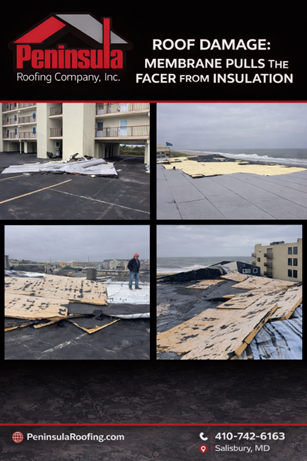
On commercial properties and large condo buildings, the “edge” is the most vulnerable part of the roof. If the wind can get under the perimeter metal (the gravel stops or coping caps), it can peel the entire roof membrane back like a lid on a sardine can.
The 2021 code requires that all perimeter edge metal meet the ANSI/SPRI ES-1 standard. This means the metal must be pre-tested and certified to resist the specific uplift pressures calculated for that building’s height and location. At Peninsula Roofing, we ensure that every commercial project utilizes edge systems that meet or exceed these rigorous standards.
The 2021 Energy Code: A New Standard for Insulation
The adoption of the 2021 IECC brings a significant bump in energy efficiency requirements. This is a “win-win” for property owners: while the initial material cost may be higher, the reduction in heating and cooling costs in the harsh coastal climate is substantial.
Residential Attics: Moving to R-49
If you are replacing a roof on a single-family home or a townhome with an attic space, the insulation requirement has increased. Previously, R-38 was the standard for our region. Under the new 2021 code, that has been bumped up to R-49. This usually requires adding several inches of blown-in or batt insulation to meet the new thermal resistance threshold.
Commercial Continuous Insulation
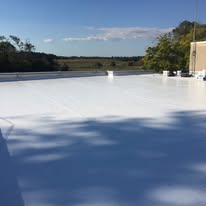
For flat or low-slope commercial roofs, the code now emphasizes “continuous insulation.” When we perform a full tear-off on a commercial building, we are required to bring the R-value up to current code using polyisocyanurate (polyiso) foam boards. This often means the total thickness of the insulation on the roof will increase, which may require us to raise the height of curb-mounted equipment like HVAC units or skylights to maintain proper flashing heights.
Crucial Installation Standards: Layers and Protection
One of the most common questions we get as a leader in Salisbury roofing is whether a “recover” (installing a new roof over an old one) is possible.
The 2-Layer Limit
Ocean City code remains strict on this: a maximum of two roof layers is allowed. However, in the coastal environment, we almost always recommend a full tear-off. If a building already has two layers of roofing, a full tear-off down to the structural deck is mandatory. This allows us to inspect the decking for wood rot or rusted metal: common issues in the salt-heavy air of Ocean City: and ensures the new roof is fastened to a sound substrate.
Ice & Water Shield Extensions
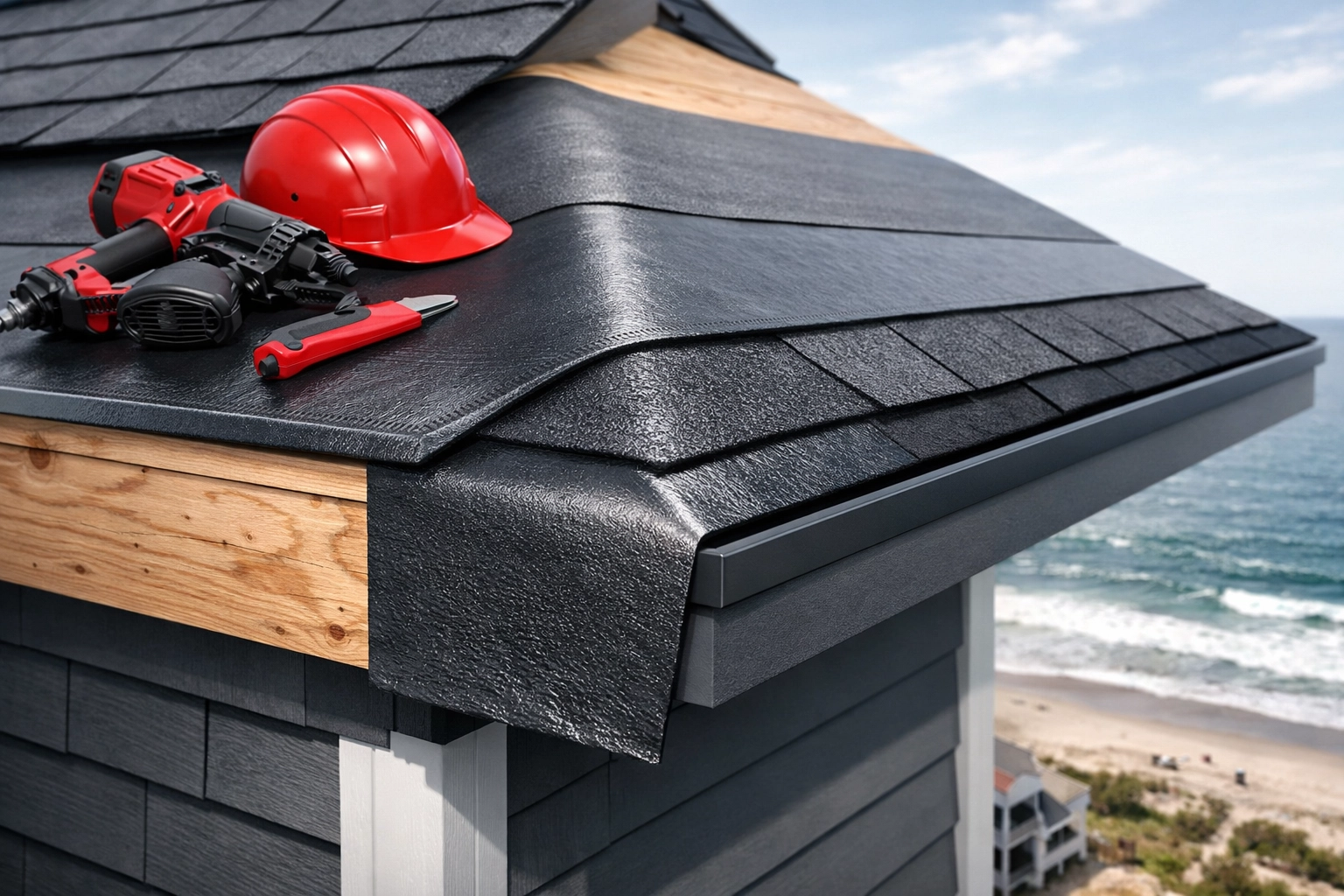
While we don’t see the same ice damming as northern states, “wind-driven rain” is a constant threat in Ocean City. The 2021 code requires enhanced underlayment protection. Specifically, self-adhering Ice & Water shield must extend from the eave’s edge to a point at least 24 inches inside the exterior wall line. This provides a waterproof gasket around nail penetrations where water is most likely to back up during a heavy storm.
The 50% “Substantial Improvement” Rule
For condo associations and owners of older commercial properties, the “Substantial Improvement” rule is perhaps the most critical piece of the code to understand.
In Ocean City, if the cost of a renovation or repair (including a new roof) exceeds 50% of the market value of the structure, the entire building must be brought up to current flood and building codes. This is often referred to as the “50% Rule.”
When planning a large-scale roofing project for a condo complex, it is vital to work with a contractor who understands these thresholds. We work closely with property managers to provide accurate estimates and phased approaches where applicable to help manage these regulatory requirements.
Why Experience Matters on the Shore
Navigating the 2021 IBC and IECC requires more than just a hammer and shingles. It requires an engineering-mindset and a deep familiarity with local municipal requirements.
Since 1947, Peninsula Roofing Company, Inc. has been the trusted name for complex coastal projects. Whether it is a high-rise condo on 120th Street or a commercial warehouse near the West Ocean City harbor, we understand that these codes aren’t just suggestions: they are the blueprint for protecting your investment.
Choosing between various roofing companies in Salisbury, MD can be difficult, but our longevity speaks for itself. We don’t just “install roofs”; we build systems designed to survive the next fifty years of Atlantic weather.