

If you step into a commercial building in Salisbury today, you might find yourself surrounded by modern amenities: high-speed fiber internet, energy-efficient LED lighting, and smart thermostats. But if you look up: specifically at the roof over your head: there is a high probability that the technology protecting the building is straight out of the 1990s.
While the 90s gave us grunge music, the rise of the internet, and questionable fashion choices, it also represented a very specific era in commercial construction. In the mid-90s, commercial roofing was going through a massive transition. As we cross into 2026, those roofs are officially hitting their 30th birthdays.
At Peninsula Roofing Company, Inc., we should know. We’ve been serving the Delmarva area for over 75 years, and we were right there on the front lines in the mid-90s, installing the very systems that many local business owners are relying on today. As one of the most established roofing companies in Salisbury, MD, we have a unique perspective on these “90s kid” roofs because, in many cases, our crews were the ones who laid them down.
The Era of Mass and Ballast: Identifying a 90s Roof
If you own a commercial property in the Salisbury area and aren’t sure how old your roof is, there are a few dead giveaways that it was installed between 1992 and 1998. During this decade, two specific systems reigned supreme: Ballasted EPDM and Pea Gravel Built-Up Roofing (BUR).
The Ballast King: EPDM with River Rock
In the mid-90s, EPDM (ethylene propylene diene monomer) was the undisputed heavyweight champion of the roofing world. However, the way it was installed back then is very different from the adhered or mechanically fastened systems we often use today.
The “hallmark” of a mid-90s EPDM roof is the ballast. If you walk onto your roof and see a sea of large, smooth river stones or crushed rock, you have a ballasted roof. In this system, the rubber membrane isn’t glued down to the insulation. Instead, it is “loose-laid,” and the weight of the rocks (usually 10 to 12 pounds per square foot) is what keeps the roof from blowing away in a Delmarva storm.
Property owners loved this system in the 90s because it was fast to install and relatively inexpensive. However, for Salisbury roofers today, these systems present unique challenges. The rock hides leaks, makes it difficult to find punctures, and adds immense weight to the building structure.

The Pea Gravel Classic: Built-Up Roofing (BUR)
While EPDM was gaining ground, the “old school” method of Built-Up Roofing was still very much in its prime. If your roof consists of multiple layers of asphalt and felt topped with a “flood coat” of hot tar and a layer of small pea gravel, you’re looking at a classic BUR system.
The pea gravel served a vital purpose: it protected the asphalt from the sun’s harsh UV rays. In the 90s, this was a tried-and-true method that felt permanent. The problem is that over 30 years, that gravel can shift, or the asphalt underneath can become brittle. When we talk about roofing Salisbury, MD, we often encounter these systems where the gravel has actually become embedded in the membrane, making repairs a “detective job” for our technicians.
The 30-Year Itch: Why the Mid-90s Roof is at its Limit
In the roofing industry, we often talk about the “design life” of a roof. Most of the commercial systems installed in the mid-90s were engineered to last between 20 and 25 years. As of 2026, a roof installed in 1996 is now 30 years old.
Think of it like an aging athlete. It might still be performing, but it’s playing on “borrowed time.” These roofs have endured three decades of Maryland humidity, freezing winters, and high-wind coastal events.
Seam Fatigue: The 90s Weak Point
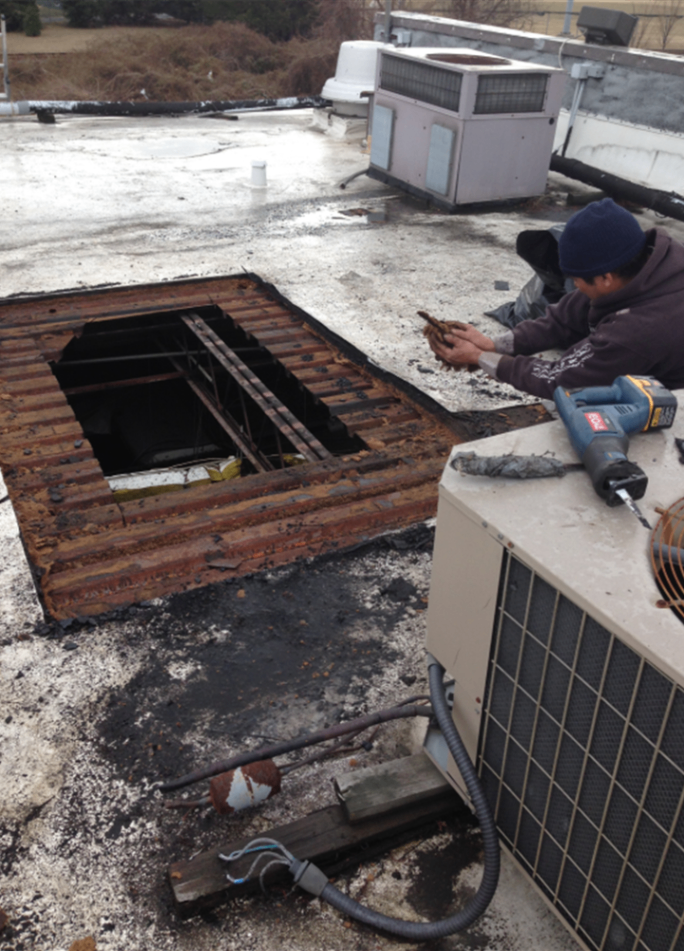
One of the biggest issues with mid-90s EPDM is the seam technology. Back then, many seams were closed using liquid glues or early versions of seam tape. Over 30 years, these adhesives break down. The rubber membrane itself might still look great, but the seams: the literal “glue” holding the roof together: are likely reaching a point of systemic failure.
If you are noticing small leaks around the edges or near HVAC units, it’s a sign that your 90s roof is losing its structural integrity. This is where Peninsula Roofing Company, Inc. steps in to provide an honest assessment of whether the system can be saved.
The Peninsula Philosophy: Repair First
It is easy for a roofing company to walk onto a 30-year-old roof and immediately tell the owner they need a total tear-off and replacement. At Peninsula Roofing, we take a different approach. Our “repair first” philosophy is built on the fact that we understand the anatomy of these older systems better than anyone else.
Just because your roof is a “90s kid” doesn’t mean it needs to be retired today. Depending on the condition of the underlying insulation and the substrate, there are several ways we can extend the life of a mid-90s roof without the massive capital expense of a full replacement.
- Strategic Seam Repair: If the membrane is healthy, we can often strip in new, modern flashing and high-performance seam tapes to buy the building another 5 to 7 years.
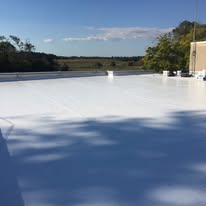
- Roof Coating Systems: For many pea gravel or EPDM roofs, a high-quality silicone or acrylic coating can act as a “liquid-applied” new roof. This seals the existing surface and provides incredible UV protection. You can learn more about these options on our services page.
- Moisture Surveys: Before we recommend any action, we use specialized tools to determine if the insulation is dry. If the “bones” of the roof are dry, we have options. If the insulation is saturated, then: and only then: do we discuss a replacement.
Why Experience Matters for Older Commercial Roofs
There is a big difference between a crew that knows how to install a brand-new TPO roof and a crew that knows how to navigate a 30-year-old ballasted system. When you hire Salisbury roofers, you want someone who knows what’s under the rock before they start digging.
Because we have been a fixture of the community since 1947, we have archived files on thousands of buildings across the region. There is a very good chance that if your building was roofed in the 90s, we have the original specs in our office. That historical knowledge is invaluable when it comes to troubleshooting mysterious leaks or determining if the structure can handle the weight of modern equipment.
Is It Time for an Inspection?
If your building was built or last roofed during the Clinton administration, it’s time for a professional set of eyes to take a look. Waiting for a major ceiling collapse during a summer thunderstorm isn’t just bad for business: it’s expensive.
Most property owners in Salisbury don’t realize their roof is failing until the damage has reached the interior. By then, you aren’t just paying for a roof repair; you’re paying for drywall, carpet, and potentially lost inventory.
A simple maintenance check-up can identify:
- Clogged internal drains that are putting thousands of pounds of water weight on your 90s structure.
- “Alligatoring” on BUR systems that indicates the asphalt is reaching its breaking point.
- Loose ballast that has moved, exposing the membrane to UV damage.
As one of the leading roofing companies in Salisbury, MD, we pride ourselves on giving property owners the “straight talk” about their assets. We’ve seen the trends come and go, but our commitment to quality has remained the same since 1947.
Conclusion
The 1990s was a great decade, but for a commercial roof, it was a lifetime ago. Whether your roof is covered in river rock or pea gravel, it’s officially an “elder statesman” of the Salisbury skyline.
Don’t let the age of your roof intimidate you. With the right maintenance and the “repair first” mindset of Peninsula Roofing Company, Inc., you can ensure your building stays protected for years to come. If you’re ready to see what’s really going on up there, contact us today for a comprehensive evaluation.
Let’s see if your 90s roof still has a few more hits left in it.