

For many homeowners in Salisbury, MD, summer is the season of backyard barbecues, trips to the beach, and enjoying the warm Delmarva sun. However, summer is also the most critical time of year to take a close look at your home’s first line of defense: the roof.
The intense heat and humidity of July and August, combined with the sudden, violent pop-up thunderstorms common in our area, can push an aging or compromised roof to its breaking point. Identifying a small leak or a few missing shingles now can save you from a catastrophic failure during a hurricane or a heavy winter snowstorm later.
At Peninsula Roofing Company, Inc., we’ve been serving the Delmarva community since 1947. With over 75 years of experience, we’ve seen how quickly a minor issue can turn into an expensive emergency. This guide is designed to help you perform a safe, thorough “health check” on your roof this summer.
Why Summer Inspections Matter in Salisbury
Our local climate is unique. While Salisbury homeowners don’t deal with the same mountain snow as Western Maryland, we face a trio of roof-killers: high humidity, salt-laden air from the coast, and intense UV exposure.
During the summer, your roof can reach temperatures well over 150 degrees. This heat causes roofing materials to expand. When a late-afternoon thunderstorm rolls through and quickly cools the roof, those materials contract. This “thermal shock” can cause shingles to crack, sealants to fail, and flashing to pull away from chimneys and vents. By using this checklist, you can catch these issues before the next big storm exposes them the hard way.
Part 1: The Exterior Checklist (Inspection from the Ground)
Safety Warning: Before you begin, remember that you should never walk on your roof yourself. Roofing is dangerous work that requires specialized safety gear and training. For this checklist, we recommend staying firmly on the ground and using a pair of binoculars for a clear view of the higher peaks.
1. Missing, Curling, or Cracked Shingles
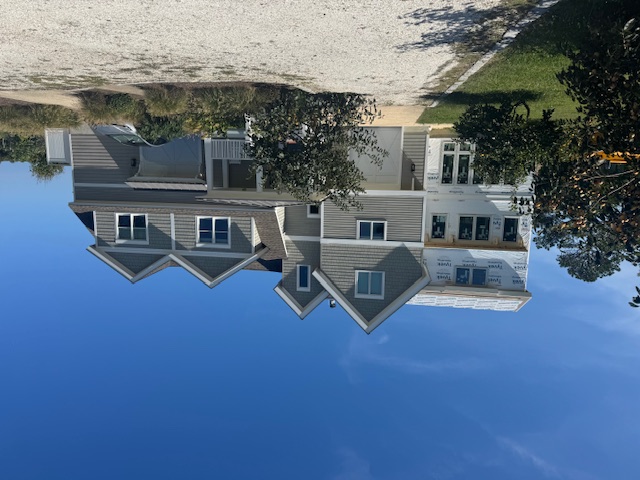
Scan your roof for any gaps in the shingle pattern. In Salisbury, high wind gusts from coastal storms can easily lift shingles that have lost their adhesive bond.
- Curling or Cupping: If the edges of your shingles are turning upward (cupping) or the middle is bubbling (curling), it’s a sign of heat damage and aging.
- Cracking: Look for vertical or horizontal cracks through the shingle body, often caused by thermal shock.
2. Granule Piles in the Gutters
If you notice what looks like coarse black sand in your gutters or at the base of your downspouts, your shingles are losing their protective granules. These granules are what protect the asphalt from UV rays. Once they are gone, the shingle will brittle and fail rapidly.
3. Flashing Gaps and Rust
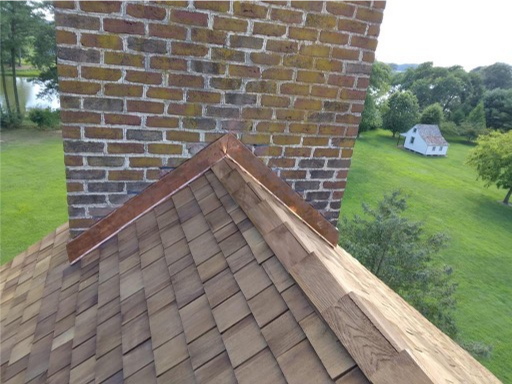
Flashing is the thin metal material installed around “interruptions” in your roof: things like chimneys, vent pipes, and skylights. In our coastal environment, salt air can accelerate the corrosion of metal flashing. Check for:
- Rust spots or pitting.
- Gaps where the metal has pulled away from the structure.
- Cracked or missing caulking around the edges.
4. Sagging Rooflines
Step back to the edge of your property and look at the “ridges” (the top peaks) and the “eaves” (the bottom edges) of your roof. They should be perfectly straight. Any dip, curve, or “swayback” look is a major red flag indicating potential structural damage or rotting roof decking underneath.
5. Tree Debris and Overhanging Branches
Tree limbs that touch or hang closely over your roof can act like sandpaper, wearing down granules every time the wind blows. Furthermore, piles of wet leaves trapped in roof valleys can hold moisture against the shingles, leading to wood rot in the height of the Salisbury humidity.
Part 2: The Interior Checklist (The Attic “Look-See”)
Sometimes the best way to find a roof leak is to look from the bottom up. On a bright, sunny afternoon, grab a flashlight and head into your attic.
1. The “Daylight” Test
Turn off your flashlight and your attic lights. Do you see any pinpoints of light coming through the roof boards? If light can get in, water definitely can. This is often the first sign of a puncture or a failed flashing seal.
2. Water Stains on Ceilings and Walls
Check your upstairs ceilings and the walls near the roofline. Look for yellow, brown, or gray “rings” or bubbles in the paint.
- Pro Tip: Leaks don’t always travel straight down. Water can enter at a chimney, travel six feet down a rafter, and then drip onto your ceiling. If you see a stain, the leak might be further up the roof than you think.
3. Musty Odors and Damp Insulation
If your attic smells like a damp basement, you likely have a moisture problem. Check your insulation; if it feels matted, flat, or damp to the touch, it has likely been exposed to a slow, persistent leak. In our Salisbury heat, damp insulation is the perfect breeding ground for mold and mildew.
Part 3: The Delmarva-Specific Factors
Living on the Eastern Shore means our roofs face specific challenges that a standard “national” checklist might miss.
- Coastal Humidity: Delmarva’s high humidity levels mean that once moisture gets under your shingles, it rarely has a chance to dry out. This leads to rapid wood rot in your roof deck.
- Salt Air Corrosion: If you live closer to the coast or even in central Salisbury, the salt in the air can eat through low-quality metal vents and flashing much faster than it would inland.
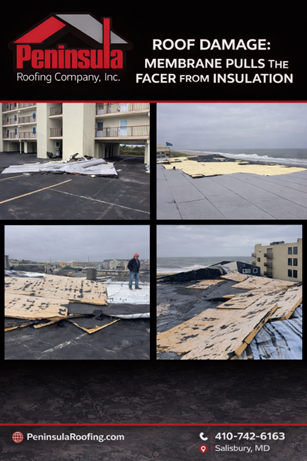
- Summer Storm Weak Points: Our “pop-up” thunderstorms often bring intense wind uplift. Even if it doesn’t rain much, the wind can break the seal on older shingles, leaving them ready to fly off during the next major weather event.
Part 4: What to Do If You Find Damage
If your inspection reveals one of the issues listed above, don’t panic, but don’t wait. Roof damage is progressive; it never gets better (or cheaper) on its own.
- Document the Damage: Take date-stamped photos from the ground or inside the attic. This documentation is vital if you need to file an insurance claim.
- Stay Away from Power Lines: If a storm has knocked a branch onto your roof, or if shingles have blown near your service line, stay back. Call a professional immediately.
- Schedule a Professional Assessment: A ground-level check is great for spotting obvious problems, but a professional roofer knows how to spot the subtle “invisible” signs of failure.
At Peninsula Roofing, we provide comprehensive inspections for both residential and commercial properties. We don’t believe in the “hard sell”: if your roof can be safely repaired rather than replaced, we will tell you. Our goal is to find the most cost-effective, budget-appropriate solution for your home.
Why Trust Peninsula Roofing Company, Inc.?
Since 1947, we have been the trusted name for roofing services in Salisbury, MD. We understand the local building codes, the local weather patterns, and the specific needs of Delmarva homeowners.
Whether you need a simple shingle repair, a full roof replacement, or 24/7 emergency storm response, our dedicated residential team is ready to help. We even offer financing options to help make your home’s protection more affordable.
Don’t wait for a drip to become a flood. Take 15 minutes this weekend to walk around your home with this checklist. If you see something that doesn’t look right, give us a call.
Contact Peninsula Roofing Today
Ready for a professional eye on your roof? Contact Peninsula Roofing Company, Inc. at 410-742-6163 to schedule your free assessment. Let our 75+ years of experience give you the peace of mind you deserve this summer.