

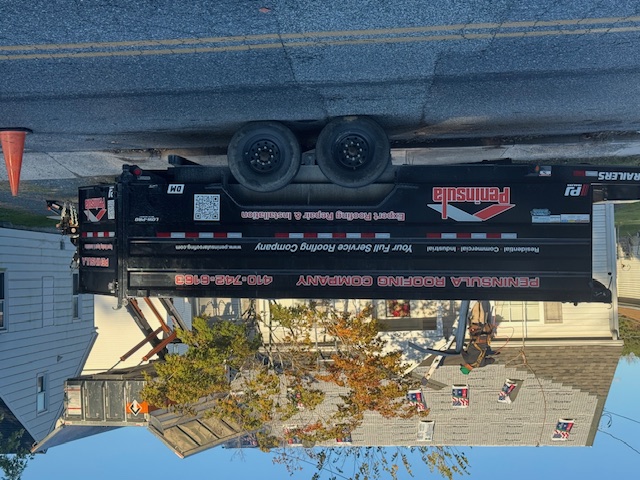
Caption: Shingle replacement helps restore your roof’s protective layer before minor wear turns into major leaks.
For homeowners in Salisbury, MD, the roof is more than just a structural necessity: it is the primary shield against the unpredictable Delmarva climate. From the blistering humidity of July to the biting winds and ice of mid-winter, your asphalt shingles are constantly under siege. At Peninsula Roofing Company, Inc., we’ve been protecting homes across the Eastern Shore since 1947. Over nearly eight decades, we’ve seen thousands of roofs reach the end of their lifespan, and we’ve noticed one recurring question: “Is my roof just looking its age, or is it actually failing?”
Understanding the difference between a “weathered” roof and a “worn-out” roof can save you thousands of dollars in emergency repairs and interior water damage. While every roof will naturally show signs of aging, knowing when those signs transition from aesthetic issues to structural liabilities is key to being a responsible property owner.
The Salisbury Climate: A Catalyst for Aging
Salisbury, MD, sits in a unique geographic position. Our humid subtropical climate means our roofs endure high moisture levels, significant UV exposure, and a punishing freeze-thaw cycle. These factors accelerate the aging process of asphalt shingles far faster than in drier or more temperate regions.
When you are searching for roofing companies in Salisbury, MD, you aren’t just looking for someone to nail down shingles; you are looking for an expert who understands how the local salt air and humidity interact with roofing materials.
UV Degradation and Thermal Shock
The sun is perhaps the most persistent enemy of a shingle. UV rays break down the bitumen (asphalt) that holds the shingle together. Over time, this causes the shingle to become brittle. In Salisbury, our summer temperatures often soar, causing shingles to expand. When a sudden afternoon thunderstorm rolls through, the rapid cooling causes the shingles to contract: a process known as thermal shock. This constant “breathing” eventually leads to cracks and loss of flexibility.
What is Normal Weathering?
Just like a car shows wear after 50,000 miles, a roof will show signs of “weathering” after five to ten years. Weathering is the natural, expected degradation of materials that does not necessarily compromise the roof’s ability to shed water.
1. Slight Fading
A common sign of a weathered roof is color loss. Intense sunlight will cause the rich charcoal or timberline green of your shingles to fade into a lighter, more matte finish. While this might affect your home’s curb appeal, it does not mean your roof is leaking.
2. Minor Granule Loss
If you notice a small amount of “sand” in your gutters during a routine cleaning, don’t panic. This is normal. Asphalt shingles are coated with ceramic-coated mineral granules to protect the asphalt from UV light. As the roof settles and ages, some of these granules will naturally shed.
3. Incidental Algae Growth
Those dark streaks you see on roofs around Salisbury are often Gloeocapsa magma, a type of algae that thrives in our humid environment. While unsightly, minor algae growth is typically a cosmetic issue rather than a functional failure, though it can be a precursor to moss if left untreated.
Signs Your Roof is Officially “Worn Out”
When weathering transitions into “worn out” status, the roof is no longer performing its primary job: keeping your home dry. As experienced Salisbury roofers, we look for specific “red flag” indicators during our inspections.
1. Significant Granule Loss (The “Bald Spot” Effect)
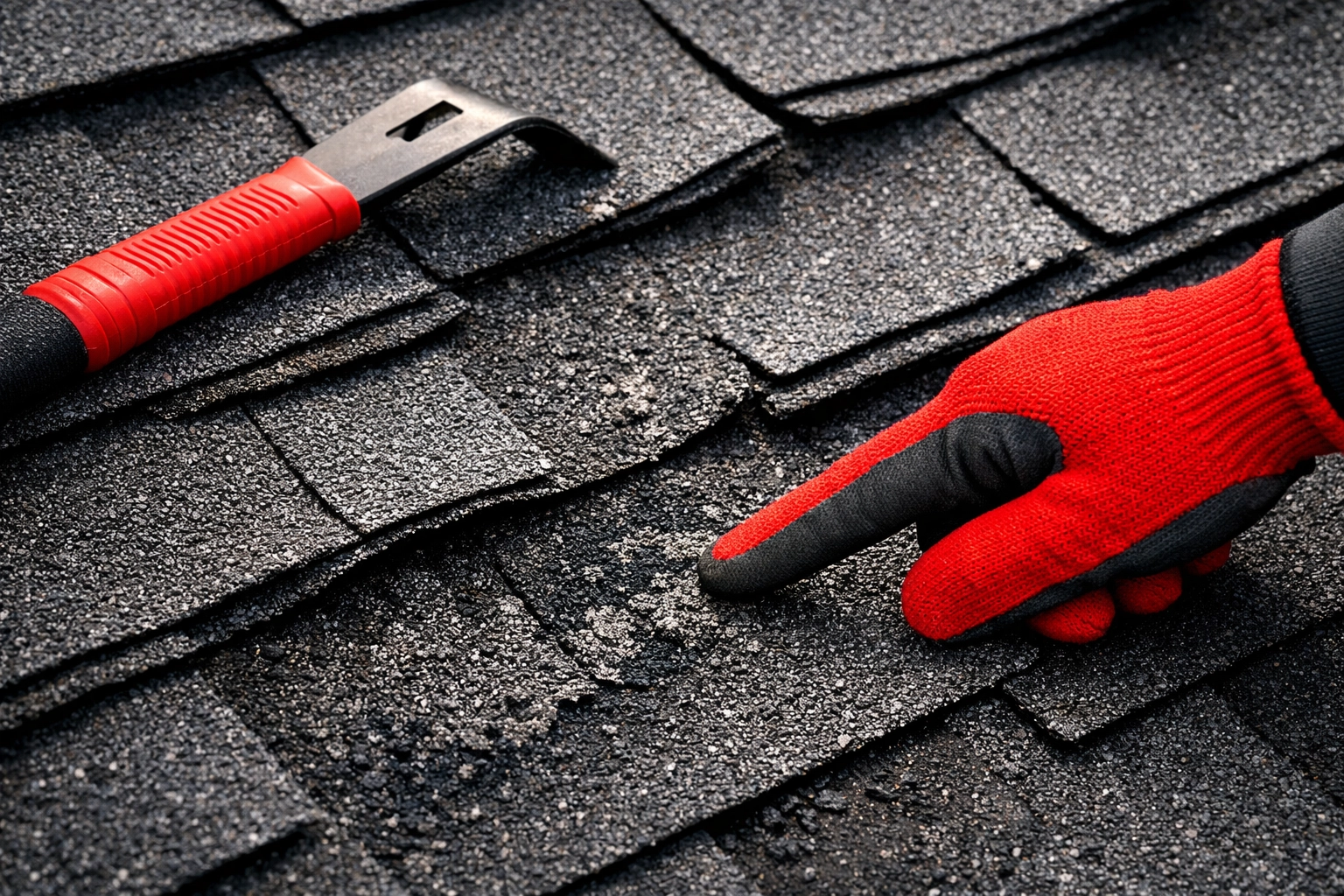
While minor shedding is normal, excessive granule loss is a major warning sign. When shingles lose enough granules, the underlying asphalt is exposed to the sun. This causes the shingle to dry out, crack, and eventually fail. If your downspouts are dumping piles of granules after every rain, your shingles are likely “reaching the end of the road.”
2. Curling and Cupping
When shingles begin to curl upward at the edges (curling) or the middle starts to sink while the edges stay flat (cupping), the shingle has lost its structural integrity. This is usually a sign of an overheated attic or extreme age. Once a shingle curls, it becomes brittle and is easily caught by the wind, leading to blow-offs during the seasonal storms we see in roofing Salisbury, MD.
3. Cracking and Tearing
As shingles lose their essential oils, they become stiff. Thermal expansion will then cause deep cracks to form. If you can see cracks that go all the way through the shingle mat, water is almost certainly finding its way to the underlayment, and eventually, your roof deck.
4. Missing Shingles and Exposed Nails
If a single storm takes out a few shingles, it might be a simple repair. However, if shingles are consistently falling off, it’s a sign that the adhesive strips have failed. Furthermore, exposed nails (often called “shiners”) are a direct highway for water to enter your home.
The 20-Year Benchmark
In the Delmarva area, most standard asphalt shingle roofs are designed to last between 15 and 25 years. However, factors like ventilation, shingle quality, and storm frequency can shift that window. If your roof is approaching the 20-year mark, it is statistically likely that it has moved from “weathered” to “worn out,” even if it looks okay from the ground.
At Peninsula Roofing Company, Inc., we recommend a professional inspection once your roof hits its 15th birthday. We have been a staple of the community since 1947, and our goal is to provide honest assessments. We would much rather help you plan for a replacement in two years than have you call us for an emergency leak in the middle of a hurricane.
Why Professional Evaluation Matters
It can be difficult for a property owner to tell the difference between a cosmetic streak and a structural crack from the safety of the driveway. That is where we come in. A professional inspection from Peninsula Roofing includes checking:
- Flashing: The metal pieces around chimneys and dormers that often fail before the shingles do.
- Attic Ventilation: To ensure your roof isn’t “cooking” from the inside out.
- Deck Integrity: To make sure the wood underneath the shingles is still solid and free of rot.
Protect Your Investment with Peninsula Roofing
Your home is likely your largest investment, and the roof is its first line of defense. Don’t wait for a ceiling stain to tell you your roof is worn out. Whether you are seeing the first signs of curling or you are tired of cleaning shingles out of your gutters, our team is here to help.
We pride ourselves on being one of the most trusted roofing companies in Salisbury, MD. Our longevity since 1947 is a testament to our commitment to quality and our deep understanding of how Delmarva weather impacts your home.
If you are unsure about the state of your roof, contact us today for a comprehensive evaluation. We’ll give you a straight answer on whether you need a minor repair, a maintenance cleaning, or a full replacement.

For more information on our services or to schedule an inspection, visit our contact page or explore our full range of roofing solutions. Let us put our nearly 80 years of experience to work for you, ensuring your home stays dry and protected for decades to come.