

Living on the Delmarva Peninsula comes with a unique set of perks: the coastal breeze, the beautiful bay views, and a community that feels like home. However, for a homeowner in Salisbury, MD, those same perks can be incredibly tough on your roof. Between the salt air, high humidity, intense summer UV rays, and the frequent “nor’easters” that roll through our region, your roof is under a constant state of siege.
At Peninsula Roofing Company, Inc., we have been serving the Delmarva area since 1947. Over the last 75+ years, we have seen exactly how the local climate accelerates shingle deterioration. Most homeowners don’t think about their roof until a drip hits their forehead during a thunderstorm, but by then, the damage is often extensive and expensive.
The good news? You don’t need to climb a ladder to know if your roof is struggling. Many of the most critical warning signs are visible right from the ground. Here are the seven warning signs every Salisbury, MD homeowner needs to watch for.
1. Excess Granules in Gutters and Downspouts
If you are cleaning your gutters and notice what looks like coarse, dark sand or coffee grounds, you are looking at your roof’s primary defense system: granules. These small ceramic-coated stones are embedded into asphalt shingles to protect the underlying bitumen from UV rays and provide fire resistance.
What’s Normal vs. Concerning?
- Normal: If your roof was installed in the last year, a light sprinkling of granules is normal as the shingles settle.
- Concerning: If you find concentrated piles or “handfuls” of granules at the base of your downspouts after a heavy Salisbury, MD rain, your shingles are reaching the end of their life.
When the granules wash away, the asphalt is exposed to the sun. The sun then “bakes” the shingle, making it brittle and prone to cracking. If you see your gutters filled with “sand,” it’s time to schedule a free inspection before the shingles begin to fail entirely.
2. Bald Spots or Dark Patches on Shingles
Closely related to granule loss are “bald spots.” From the ground, these often look like dark, dirty, or shiny patches on your roof. Many homeowners mistake these for dirt or algae, but they are often areas where the granules have completely sloughed off, leaving the black substrate of the shingle exposed.
In our coastal environment, these bald spots are particularly dangerous. The salt air and humidity can penetrate these exposed areas much faster than they would a healthy shingle. Once the protection is gone, the shingle will dry out, shrink, and eventually allow water to seep through to the underlayment. If your roof looks “patchy” or uneven in color, it is a sign that the structural integrity of your shingles is compromised.
3. Curling or Cupping Shingles
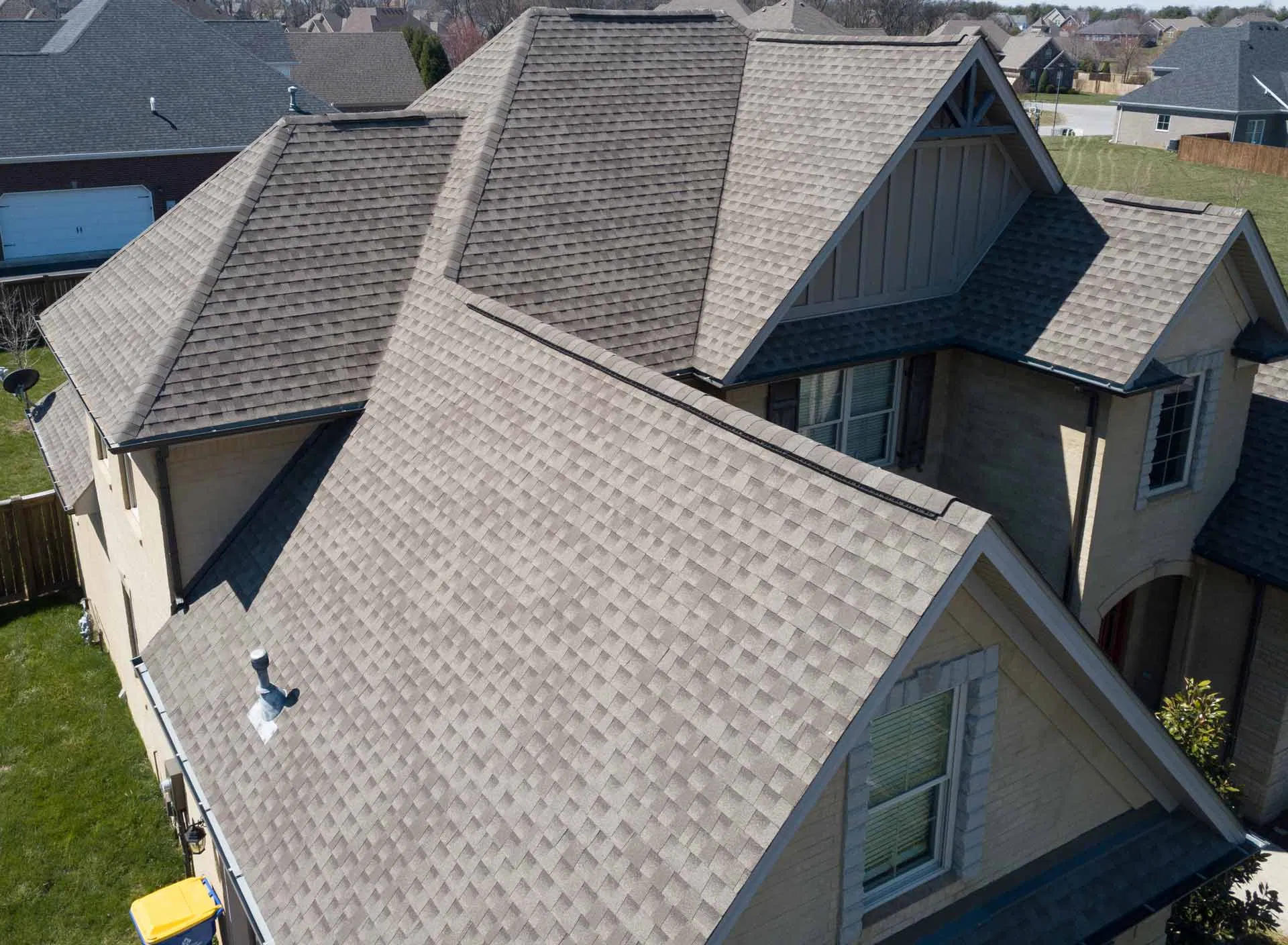
Take a look at the edges of your shingles. Are they lying flat against the roof, or are the corners turning upward? This is known as “curling” or “cupping.”
- Cupping: This happens when the center of the shingle bulges, but the edges stay flat.
- Curling: This occurs when the edges turn up, looking like the corners of a dry leaf.
Why it happens in Salisbury, MD:
Our region experiences significant “heat cycling.” The intense humidity and high temperatures in the summer followed by sudden cooling from rain or evening breezes cause shingles to expand and contract rapidly. Over time, this stress causes the shingle to lose its shape. Once a shingle curls, it is no longer shedding water properly. Instead, it can actually “catch” water and wind, leading to shingle blow-offs during a storm.

4. Missing or Cracked Shingles
High winds are a frequent guest in Salisbury, MD, especially during the stormy months. After a significant wind event, it is always a good idea to walk around your yard and check for shingle debris.
A single missing shingle might seem like a minor cosmetic issue, but it creates a “weak link” in your roof’s armor. When one shingle is missing, the ones surrounding it are now more susceptible to being caught by the wind and ripped away. Furthermore, the exposed area is a direct entry point for water.
Cracked shingles are equally dangerous. Cracks are typically a sign of “thermal shock” or general age. If you see shingles that look like they have “shattered” or have long horizontal cracks, the shingle is no longer waterproof. This is a “schedule soon” situation before a small crack becomes a major leak.
5. Daylight Visible Through Attic Roof Boards
One of the easiest ways to check your roof’s health is to go into your attic on a bright, sunny day. Turn off the lights and look up at the roof deck.
If you see pinpricks of light or “stars” through the boards, you have a problem. If light can get in, water can get in. This often indicates that the roof deck (the wood underneath your shingles) has gaps or has begun to rot, or that the shingles and underlayment have failed completely in that spot.
Even if you don’t see an active drip, those light beams are a sign that your home’s “envelope” has been breached. In the winter, this also means your expensive heat is escaping directly through the roof, leading to those rising energy bills Sean often talks about with our clients.

6. Water Stains on Ceilings or Walls
This is the most obvious sign, but often the one homeowners ignore for too long. If you notice a yellow, brown, or gray ring on your ceiling or a “bubbling” in the paint on your walls, you have an active leak.
In many Salisbury, MD homes, leaks don’t always appear directly under the hole in the roof. Water is sneaky: it can enter at the ridge, run down a rafter, and finally drip onto your ceiling ten feet away from the original entry point.
Pro Tip: Don’t just look for stains on the ceiling. Check the corners of your closets and the areas around your chimney or vent pipes. If you see a stain, it is a “call now” situation. The longer you wait, the more likely you are to develop mold or structural rot in your rafters.

7. A Sagging Roof Deck
This is the most critical warning sign on this list. If you stand back from your house and notice a “dip” or a “wave” in the roofline, you need to act immediately.
A sagging roof is rarely just a shingle issue; it is almost always a structural issue. It could be caused by:
- Long-term water damage that has rotted the plywood decking.
- Inadequate bracing or undersized rafters.
- Excessive weight from too many layers of old shingles.
If your roof is sagging, the structural integrity of your home is at risk. Do not walk on a sagging roof, and do not wait for the next storm. This is a situation that requires a professional assessment from a team that knows the building codes and structural requirements of the Delmarva area.
Why Trust Peninsula Roofing Company, Inc.?
When you notice these signs, the first instinct might be to panic about the cost. At Peninsula Roofing, we take a different approach. Since 1947, our mission has been to provide honest, budget-appropriate solutions for our neighbors in Salisbury, MD.
We are not a “one-size-fits-all” company. If a repair can extend the life of your roof for another five years, we will tell you. If a full replacement is the only safe option, we will provide a transparent quote and financing options to help make it manageable.
Our deep roots in Delmarva mean we understand the local climate better than anyone. We’ve seen the storms of the 50s, the 80s, and today, and we know what materials stand up best to our coastal air.
Don’t Wait for the Next Storm
If you’ve seen granules in your gutters or a stain on your ceiling, don’t wait for a rainy night to worry about it. Small signs today become big problems tomorrow.
Contact us today at Peninsula Roofing Company, Inc. for a comprehensive, professional, and honest roof inspection. Let our 75+ years of experience give you the peace of mind you deserve.