

If you live in Salisbury, MD, or anywhere across the Delmarva Peninsula, you have probably noticed dark streaks or green growth appearing on an asphalt-shingle roof. At first glance, it may seem like a simple appearance issue. In some cases, it is. In others, it is an early warning that moisture is staying on the roof longer than it should.
The most important distinction is between algae and moss.
The black streaks commonly seen on shingles are usually algae: specifically, a cyanobacterium commonly identified as Gloeocapsa magma. Algae is mostly cosmetic, but it indicates a damp, shaded environment and can keep shingles wetter than normal. Green, fuzzy moss is more concerning because it can physically damage the roof surface, encourage water intrusion, and shorten the useful life of the shingles.
Black Roof Streaks Are Usually Algae
Algae typically appears as black, blue-green, or brownish streaks running down the slope of a roof. It feeds on moisture and on the limestone filler found in many asphalt shingles.
Algae does not usually destroy a roof by itself. However, it can:
- Hold moisture against the shingle surface
- Make shingles stay damp between rainstorms
- Create favorable conditions for moss and lichen
- Make the roof absorb more heat
- Reduce the roof’s uniform appearance
If the roof is otherwise in good condition and the growth is limited to flat streaks, cleaning may be a cosmetic maintenance decision rather than an urgent repair. Still, algae should not be ignored completely. Its presence often points to limited sunlight, poor airflow, overhanging branches, or another source of recurring moisture.
Green Moss Can Cause Real Roof Damage
Moss is the growth that deserves closer attention. It forms soft, fuzzy green mats or clumps, often along shingle edges, in roof valleys, and on north-facing or heavily shaded slopes.
Unlike algae, moss grows outward and attaches itself to the roofing surface with root-like structures called rhizoids. As it develops, it can damage asphalt shingles in several ways:
- Moss traps water. Moss acts like a sponge, holding moisture against the roof after rain or heavy dew. Shingles that should dry within hours may remain damp much longer.
- Moss lifts shingle edges. As the moss thickens underneath or between overlapping shingles, it can push up the edges. Once those edges are raised, wind-driven rain can get underneath them.
- Water can reach the layers below. Moisture that works beneath the shingles may eventually reach the underlayment, roof decking, insulation, or interior ceiling.
- Granules can be loosened. Asphalt shingles rely on protective mineral granules to shield them from ultraviolet light and weather. Moss growth and repeated cleaning attempts can accelerate granule loss.
- Freeze-thaw cycles make the damage worse. In fall and winter, trapped water can freeze and expand. When it thaws, the moss and shingle surface shift repeatedly. This expansion and contraction can enlarge small openings and loosen already-lifted shingles.
Over time, what started as a green patch can contribute to premature shingle aging, leaks, wood rot, and a roof replacement that might otherwise have been delayed.
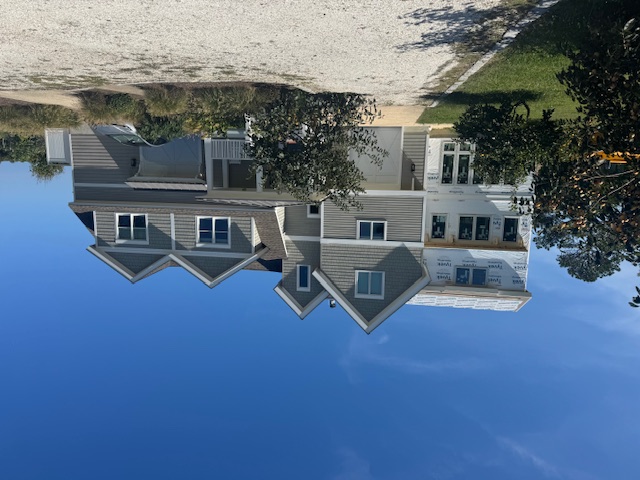
Why Delmarva Roofs Are Especially Prone to Moss and Algae
The Delmarva Peninsula provides many of the conditions that moss and algae prefer:
- Coastal humidity
- Frequent rain and damp mornings
- Salt air near coastal communities
- Mature trees around established neighborhoods
- Shaded roof slopes
- North-facing roof planes that receive limited direct sunlight
- Leaves and organic debris that retain moisture
In many Salisbury neighborhoods, large trees provide welcome shade for homes and yards. However, branches that extend over the roof can block sunlight and reduce airflow. Leaves may also accumulate in valleys and along roof edges, creating damp pockets where algae and moss can establish themselves.
This does not mean every roof with trees nearby has a problem. It means the roof should be evaluated based on its condition, not just its appearance. A few flat algae streaks on a newer roof are very different from thick moss lifting shingles on an aging roof.
When Is Cleaning Worth It?
Cleaning is often worthwhile when:
- The growth is limited and the shingles remain flat
- The roof still has substantial granule coverage
- There are no active leaks or signs of damaged decking
- The roof has years of useful life remaining
- You want to improve the appearance before selling the home
- Shade and moisture sources can be corrected
Cleaning may not be the best investment when the roof is already near the end of its service life, has widespread granule loss, or has moss-related damage across multiple slopes. In those cases, cleaning may improve the appearance temporarily without addressing the underlying deterioration.
A professional inspection can help answer the practical question: Is the growth cosmetic, or is it contributing to roof failure?
At Peninsula Roofing Company, we provide free in-person inspections rather than relying only on drone images. Walking the roof allows an inspector to evaluate shingle edges, granule loss, flashing, valleys, moisture damage, and the condition beneath areas affected by moss.
The Safe Way to Clean Asphalt Shingles
Asphalt shingles should not be pressure washed or power washed.
High-pressure water can:
- Strip protective granules from the shingles
- Damage the shingle surface
- Force water beneath shingle tabs
- Loosen or break the adhesive seals
- Increase the risk of leaks
- Potentially conflict with manufacturer warranty requirements
The Asphalt Roofing Manufacturers Association’s guidance on algae, moss, and lichen recommends a low-pressure cleaning approach using an appropriate bleach-based solution, followed by a gentle rinse. The goal is to kill the growth without mechanically scouring the shingles.
Cleaning a roof also involves chemical handling, ladder safety, runoff protection, and the risk of slipping on wet surfaces. Steep roofs, two-story homes, fragile shingles, and widespread moss are best handled by an experienced professional. Any cleaning method should also be checked against the specific shingle manufacturer’s requirements.
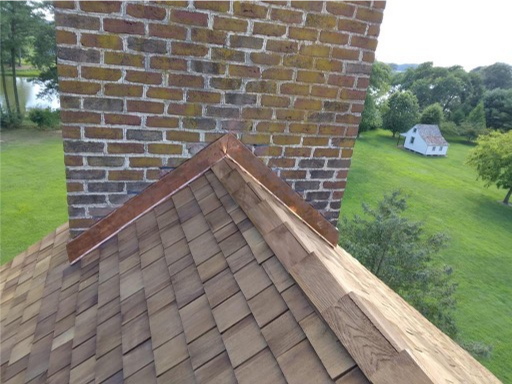
How to Prevent Moss and Algae From Returning
No prevention method can eliminate every algae spore or moss seed in a humid coastal climate. However, homeowners can reduce the conditions that allow growth to spread.
Trim overhanging branches
Pruning branches can improve sunlight and airflow across the roof. It can also reduce the amount of leaves and organic debris that collect on the shingles.
Keep gutters and roof drainage clear
Blocked gutters and downspouts can contribute to persistent moisture along roof edges. Keeping drainage paths clear helps rainwater move away from the roof and foundation.
Consider zinc or copper ridge strips
Zinc or copper strips installed near the roof ridge can release small amounts of metal ions when rainwater runs over them. Those ions can inhibit algae and moss growth on the roof below. These strips must be installed correctly and should be considered as part of the roof’s overall design: not as a substitute for correcting major shade or drainage problems.
Choose algae-resistant shingles when replacing the roof
When it is time for a new roof, homeowners can ask about algae-resistant shingles that use copper-infused granules. These materials can help reduce black streaking and may be especially appropriate for shaded, humid properties in Salisbury and throughout Delmarva.
Moss, Algae, Insurance, and Roof Warranties
Moss and algae do not automatically mean an insurance claim will be denied or a warranty will be voided. However, they can matter when the roof’s condition is being evaluated.
Insurance policies generally distinguish between sudden, covered damage and gradual deterioration or lack of maintenance. A roof with long-term moss growth, rot, or deferred repairs may receive different treatment than a roof damaged by a recent windstorm. Similarly, improper pressure washing or unauthorized cleaning products may create warranty concerns.
If you are preparing an insurance claim, replacing an older roof, or trying to preserve a manufacturer warranty, document the roof’s condition and use a cleaning method consistent with the shingle manufacturer’s requirements.
Get an Honest Answer About Your Roof
Moss and algae are common across Salisbury, MD, and the Delmarva Peninsula, but they do not all require the same response. Black algae streaks may be primarily cosmetic. Green moss that traps moisture and lifts shingle edges can be an active threat to the roof.
Peninsula Roofing Company has served Delmarva since 1947, providing residential and commercial roofing inspections, repairs, maintenance, and replacement services. Our team can inspect your roof in person and explain whether cleaning is appropriate, whether repairs are needed, or whether replacement makes more sense.
If you are comparing roofing companies in Salisbury, MD, searching for a roofer Salisbury homeowners can trust, or concerned about the condition of your Salisbury roofing, contact Peninsula Roofing Company to schedule a free roof inspection. We will help you determine whether the growth on your roof is cosmetic: or causing real damage.