

When you look up at your roof, you probably see shingles, flashing, and gutters. What you don’t see are the hundreds of years of trial, error, and hard-learned lessons baked into every nail and seam. Building codes often get a bad rap as “red tape,” but for those of us living on the Delmarva Peninsula, they are the thin line between a cozy home and a structural catastrophe during a coastal storm.
At Peninsula Roofing Company, Inc., we’ve been part of this evolution for over 75 years. Since 1947, we’ve watched codes transform from simple fire-safety rules into complex, science-based standards that dictate everything from how many layers of shingles you can have to how much wind your commercial roof can withstand.
To understand why your roofer in Salisbury insists on certain materials today, we have to look back at how we got here.
The Early Days: “Don’t Burn the Town Down” (1625–1788)
In the earliest days of American settlement, building codes weren’t about comfort or energy efficiency: they were about survival. In the 1620s, the biggest threat to a growing colony wasn’t the weather; it was fire.
Between 1625 and 1630, the city of Boston took a stand that would change American construction forever: they banned thatched roofs and wooden chimneys. Thatch, while cheap and plentiful, was essentially a giant pile of kindling sitting on top of your home. One stray spark from a fireplace could level an entire block. By mandating slate, tile, or metal, early regulators established the precedent that the community has a vested interest in what materials you put on your roof.
By 1788, the town of Old Salem (now part of Winston-Salem, NC) took it a step further by adopting the first formal written building code in the United States. Interestingly, because of the community’s Moravian roots, it was written in German. It focused heavily on fire prevention, ensuring that roofs were built to resist the spread of flames between neighboring buildings.
The Rise of Standardization (1905–1927)
As America industrialized, the patchwork of local rules became a headache for builders and insurance companies. In 1905, the National Board of Fire Underwriters released the first “model” building code. This was a massive turning point. For the first time, there was a blueprint that any city could adopt to ensure their buildings were safe enough to insure.
In 1927, the Uniform Building Code (UBC) was published. This moved the needle from purely “fire safety” to “structural integrity.” It began to address how roofs should handle weight and pressure: foundational concepts that Salisbury roofers still rely on today to ensure your home can handle heavy snow or high winds.
The Era of Regional Confusion (1940s–1990s)
By the mid-20th century, America had split into three major regional code bodies:
- BOCA (Building Officials and Code Administrators) in the Northeast and Midwest.
- ICBO (International Conference of Building Officials) in the West.
- SBCCI (Southern Building Code Congress International) in the South.
If you were a roofing company in Salisbury, MD, you were likely following BOCA standards. However, because Maryland sits at a geographical crossroads, these regional differences could sometimes lead to confusion for contractors working across state lines.
It was during this era, in 1947, that Peninsula Roofing Company, Inc. was founded. We grew up alongside these changing standards, navigating the shift from traditional felt paper and wood shakes to the high-performance asphalt and synthetic materials we use today.
The Unification: The ICC and the “International” Standard (1994–Present)
In the late 1990s, the three regional bodies finally realized that a unified set of rules would make everyone safer and more efficient. They formed the International Code Council (ICC). By the year 2000, they released the International Residential Code (IRC) and the International Building Code (IBC).
Today, the Maryland Building Performance Standards (MBPS) are based on these ICC codes. When we talk about our services, we aren’t just talking about aesthetic choices; we are talking about meeting: and exceeding: the IRC and IBC standards that protect your investment.
Modern Code Realities for Salisbury Homeowners
So, how do these 250 years of history affect your roof today? Here are three major ways modern codes impact roofing in Salisbury, MD:
1. The Two-Layer Rule
One of the most frequent questions we get is, “Can I just roof over my old shingles?” Historically, people would stack three or even four layers of shingles.
Modern codes (IRC R908.3.1.1) now generally prohibit more than two layers of roof covering. However, in many cases: especially in wind-prone areas like Delmarva: we strongly recommend a full tear-off even if you only have one layer. A new roof is only as good as the deck it’s nailed to. If we can’t inspect the wood underneath, we can’t guarantee the roof will stay put during a Nor’easter.
2. Wind Uplift and the Coastal Factor
Being close to the Atlantic and the Chesapeake Bay means Salisbury is subject to high-wind events. Modern codes have vastly stricter “wind uplift” requirements than they did 50 years ago. This dictates the type of nails we use, the patterns in which we drive them, and the specific wind-rating of the shingles or metal panels. For commercial roofing in Salisbury, MD, this often involves sophisticated testing to ensure the membrane won’t peel off like an orange skin during a hurricane.
3. Energy Codes and “Cool Roofs”
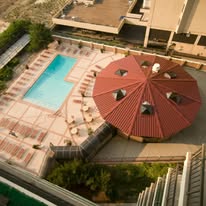
The codes of the 1600s were about fire; the codes of the 2000s are about the environment. The International Energy Conservation Code (IECC) now influences roofing choices. This has led to the rise of “cool roofs”: materials that reflect more sunlight and absorb less heat. In a humid Maryland summer, a code-compliant, energy-efficient roof can significantly lower your cooling bills.
4. Ice and Water Barriers
While we don’t get the snow of Buffalo, NY, Salisbury does experience freeze-thaw cycles. Modern codes require “ice barriers” (like Grace Ice & Water Shield) to be installed at the eaves. This prevents “ice damming”: where melting snow backs up under your shingles and rots your rafters.
Why Experience Matters
Following building codes isn’t just about passing an inspection; it’s about professional integrity. Since 1947, Peninsula Roofing has survived and thrived because we don’t cut corners. We’ve seen codes change, and we’ve always stayed ahead of the curve.
Whether you need a simple residential repair or a complex commercial replacement, you need a team that understands the “why” behind the rules.
If you’re concerned that your current roof might not be up to modern standards: especially if it’s more than 20 years old: it’s time for an assessment. Sean Fahey and the entire team at Peninsula Roofing are here to ensure your home or business is protected by the best that 250 years of American engineering has to offer.
Trust the Salisbury Experts
Don’t leave your safety to chance. When searching for roofing companies in Salisbury, MD, look for the name that has been a staple of the community for three-quarters of a century. We combine historical perspective with cutting-edge technology to give you a roof that stands the test of time.
Ready to upgrade your roof to 21st-century standards? Contact us today for a consultation. Let’s make sure your Salisbury roof is ready for whatever the next century throws at it.