

For property owners across Salisbury, MD and the greater Delmarva Peninsula, dealing with an aging roof is one of the most significant maintenance decisions you will face. Whether you manage a commercial warehouse, a retail storefront, or a sprawling residential property, discovering leaks, chalking membranes, or blistered seams immediately triggers a stressful question: Do I need a full roof replacement, or can I get away with a roof restoration coating?
At Peninsula Roofing Company, Inc., we have spent over 75 years serving Delmarva since 1947. Founded on core principles of honesty, technical expertise, and cost-effective solutions, our team: guided by owner Sean Fahey: believes in giving property owners straight answers. We don’t automatically recommend a costly full tear-off when a smart, engineered restoration can protect your building for another decade or more. At the same time, we will never apply a bandage coating to a roof that is fundamentally compromised.
In this comprehensive guide, we break down what roof coatings are, when restoration is the right move, when replacement is unavoidable, how costs stack up, and what unique regional factors property owners in Salisbury must consider.
What Is Roof Restoration and How Do Coatings Work?
Roof restoration involves applying a seamless, monolithic liquid membrane: typically silicone, acrylic, or polyurethane: directly over your existing commercial or residential roof system. Instead of tearing off old materials, sending tons of debris to local landfills, and disrupting your daily operations or home life, a professional coating system seals existing seams, flashings, and minor cracks while providing powerful UV protection.
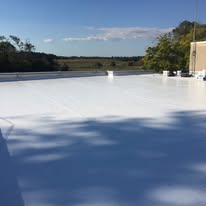
When applied correctly by experienced professionals, a high-performance coating system can extend the life of your roof by 10 to 15 years. It effectively acts as a renewal shield, transforming a weathering roof into a watertight, energy-efficient asset.
Silicone vs. Acrylic: Choosing the Right Chemistry
Not all roof coatings are created equal. Understanding the difference between the two most common types: silicone and acrylic: is essential for choosing the right solution for your building.
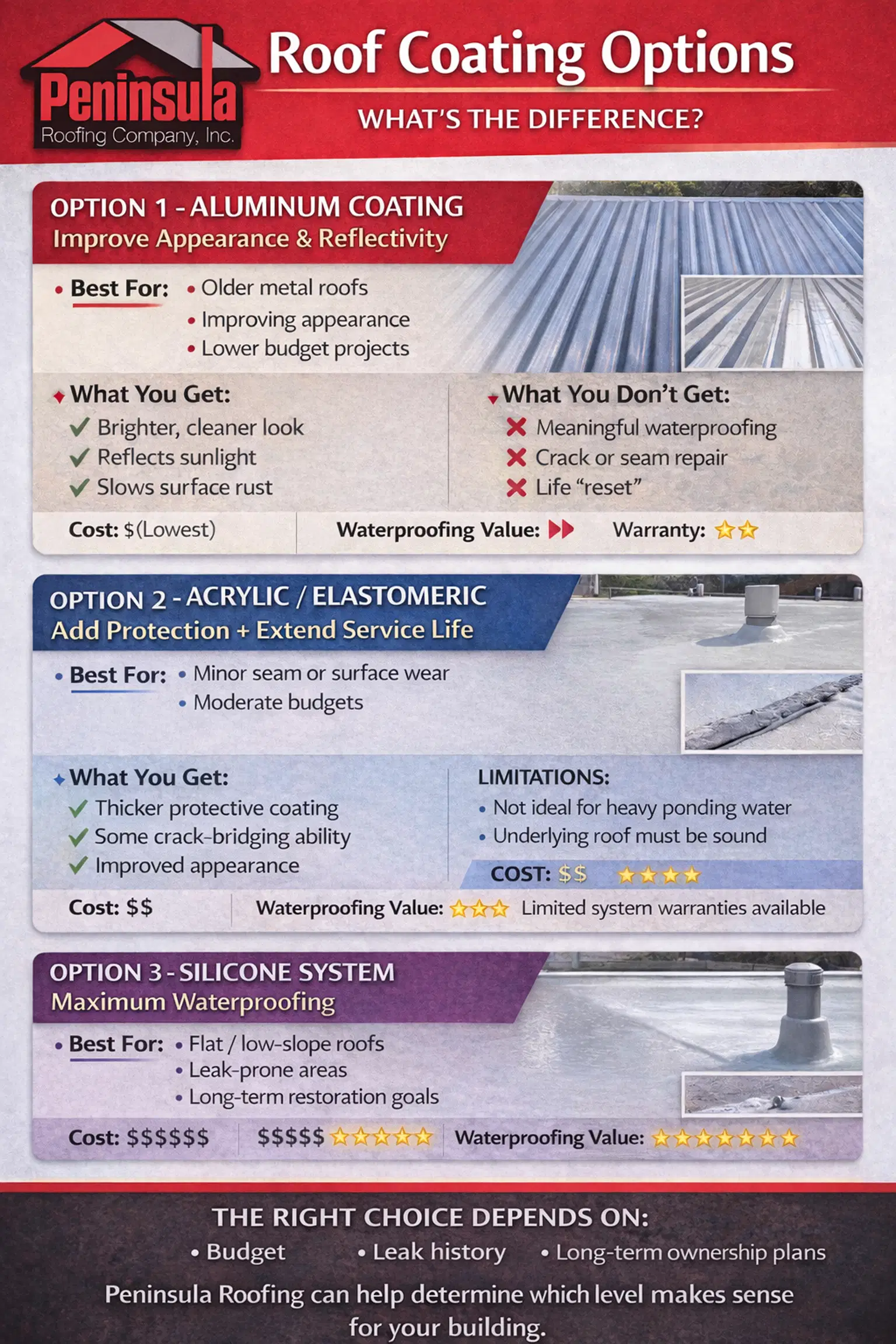
1. Silicone Roof Coatings
- How it works: Silicone is a moisture-cure coating that utilizes atmospheric humidity to cure into a solid rubber membrane.
- Key advantage: Exceptional resistance to standing or ponding water. Unlike other coatings that can soften and fail when water pools for extended periods, silicone stands up to puddles without breaking down. It also offers superior UV stability and chalk resistance.
- Best for: Low-slope or flat roofs with minor drainage challenges, industrial buildings, and commercial facilities in rainy or humid climates like Salisbury, MD.
- Investment: Generally more expensive upfront, but offers maximum longevity and weathering performance.
2. Acrylic Roof Coatings
- How it works: Water-based elastomeric coatings that cure through evaporation.
- Key advantage: Highly cost-effective, highly reflective (great for cool-roof energy savings), and easy to clean and re-coat down the road.
- Limitations: They are water-based, meaning they can degrade or lose adhesion if subjected to long-term ponding water.
- Best for: Sloped roofs, metal roofs with good positive drainage, or buildings where budget constraints make acrylic the most practical choice for a dry deck.
When Roof Restoration Makes Sense
Restoration is an outstanding, budget-friendly option, but it requires specific baseline conditions to succeed. Here is when restoration makes sense for your property:
- The Roof Is Structurally Sound: The underlying deck, whether metal, wood, or concrete, shows no signs of rot, severe corrosion, or structural sagging.
- Insulation is Dry: A professional core sample or moisture scan confirms that trapped moisture and saturated insulation are minimal (ideally less than 15% saturation).
- Good Membrane Adhesion: The existing single-ply membrane (such as EPDM, TPO, or PVC) or built-up roof is securely attached to the deck and has good surface integrity.
- Proper Drainage: The roof drains properly within 48 hours after rainfall, avoiding deep, stagnant ponding areas (unless using a ponding-resistant silicone system).
- Accessibility and Age: The roof is nearing the end of its weathering cycle (showing surface cracking, UV damage, or minor seam leaks) but has not suffered catastrophic, widespread failure.
When these conditions are met, restoration saves you substantial capital and keeps your building dry without the headache of heavy construction. Explore our commercial and residential services to learn more about how we evaluate building envelopes.
When Full Replacement Is Unavoidable
While we love saving our clients money through restoration, there are times when applying a coating is throwing good money after bad. A full roof replacement is necessary under the following conditions:
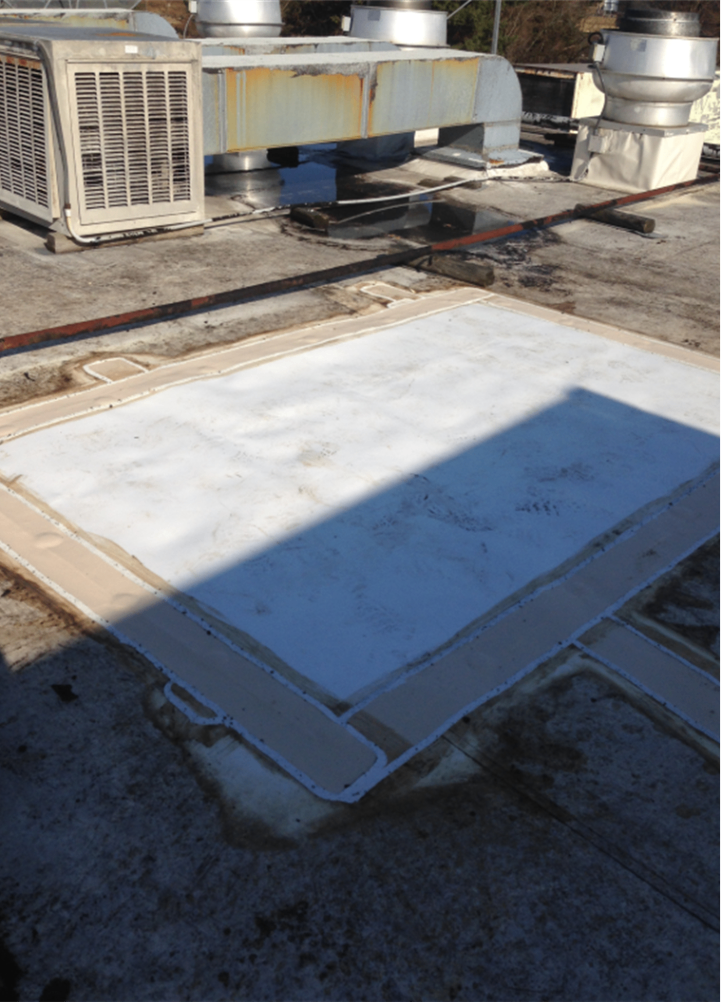
- Widespread Membrane Failure: The existing roof is severely blistered, split, brittle, or delaminating across large portions of the surface. Coatings cannot bond to a decaying, unstable substrate.
- Saturated Insulation & Deck Damage: Core testing reveals that moisture infiltration has soaked more than 25% to 30% of the underlying insulation or rotted the structural deck. Sealing the top will trap moisture inside, accelerating rot and mold growth.
- History of Failed Repairs: If a roof has been repeatedly patched over many years and continues to leak from multiple independent failure points, a complete system reset is required.
- Exceeded Lifespan: A roof that has aged well past its expected service life (e.g., 25–30+ years for many systems) lacks the structural integrity to support a restoration warranty.
Cost Comparison: Restore vs. Replace
When budgeting for capital expenditures, the financial difference between coating and replacement is dramatic:
- Roof Restoration / Coating: Typically runs $2.00 to $5.00 per square foot, depending on prep work, material thickness, and coating type. While it extends roof life by 10 to 15 years, it is often 40% to 70% cheaper upfront than a complete tear-off.
- Full Roof Replacement: Typically ranges from $7.00 to $22.00+ per square foot, depending on whether the project is residential or commercial, the materials chosen, insulation replacement, and disposal fees. However, a new installation resets the clock for 20 to 30+ years.
For businesses and homeowners looking to manage cash flow while maintaining high property standards, coating provides a strategic bridge. For deeper insight into roof lifespans in our region, check out our guide on how long a roof actually lasts in Salisbury.
The Delmarva Factor: Coastal Moisture and Salt Air
Operating on the Delmarva Peninsula brings unique environmental challenges. High humidity, heavy summer downpours, freeze-thaw cycles, and coastal salt air put relentless stress on building envelopes.
A critical step that inexperienced contractors often skip is surface preparation. Salt residue, chalking oxidation, atmospheric pollutants, and algae must be thoroughly power-washed and treated with specialized primers before any coating is applied. Without meticulous substrate prep, coastal moisture and salt deposits can cause delamination within just a couple of seasons. That is why working with local experts who understand Salisbury’s specific climate is non-negotiable.
Beyond Cost: The Hidden Benefits of Restoration
Choosing to restore rather than replace offers advantages that extend far beyond your immediate budget:
- Cool Roof Reflectivity: White and light-colored elastomeric or silicone coatings reflect up to 85% of solar radiation, significantly lowering attic temperatures and reducing HVAC cooling loads during scorching Delmarva summers.
- Reduced Landfill Waste: Keeping existing materials in place prevents thousands of pounds of roofing debris from clogging local landfills.
- Lightning-Fast Installation: Coatings can be applied with minimal equipment, zero loud tear-off noise, and no disruption to your business workflow or family routine.
Why a Professional Moisture Scan and Adhesion Test Are Mandatory
Never let a contractor quote a roof coating without performing diagnostic testing first. At Peninsula Roofing Company, Inc., our evaluation process always includes:
- Non-Destructive Moisture Scans (Infrared/Nuclear): To locate hidden pockets of trapped water within the insulation layers.
- Core Cuts: Physically inspecting cross-sections of the roof assembly to measure saturation levels and deck condition.
- Adhesion Pull-Tests: Applying small test patches of the intended coating to verify that the existing membrane will bond securely without peeling.
Partner with Salisbury’s Trusted Roofing Authority
Deciding whether to restore or replace your roof shouldn’t be a guessing game. As a family-owned business operating on Delmarva since 1947, Peninsula Roofing Company, Inc. prides itself on honest assessments, meticulous craftsmanship, and putting our clients’ long-term interests first. Whether you need a high-performance silicone coating or a robust new roof installation, Sean Fahey and our dedicated commercial and residential teams are here to help.
Ready to find out what your roof actually needs? Contact us today to schedule your free, no-obligation roof assessment, or visit our about us page to learn more about our 75+ year legacy across Salisbury, MD and the surrounding communities.