

If you’ve lived in Salisbury, MD, or anywhere across the Delmarva Peninsula for a season or two, you know the drill. A summer thunderstorm rolls off the Chesapeake, or a coastal nor’easter pushes up the Atlantic, and suddenly the quiet of your home is replaced by the rhythmic drumming of hail or the unsettling whistle of 60-mph wind gusts.
Once the clouds clear and you see a few shingles in your yard: or worse, a damp spot on your ceiling: the panic sets in. Your first thought is usually: “How much is this going to cost?” followed closely by, “Do I need a whole new roof, or can I just fix the damage?”
At Peninsula Roofing Company, Inc., we’ve been answering these questions for Salisbury homeowners since 1947. With over 75 years of experience serving the Delmarva area, we’ve seen every type of storm damage imaginable. The truth is, you don’t always need a full replacement, but there are specific rules: both legal and practical: that dictate your next steps.
In this guide, we’ll break down the “25% Rule” in Maryland, the role of your roof’s age, and how to navigate the insurance maze without getting taken for a ride.
Understanding Maryland’s 25% Rule
One of the most important factors in the “repair vs. replace” debate is something known in the industry as the 25% Rule.
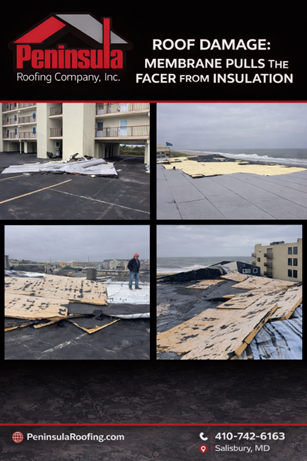
In many Maryland jurisdictions, including areas around Salisbury, building codes are strict about how much of a roof can be patched before a full tear-off is required. Generally, if more than 25% of the total roof surface area is damaged or needs repair, the code requires a full replacement of the entire roof system.
Why is this rule in place? It’s not just to make you spend more money; it’s a safety and structural integrity standard. Patching a quarter of a roof often leads to mismatched shingle heights, uneven weight distribution, and multiple “seams” where leaks are likely to develop in the future. If you try to skirt this rule, you might find that your local building inspector won’t sign off on the work, or worse, your insurance company may refuse to cover future claims because the roof wasn’t brought up to code.
The Age Factor: When is a Repair Just a Band-Aid?
Even if the damage is localized and falls well under the 25% threshold, the age of your roof plays a massive role in whether a repair is actually cost-effective.
If your roof is under 12 years old:
If your roof was installed recently and is still within its prime service years, a repair is almost always the best move. Modern shingles are durable, and matching the color and style of your existing roof is usually much easier. As long as the underlayment is sound and the “decking” (the wood underneath) hasn’t been compromised, a targeted repair by a professional Salisbury roofer will restore your home’s protection for a fraction of the cost of a replacement.
If your roof is 15+ years old:
This is where the math starts to change. Asphalt shingles in the Delmarva humidity and salt air typically have a functional lifespan of 20 to 25 years. If your roof is 15 years or older and suffers storm damage, you have to ask yourself: Is it worth spending $1,500 on a repair today when I’ll likely need a $12,000 replacement in three years?
Furthermore, older shingles become brittle. When a roofer tries to “tie in” new shingles to an old, brittle roof, the surrounding shingles often crack or lose their granules during the process. In these cases, a full replacement is often more cost-effective in the long run, especially if insurance is footing a portion of the bill.
Navigating the Insurance Maze: RCV vs. ACV
When you file a claim for storm damage in Salisbury, MD, the language in your policy determines exactly how much help you’ll get. There are two main types of coverage:
- Replacement Cost Value (RCV): This is the gold standard. RCV policies pay the full cost to replace your roof at today’s prices, regardless of how old the roof was. You pay your deductible, and the insurance covers the rest.
- Actual Cash Value (ACV): This policy only pays for the “depreciated” value of the roof. If you have a 20-year-old roof that needs $10,000 in work, the insurance company might argue the roof only had 10% of its life left and only cut you a check for $1,000.
Why You Need a Contractor at the Adjuster Visit
When the insurance adjuster comes to inspect your home, they are looking for specific evidence of “peril” (storm damage). However, adjusters are human, and they sometimes miss subtle signs of wind lift or hail bruising that a trained roofer would spot immediately.
At Peninsula Roofing, we always recommend having a trusted contractor present during the adjuster’s walkthrough. We can point out compromised flashing or hidden deck damage that might be the difference between a “denied” claim and a “full replacement” approval.
Beware the “Storm Chasers”
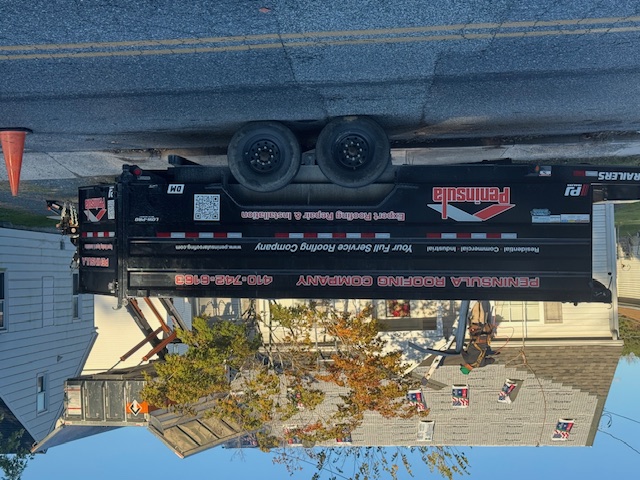
After a major weather event in Wicomico County, you’ll likely see out-of-state trucks roaming neighborhoods. These are “storm chasers”: contractors who follow hail and wind maps across the country.
They often promise “free roofs” and high-pressure sales tactics. The problem? Once the job is done and they’ve collected the insurance check, they move on to the next state. If your roof starts leaking six months later, their phone number is disconnected, and your “warranty” is worthless.
How to vet a roofer in Salisbury:
- Check for a local office: Do they have a physical address in Salisbury, MD?
- Ask for an MHIC License: In Maryland, any roofing contractor must be licensed by the Maryland Home Improvement Commission.
- Look for Longevity: Companies like Peninsula Roofing have been here since 1947. We aren’t going anywhere.
When a Repair is Perfectly Fine
We aren’t in the business of selling you things you don’t need. There are many scenarios where we will look at a roof and tell a homeowner, “You don’t need a replacement; a repair will do just fine.”
- Localized Shingle Blow-off: If a few shingles caught a high gust but the rest of the roof is sealed tight.
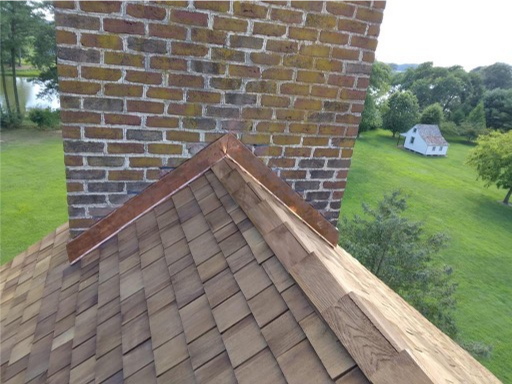
- Leaking Flashing: Often, leaks occur around chimneys or vents. These can usually be fixed by replacing the metal flashing and sealant without touching the rest of the shingles.
- Fallen Branch Damage: If a limb hit a specific spot but didn’t compromise the structural integrity of the roof deck.
When Replacement is Unavoidable
On the flip side, there are “red flags” that tell us a repair is a waste of your money:
- Widespread Granule Loss: If your gutters are filled with sand-like granules, your shingles have lost their UV protection and are failing.
- Decking Damage: If the wood underneath the shingles is soft, rotting, or sagging, the entire system must come off to fix the foundation of your roof.
- Multiple Layers: If you already have two layers of shingles (a “roof-over”), Maryland code generally prohibits adding a third. A full tear-off is the only legal option.
Trust the Delmarva Experts
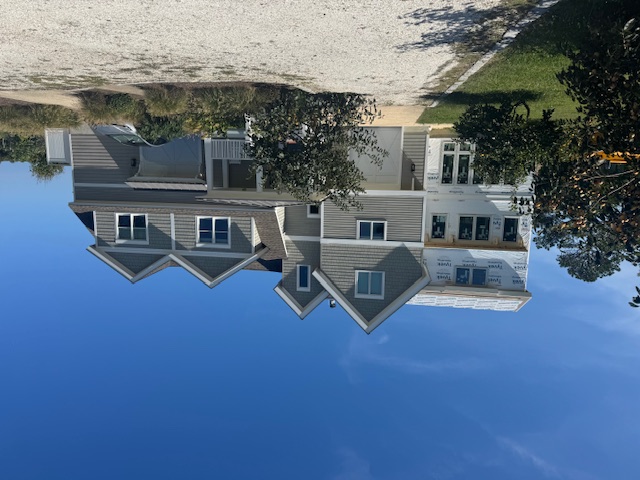
Storm damage is stressful, but you don’t have to navigate it alone. Whether you need a simple shingle patch or a comprehensive residential roof replacement, Peninsula Roofing Company, Inc. provides honest, expert assessments. We’ve served Salisbury and the surrounding Delmarva area for three-quarters of a century because we treat our neighbors with respect and provide budget-appropriate solutions.
If you suspect your roof has been damaged in a recent storm, don’t wait for the next rain to find the leaks. We offer free inspections and 24/7 emergency storm response to give you peace of mind when you need it most.
Contact Peninsula Roofing Company, Inc. today at 410-742-6163 or visit our contact page to schedule your professional inspection.