

If you spend much time on the road, you start to notice things that most people drive right past. For a roofer, that usually means staring at the top of every commercial building from Salisbury to Syracuse.
There is a very clear visual divide in roof colors. If you head north toward New England, the skylines of industrial parks are dominated by black roofs. But as soon as you head south toward the Carolinas and Florida, it’s a sea of white. It’s not just an aesthetic choice or a regional fashion statement: it’s a battle of thermodynamics.
At Peninsula Roofing Company, Inc., we get asked all the time: “Which is better? Black or white?” The answer, especially here on the Delmarva Peninsula, isn’t as black and white as the materials themselves. We live in what we call the “Transition Zone,” and making the right choice for your building requires looking at more than just the color of the membrane.
The Science of the Divide: EPDM vs. TPO
The two heavyweights in the commercial roofing world are EPDM (the black stuff) and TPO (the white stuff).
EPDM (Ethylene Propylene Diene Terpolymer) is a synthetic rubber membrane that has been a gold standard for decades. Because it’s naturally black, it is an absolute sponge for solar radiation. In the North, where the “heating load” (the energy needed to keep a building warm) is the primary concern, black roofs are a massive asset. They soak up the sun’s rays during those long, freezing winters, helping to take the edge off the heating bill.
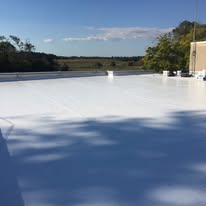
TPO (Thermoplastic Polyolefin) is the white, reflective alternative that has surged in popularity over the last twenty years. It works on the principle of “cool roofing.” Instead of absorbing heat, it reflects it. Research shows that white roofs can reflect approximately 75% of solar energy away from the building. On a standard 88-degree summer day, a black EPDM roof can easily soar to 170 degrees Fahrenheit. A white TPO roof? It usually tops out around 95 degrees. In the deep South, where air conditioning runs ten months a year, TPO is a no-brainer.
The “Transition Zone” Struggle
So, where does that leave us? Here in Salisbury and across the Mid-Atlantic, we aren’t exactly the North, and we aren’t exactly the South. We are firmly planted in the Transition Zone.
In a transition zone, the benefits of one color over the other start to blur. We have brutal, humid summers where our AC units are screaming for mercy, but we also have cold, snowy winters where the furnace is working overtime. If you pick a white roof to save on cooling in July, are you just going to pay that money back to the utility company in January when you lose that “passive solar” heating?
This is why choosing between roofing companies in Salisbury, MD matters. You need a partner who understands that the Mid-Atlantic climate doesn’t follow a single rulebook. We have to balance the seasonal extremes.
The Delmarva Reality: It’s What’s Underneath That Counts
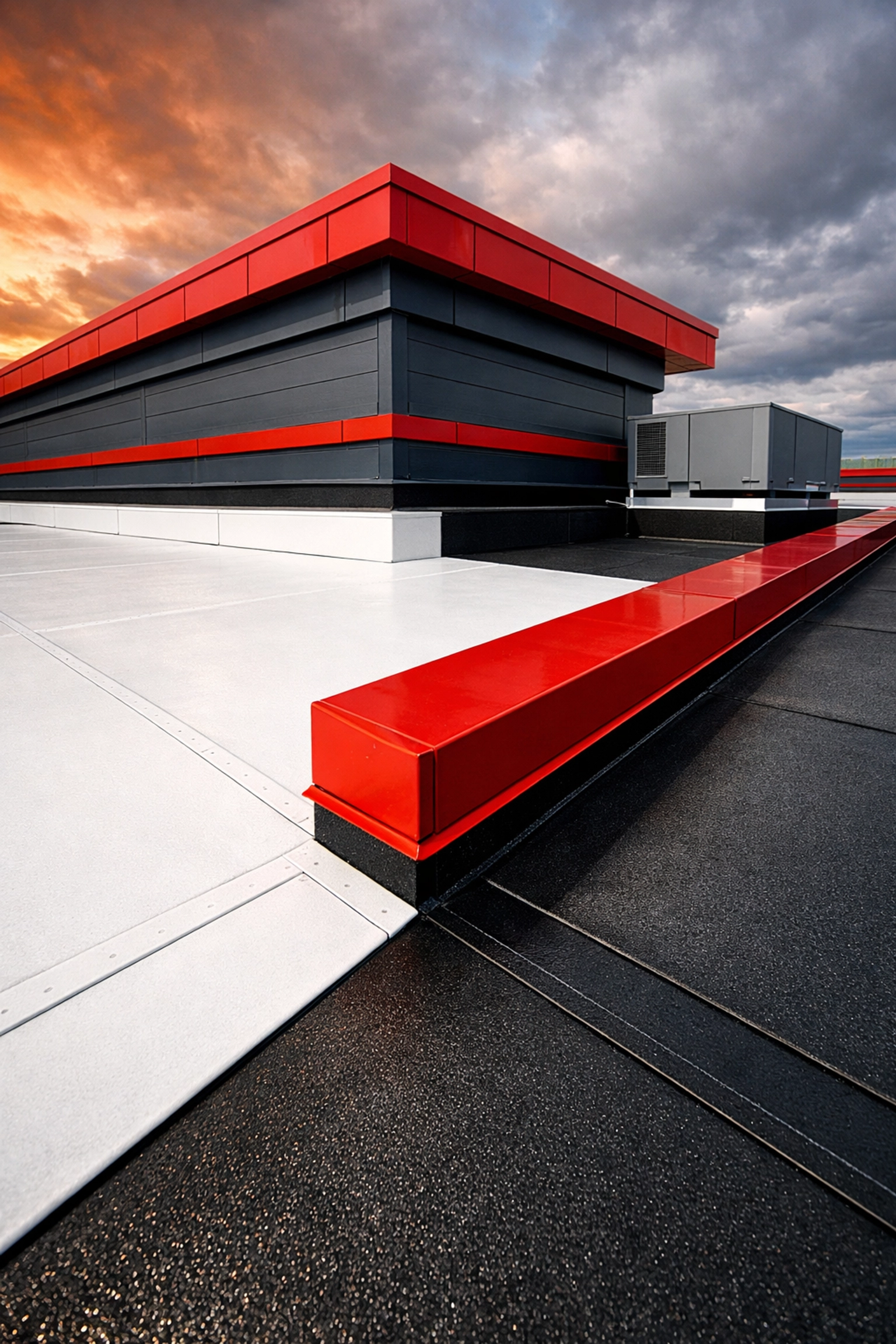
While the “Black vs. White” debate gets all the headlines, there’s a secret that many contractors won’t tell you: for most buildings on Delmarva, the color of the membrane is actually secondary to what’s happening underneath it.
The real hero of energy efficiency isn’t the color: it’s the insulation.
In our region, the R-value (the measure of thermal resistance) of your roof assembly is the most critical factor in your energy bill. If you have a high-performing, properly installed layer of polyisocyanurate (polyiso) insulation under your membrane, the color of the top sheet becomes much less significant.
Think of it like a thermos. If the thermos is well-insulated, it doesn’t matter if you paint the outside black or white; the coffee inside stays hot because the heat transfer is being blocked by the insulation, not the paint. On Delmarva, we focus on beefing up the R-value to ensure that whether it’s 100 degrees or 10 degrees outside, your building’s internal climate remains stable.
The Shift Toward White
Even though insulation is the primary driver of efficiency, we are seeing a definite trend. With our summers getting hotter and our winters seemingly getting milder and shorter, the “cooling load” is becoming the bigger financial burden for property owners in our area.
Because of this shift, we are installing more white TPO and PVC systems than ever before. Property owners are finding that the peak demand charges from electric companies in the summer: when everyone is running their AC at once: are often the most expensive part of their year. A white roof helps shave those peaks down, providing a more immediate return on investment.
Furthermore, white roofs help mitigate the “Urban Heat Island” effect. Even in a city like Salisbury, having several large commercial buildings with black roofs can actually raise the ambient temperature of the surrounding area. Moving toward reflective surfaces is a win for the building owner and a win for the local environment.
The Peninsula Way: Managing Thermal Performance
At Peninsula Roofing Company, Inc., we don’t just sell you a roll of rubber or plastic. We aren’t here to push a “one-size-fits-all” color. Our job is to manage your building’s thermal performance.
When we look at a project for salisbury roofing, we look at the whole picture:
- Building Use: Is it a cold storage facility? A retail space? A warehouse? A data center? (Data centers, for example, produce so much internal heat that they need cooling even in the winter, making white roofs a mandatory choice).
- Existing Infrastructure: What is the current R-value? Does the deck need more insulation to meet modern energy codes?
- Maintenance Goals: White roofs show dirt more easily and may require cleaning to maintain their reflectivity. Black roofs hide dirt but can suffer more from thermal expansion and contraction due to those 170-degree surface temps.
We’ve been serving the Delmarva area since 1947, and in those 75+ years, we’ve seen roofing technology evolve from hot asphalt and gravel to high-tech thermoplastic membranes. We know how these materials react to the salt air, the humidity, and the wild temperature swings of the Mid-Atlantic.

Maintenance and Longevity
Regardless of the color you choose, the key to a long-lasting roof is professional installation and consistent maintenance. A white roof that is covered in ponding water and algae isn’t reflective anymore, and a black roof with failing seams is going to cause a headache regardless of how much “winter heat” it absorbs.
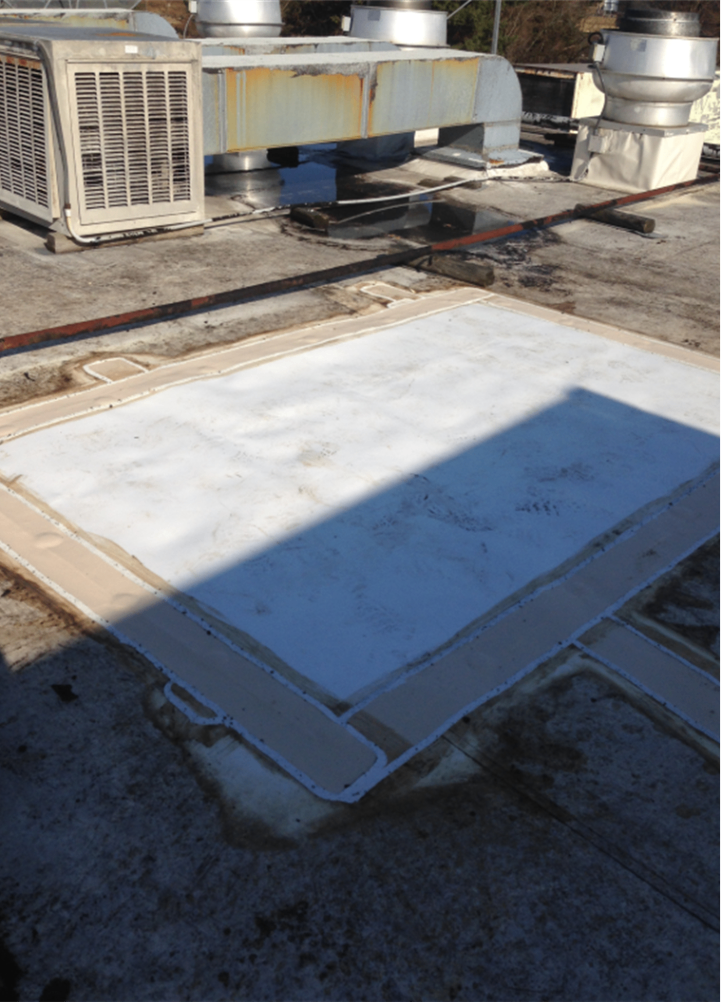
We specialize in roofing salisbury md by offering comprehensive maintenance programs. Whether you have an EPDM system that needs a few reinforced seam patches or a TPO roof that needs a specialized coating to extend its life, our team is equipped to handle the specific needs of commercial properties.
Making the Right Choice for Your Building
So, your observation was spot on: there is a geographic divide in roofing colors, and it’s driven by the simple physics of heat. But here on Delmarva, we are the exception to the rule. We live in the middle ground where expertise matters most.
If you are looking at your commercial roof and wondering if you should make the switch from black to white, or if you just need to know if your current insulation is doing its job, give us a call. We’ll help you navigate the “Transition Zone” and ensure your building is protected, efficient, and ready for whatever the Delmarva weather throws at it next.
You can learn more about our history and our commitment to the community on our about us page, or check out our full range of services to see how we can help your specific property.
At the end of the day, the best roof isn’t necessarily the whitest or the blackest: it’s the one that’s engineered correctly for the building it covers. That’s the Peninsula Way.