

The kids are heading back to school, routines are settling in, and summer’s busiest days are winding down. That makes September a good time to add one more item to your household checklist: a roof checkup.
For homeowners in Salisbury, MD, September offers a valuable window for roof maintenance. The intense summer heat is fading, but Delmarva’s hurricane season and severe-weather threats are not over yet. At the same time, there is still enough warm weather to complete many repairs before colder temperatures make some roofing sealants and adhesives harder to apply and cure properly.
A September inspection can help you find small issues before they become winter leaks, storm emergencies, or expensive structural damage. Here is what to check.
Why September Is an Important Month for Your Roof
Your roof has worked through months of heat, humidity, strong sunlight, thunderstorms, and occasional high winds. July’s heat alone can accelerate shingle aging, dry out sealants, and cause materials to expand and contract repeatedly.
September is also a practical time to prepare for the remaining weeks of hurricane season. Even when a storm does not make a direct impact on the Eastern Shore, remnants can bring heavy rain, strong wind, and flying debris to Salisbury and surrounding communities.
Finally, completing repairs early allows roofing materials time to seal before sustained cold arrives. Many roofing adhesives and sealants perform best when installed in moderate temperatures. Once temperatures regularly fall below approximately 40 to 50 degrees Fahrenheit, some products may not cure or bond as effectively. Exact requirements vary by product, so a professional should confirm the appropriate installation conditions.
1. Scan the Roof From the Ground
You do not need to climb onto the roof to begin a useful inspection. In fact, walking on a roof without the proper training and safety equipment can cause injuries or damage shingles.
Instead, walk around your home on a clear day and use binoculars to examine the roofline. Look for:
- Missing shingles
- Cracked or split shingles
- Curling, cupping, or lifted shingle edges
- Dark or bare patches
- Damaged ridge caps
- Loose material near the roof’s edges
- Moss or heavy algae growth
- Debris resting on the roof
Pay special attention to areas exposed to afternoon sun and sections beneath overhanging trees. Summer heat and ultraviolet exposure can make older shingles brittle. Storm winds can then lift or remove shingles that already have weakened seals.
A few damaged shingles do not automatically mean you need a full replacement. The extent of the damage, the roof’s overall condition, and the condition of the underlying decking all matter. That is why a proper inspection should focus on condition: not just age.
2. Inspect Flashing Around Roof Penetrations
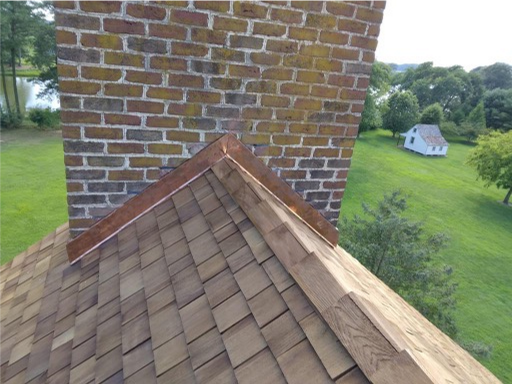
Flashing is installed where the roof meets another surface or where something passes through the roof. These areas are common sources of leaks because they must remain watertight while the roof and surrounding materials expand and contract.
Using binoculars from the ground, look at the flashing around:
- Chimneys
- Plumbing vents
- Attic vents
- Skylights
- Roof valleys
- Dormers
- Roof-to-wall transitions
Watch for rust, gaps, lifted metal, cracked sealant, or loose-looking edges. If you see staining on the exterior masonry near a chimney, that may also indicate a flashing or water-management problem.
Do not try to solve flashing issues with a quick layer of household caulk. The correct repair depends on the flashing design, the roofing material, and where water is entering. A professional roofer can determine whether the issue requires resealing, replacement of a flashing component, or a more extensive repair.
3. Look for Excessive Granules in the Gutters
Asphalt shingles are covered with protective mineral granules. These granules help shield the shingles from ultraviolet light and weather exposure.
Some granule loss is normal, especially after a new roof installation. However, excessive granules collecting in the gutters can be a warning sign: particularly when paired with visible bald spots or accelerated shingle wear.
During your September check, look inside the gutters for:
- Thick layers of loose granules
- Large piles near downspout openings
- Granules mixed with pieces of shingle
- Areas where the roof appears unusually smooth or discolored
Granule loss can occur because of age, storm damage, foot traffic, manufacturing issues, or general deterioration. It does not provide a diagnosis by itself, but it is a good reason to schedule a closer inspection.
4. Clean and Test the Gutters and Downspouts
Gutters are part of your roof drainage system. They collect runoff and direct it away from the walls and foundation. A gutter that is clogged, sagging, or disconnected can allow water to back up under the roof edge or overflow against the house.
Before fall leaves begin accumulating, check that:
- Gutters are free of leaves, sticks, and roofing debris
- Gutters are securely attached and not sagging
- Water flows toward the downspouts
- Downspouts are not blocked
- Extensions direct water approximately 4 to 6 feet away from the foundation
- Water does not pool beside the home after a rain
If you are comfortable doing so, flush the system with a hose from a safe position. Never lean an unsecured ladder against a gutter, and consider hiring a professional if the roofline is high or difficult to access.
5. Check the Attic for Hidden Problems
The attic can reveal roof problems before they become visible inside your living areas. On a dry day, use a flashlight to inspect the underside of the roof deck and the surrounding insulation.
Look for:
- Brown or yellow water stains
- Damp or compressed insulation
- Musty odors
- Mold or mildew
- Daylight coming through the roof deck
- Rust around fasteners or metal components
- Evidence of insects or other pests
- Blocked soffit vents
Check the attic again after a significant rain if possible. Some leaks only appear when wind pushes rain beneath shingles, around flashing, or through roof penetrations.
Ventilation is also important as the seasons change. Clear soffit vents and confirm that insulation has not blocked intended airflow paths. Proper intake and exhaust ventilation helps manage attic moisture and temperature, which can reduce condensation concerns during colder weather.
For more information about attic airflow, see our guide to ridge vents and box vents for Salisbury homes.
6. Trim Branches Near the Roofline
Tree limbs can scrape shingles, drop debris into gutters, and break during high winds. As a general rule, trim branches that are within about 6 feet of the roofline.
Do not attempt to remove large, heavy, or unstable limbs yourself. A qualified tree professional can reduce the risk of injury and prevent accidental damage to your roof, siding, vehicles, or utility lines.
Keeping branches away from the roof also allows more sunlight and airflow to reach the surface, which may help limit the moisture that contributes to moss and algae growth.
7. Check Vent Boots and Seals Before Cold Weather
Vent boots are designed to seal the areas where plumbing pipes pass through the roof. Over time, the rubber or flexible components can crack, shrink, or become brittle. The sealant around them can also separate.
From the ground, look for obvious gaps or deterioration around vent pipes. In the attic, check for staining or moisture near the corresponding penetration.
These small components can cause surprisingly persistent leaks. September is a good time to address them because repairs involving sealants or adhesives are generally easier to complete in moderate weather than after temperatures drop.
When to Call a Salisbury Roofing Professional
Contact a professional promptly if you find:
- Active leaks or dripping water
- Water stains that are growing
- Sagging roof decking or ceiling areas
- Widespread shingle damage
- Missing flashing
- Large amounts of granules
- Mold or damp insulation in the attic
- Damage after high winds, hail, or a severe storm
If you are searching for roofing companies in Salisbury, MD, look for a contractor who will inspect the roof in person and explain the findings clearly. A good inspection should help you understand whether your roof needs a targeted repair, maintenance, or replacement.
Peninsula Roofing Company has served Delmarva since 1947. Our team provides free, in-person roof inspections: not drone-only assessments: and offers honest repair-versus-replace guidance based on your roof’s actual condition. We serve residential and commercial properties throughout the region, and our 24/7 storm response team is available when a roof problem cannot wait.
You can also review our roofing, repair, maintenance, and storm response services or learn more about our experience serving Salisbury and Delmarva.
Schedule Your Back-to-School Roof Checkup
A new school year is a natural reminder to reset household routines. While you are organizing schedules, checking backpacks, and preparing for fall activities, take a few minutes to check your roof, gutters, attic, and surrounding trees.
Finding a problem in September gives you more time to make an informed decision, complete repairs in suitable weather, and prepare your Salisbury home for the storms and cold temperatures ahead.
For a free back-to-school roof checkup, contact Peninsula Roofing Company or call 410-742-6163. If you experience storm damage or an active roof leak, our team is available 24/7 for emergency response.
Frequently Asked Questions
Is September a good time to have a roof inspection in Salisbury, MD?
Yes. September provides a useful transition period between summer heat and colder weather. It also gives homeowners an opportunity to identify damage before the remaining hurricane season and winter weather create additional problems.
Can I inspect my roof myself?
You can perform a ground-level visual scan with binoculars and check the attic and gutters from safe locations. Avoid walking on the roof or using an unsecured ladder. A professional inspection is recommended for flashing, roof penetrations, decking, and areas that cannot be safely viewed from the ground.
Does granule loss always mean I need a new roof?
No. Granule loss can have several causes, and a small amount may not indicate a serious problem. Widespread granule accumulation, bald patches, leaks, and brittle or curling shingles deserve a closer evaluation.
Why should roof repairs be completed before cold weather?
Some roofing sealants and adhesives require moderate temperatures to bond and cure effectively. Completing this type of work before temperatures regularly fall below approximately 40 to 50 degrees Fahrenheit may provide better installation conditions. Product requirements vary, so your roofing contractor should confirm the proper temperature range.
Does Peninsula Roofing provide free roof inspections?
Yes. Peninsula Roofing Company provides free, in-person inspections and explains whether repair or replacement is the more appropriate option for the roof’s condition.