

As the July humidity settles over Salisbury, MD, most homeowners are focused on one thing: keeping the air conditioner running. But while you’re comfortable inside, a silent “oven effect” might be destroying your home’s most expensive asset from the inside out.
At Peninsula Roofing Company, Inc., we see it every summer. A homeowner calls us because their shingles look “old” despite being only ten years into a 30-year warranty. When we climb into the attic, we aren’t just met with heat: we’re met with a furnace.
If your attic isn’t properly ventilated, it isn’t just a storage space for holiday decorations; it’s a slow-cooker that is effectively “baking” your shingles. Here is why the Salisbury heat wave is a primary suspect in premature roof failure and what you can do to protect your investment.
The 160-Degree Reality: How Heat Destroys Asphalt
It’s a common misconception that roofs only wear out from the “outside in”: meaning rain, wind, and sun. While the Delmarva sun is intense, the damage often happens from the “inside out.”
On a typical 90°F July afternoon in Salisbury, a dark asphalt shingle can easily reach surface temperatures of 160°F or higher. Without proper airflow, that heat radiates downward into your attic. If that heat has nowhere to go, your attic can soar to 130°F to 150°F.
When an attic stays this hot for 10 to 12 hours a day, it begins to “cook” the underside of your roof deck. Asphalt shingles are engineered with organic oils and resins that keep them flexible and waterproof. Excessive, trapped heat accelerates a process called asphalt oxidation.
What Heat Does to Your Shingles:
- Volatilization: The essential oils in the asphalt literally evaporate.
- Brittleness: As the oils disappear, the shingles become dry and brittle.
- Granule Loss: Brittle shingles lose their grip on the protective ceramic granules that shield them from UV rays.
- Curling and Cupping: The structural integrity of the shingle fails, causing the edges to lift or the centers to sink.
In many cases, poor attic ventilation can shorten a shingle’s lifespan by 30% to 50%. A roof designed to last 25 years might start failing in just 12 if it’s being cooked every summer.

The IRC R806 Standard: The “Lungs” of Your Home
To prevent this thermal destruction, building experts and the International Residential Code (IRC) have established strict guidelines for roof ventilation. Specifically, Section R806 outlines the minimum requirements for attic airflow.
The “Golden Rule” of roofing is the 1/150 rule. This means you should have 1 square foot of net free vent area (NFA) for every 150 square feet of attic floor space. While some exceptions allow for a 1/300 ratio, in the high-humidity, high-heat environment of Salisbury, MD, we almost always recommend the more robust 1/150 standard.
However, volume isn’t everything. For ventilation to work, it must be balanced.
A balanced system requires:
- 50% Intake: Usually provided by soffit vents at the eaves.
- 50% Exhaust: Usually provided by ridge vents at the peak of the roof.
Without intake, your exhaust vents have no air to pull from. Without exhaust, the hot air simply sits at the peak, stagnant and destructive. At Peninsula Roofing, our owner, Sean Fahey, has been recognized as a voice of authority on this topic, emphasizing that a roof is a system: not just a covering. If the “lungs” (ventilation) aren’t working, the “skin” (shingles) will fail.
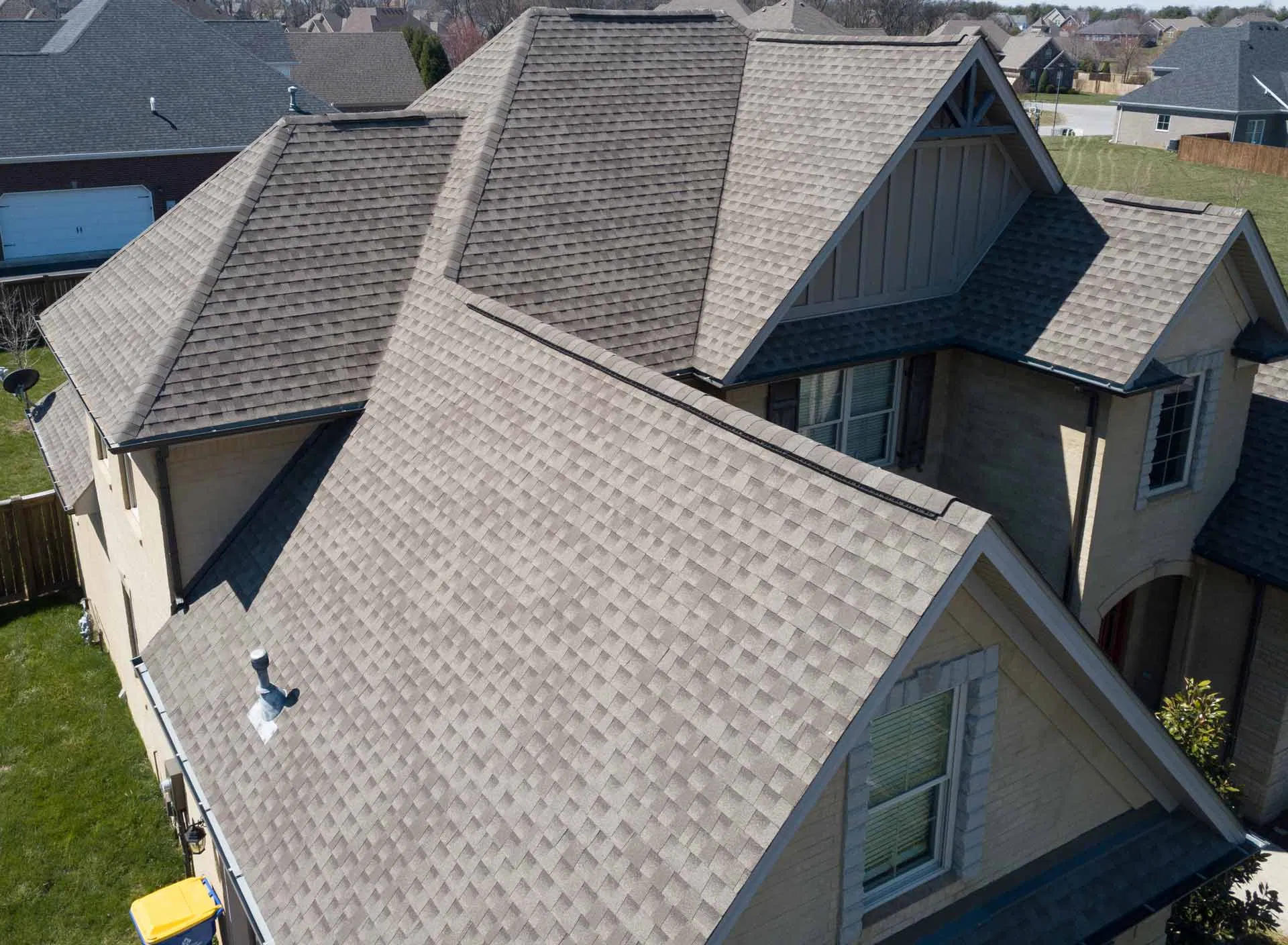
5 Signs Your Attic is Cooking Your Roof
You don’t always need to climb onto your roof to know there’s a problem. Your home will often tell you if the heat is becoming unmanageable.
1. The “Oven Blast” Test
If you open your attic hatch and feel a physical wall of heat that feels significantly hotter than the outside air, you have a ventilation problem. A healthy attic should generally stay within 10–20°F of the outdoor temperature.
2. Shingle Distortion
Look up at your roof from the driveway. Are the shingles curling up at the corners? Do they look like they are “cupping” or “blistering”? This is a classic sign of thermal shock and oil loss from excessive heat.
3. “Sand” in the Gutters
If you find piles of granules (they look like heavy dark sand) in your downspouts or gutters after a July thunderstorm, your shingles are shedding their protective layer. This often happens because the asphalt has become too brittle to hold them.
4. Sky-High Cooling Bills
If your HVAC system is struggling to keep the second floor cool, it’s likely fighting the 150-degree radiator sitting right above your ceiling. Better ventilation can often lower indoor temperatures and reduce your energy costs.
5. Uneven Indoor Temperatures
If one room is drastically hotter than another, it might be due to a pocket of stagnant hot air in the attic directly above that space.
Quick Fixes: What You Can Do Today
While some ventilation issues require professional intervention, there are a few things Salisbury homeowners can check themselves:
- Check Your Soffits: Walk around your house and look at the vents under your eaves. Are they painted over? Are they clogged with bird nests or dust? Use a shop vac or a soft brush to clear them.
- Baffle Inspection: If you go into your attic, ensure that your insulation isn’t shoved into the corners, blocking the air coming in from the soffits. You should see “baffles” (plastic or foam channels) that keep the air path clear.
- Trim the Trees: Overhanging branches don’t just drop leaves; they can block the natural wind flow that helps “pull” air through your ridge vents.
When to Call the Pros: The Ventilation Assessment
Sometimes, the problem is structural. Older homes in Salisbury often weren’t built with modern ventilation codes in mind. You might have plenty of exhaust but zero intake, or you might have “short-circuited” your system by mixing different types of vents (like combining a powered fan with a ridge vent).
As Sean Fahey and our team often advise, a professional ventilation assessment is the best way to add years to your roof’s life. At Peninsula Roofing, we don’t just look at your shingles; we look at the entire attic ecosystem. We can calculate your NFA, check for blockages, and recommend cost-effective solutions like adding more soffit vents or installing a continuous ridge vent.
Protect Your Salisbury Home This Summer
Salisbury’s July heat doesn’t have to be a death sentence for your roof. By ensuring your attic can “breathe,” you protect your shingles from premature aging, lower your energy bills, and maintain your home’s value.
Don’t wait until you see a leak or a curled shingle to take action. Peninsula Roofing Company, Inc. has been serving Delmarva since 1947, and we know exactly how our local climate affects different roofing materials. Whether you need a minor repair or a complete ventilation overhaul, we’re here to find a budget-appropriate solution for you.
Is your attic cooking your roof? Contact Peninsula Roofing today for a free attic ventilation assessment and keep your cool all summer long.