

For a commercial property owner in Salisbury, MD, the roof is often a “set it and forget it” asset: until it isn’t. Whether you are managing a retail storefront on North Salisbury Blvd or a sprawling warehouse near the bypass, understanding the lifecycle of your commercial roof is the difference between a controlled, predictable expense and a sudden, catastrophic financial hit.
A commercial roof isn’t just a lid on a building; it is a complex system of layers working in harmony to protect your inventory, your tenants, and your investment. Since 1947, Peninsula Roofing Company, Inc. has been navigating these lifecycles alongside local business owners. While every roof is unique, they all follow a predictable path. By understanding these four distinct stages, you can maximize your ROI and ensure your facility stays dry for decades.
Stage 1: The Foundation – Installation and the Early Years
The lifecycle of your roof begins long before the first roll of membrane is heat-welded or the first metal panel is crimped. It begins with the design and the selection of materials. In Salisbury, our climate presents specific challenges: high humidity, salt air from the nearby Atlantic and Chesapeake, and the occasional heavy snow load or tropical storm wind.
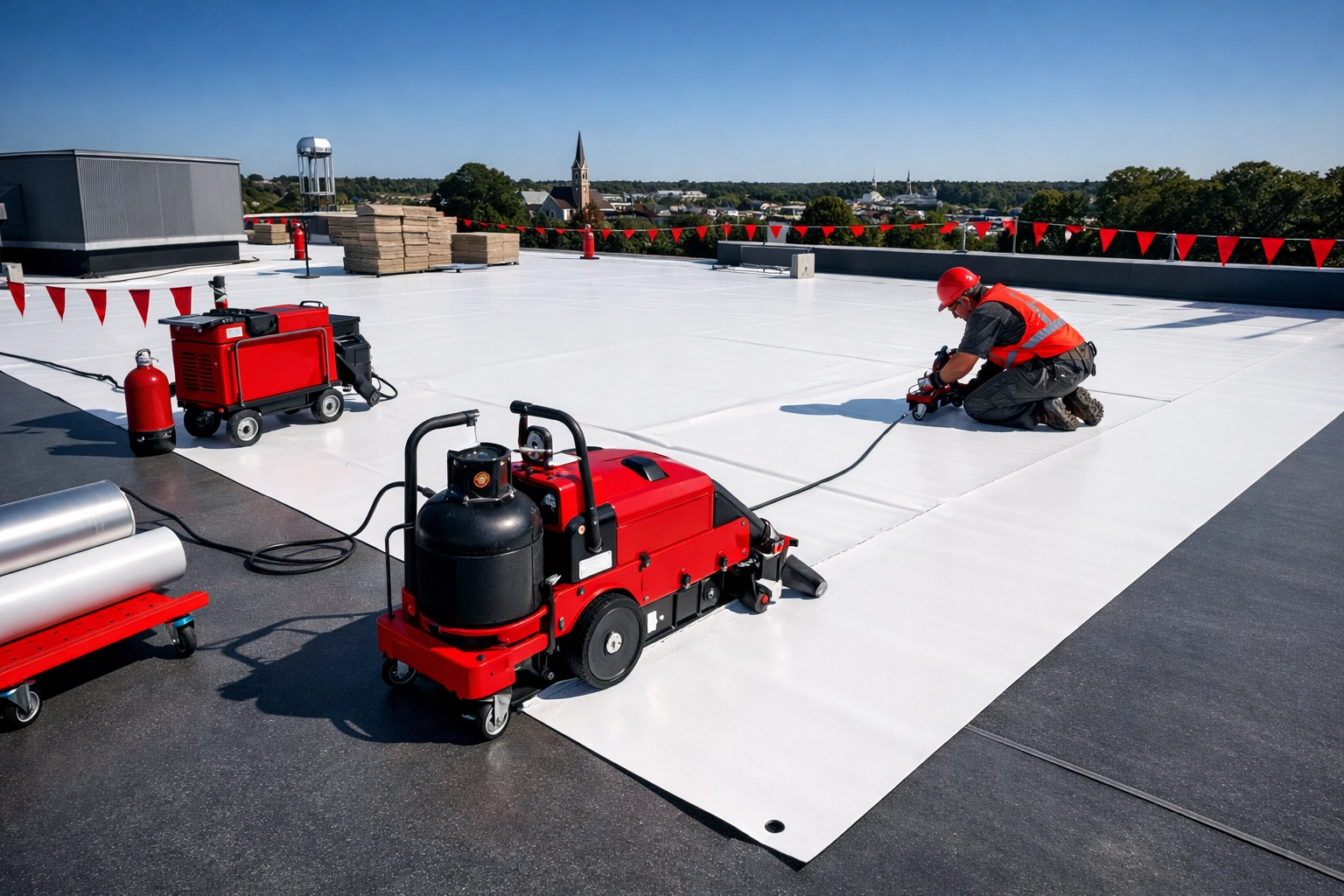
During the installation phase, the “foundation” of the roof’s future is laid. Most commercial roofs are expected to last between 20 and 30 years, but that clock only starts if the installation is handled correctly. For instance, TPO (Thermoplastic Polyolefin) and PVC (Polyvinyl Chloride) systems are popular in the Mid-Atlantic because of their reflective properties and chemical resistance. However, if the seams aren’t welded at the precise temperature or the flashing around HVAC units is hurried, the “30-year roof” might only be a 15-year roof.
This is the stage where you decide which material fits your building’s needs. Metal roofing, while a higher initial investment, can last 40 to 60 years. EPDM (rubber) is a durable, time-tested option that often reaches 20 to 40 years when properly installed by experienced roofing companies in Salisbury, MD. The goal here is a “zero-defect” start.
Stage 2: The “Gold” Years – Proactive Maintenance
The first 0 to 10 years of a commercial roof’s life are often called the “Gold Years.” During this time, the roof is flexible, the seams are tight, and the drainage systems are usually clear. This is also the stage where most Salisbury business owners make their biggest mistake: they stop looking at the roof.
Because the roof is new and under warranty, it is easy to assume it doesn’t need attention. However, proactive maintenance during this stage is what allows a roof to exceed its life expectancy. Minor issues: such as a loose piece of flashing from a windstorm, a clogged scupper, or damage caused by an HVAC technician dropping a tool: can be fixed for a few hundred dollars. If ignored, these small breaches allow water to enter the insulation, leading to mold and structural rot that costs thousands to remediate.
Top-tier salisbury roofers recommend at least two inspections per year: once in the spring to check for winter ice damage, and once in the fall to ensure drains are clear of debris before the winter rains and snow arrive. Think of this stage as the “oil change” phase of your building. You wouldn’t run a delivery truck for five years without an oil change just because the engine was new; your roof deserves the same logic.
Stage 3: The Middle Age – Management and Minor Repairs
As your roof hits the 10-to-18-year mark, it enters “Middle Age.” In Salisbury, the constant cycle of thermal expansion (the roof heating up in the summer sun and cooling at night) begins to take its toll. The membrane may start to lose some of its elasticity, and the sealants around penetrations (like pipes, vents, and skylights) might begin to dry out or crack.
During this stage, repairs become more frequent. You might notice small leaks after a heavy Delmarva downpour. This is the “Management Phase.” The key here is to determine if the repairs are localized or systemic. If the membrane is generally healthy but a few seams are popping, a simple repair can keep the roof performing well.
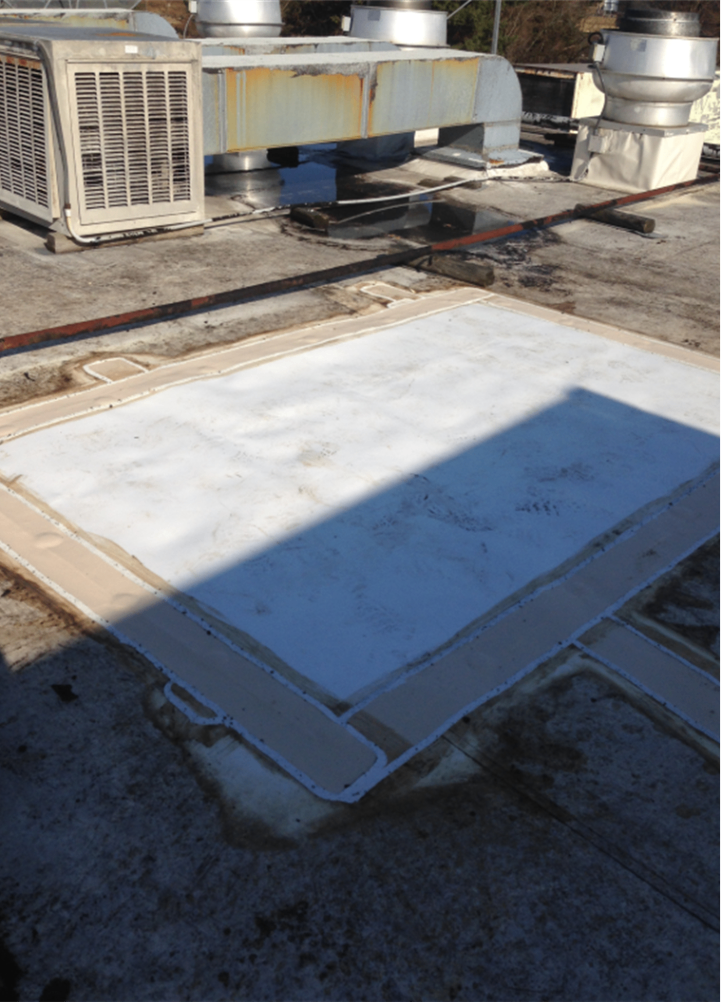
This is also the time to keep a close eye on your roof’s “ponding water”: areas where water sits for more than 48 hours after a rain. Ponding water acts as a magnifying glass for UV rays, accelerating the degradation of the roof material. Skilled roofing companies Salisbury, MD will look for these signs and suggest minor drainage adjustments or “crickets” to direct water toward the drains. If you manage these middle years well, you are setting the stage for a successful “End of Life” strategy that doesn’t involve a total tear-off.
Stage 4: The Crossroads – End of Life, Recover, or Replace
Eventually, every roof reaches a point where repairs are no longer cost-effective. You have reached the “End of Life” stage when the cost of annual repairs approaches the amortized cost of a new roof, or when the underlying insulation has become saturated with water.
In Salisbury, building owners at this stage have a few choices:
1. The Roof Recover
If your roof has only one layer of existing material and the decking and insulation are still dry, you may be a candidate for a “recover.” This involves installing a new membrane over the old one. It is a cost-effective way to get another 15 to 20 years out of your building without the mess and expense of a full tear-off.
2. Roof Coatings and Restorations
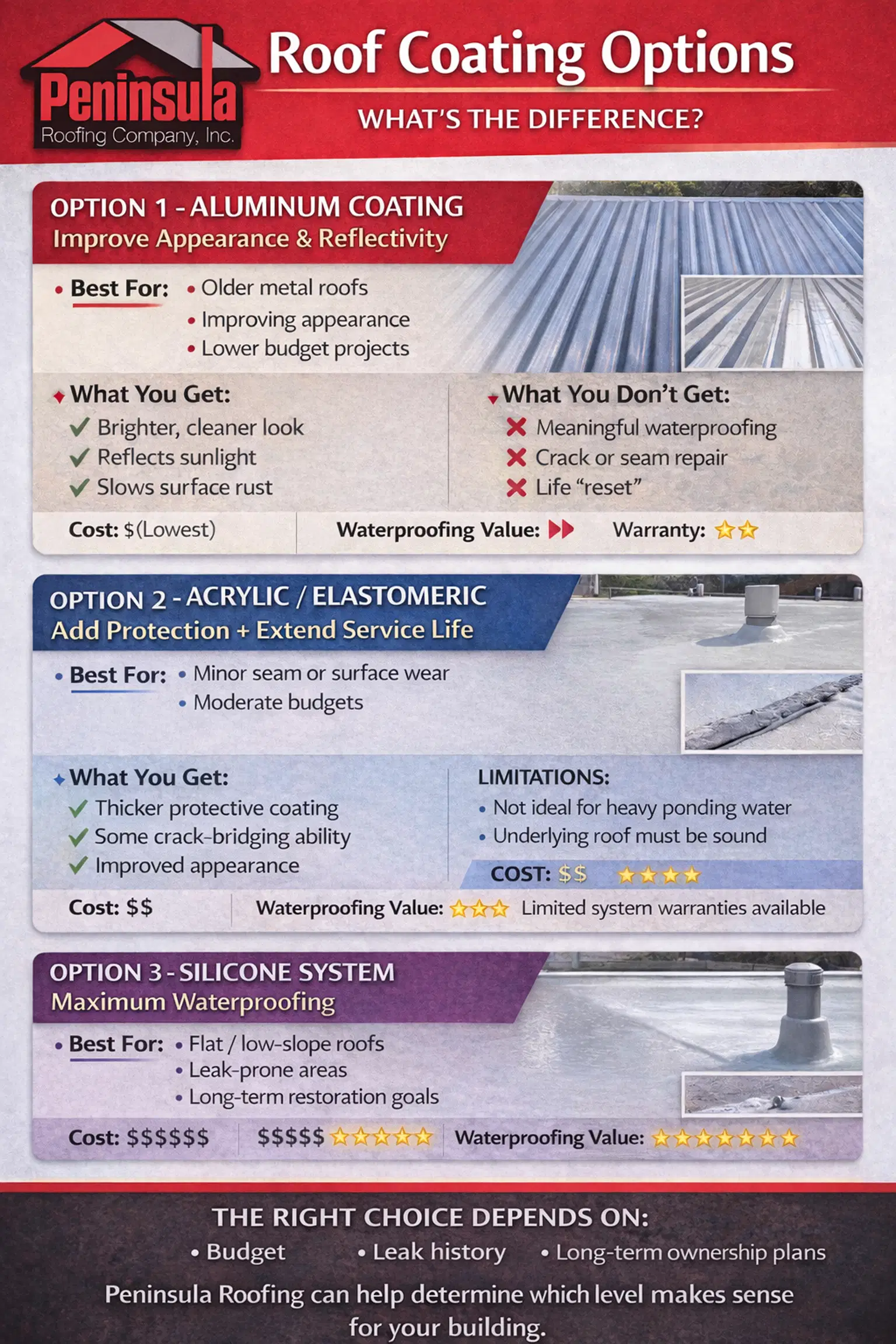
Modern technology has given Salisbury property managers a powerful middle-ground tool: silicone or acrylic coatings. If the roof is structurally sound but the surface is wearing thin, a liquid-applied membrane can create a seamless, waterproof barrier. This is often significantly cheaper than a replacement and can be classified as a maintenance expense for tax purposes.
3. Full Replacement
If the roof has multiple layers or significant moisture trapped in the insulation, a full replacement is the only responsible option. While this is a major capital expenditure, it allows you to upgrade your building’s energy efficiency by adding modern insulation (R-value) that wasn’t available when the building was first constructed.
Knowing When to Act
How do you know which stage your roof is in? It starts with an honest assessment. You can learn more about the specific services that address each stage of the lifecycle, but the most important thing is to have a record of your roof’s history.
Signs that your Salisbury building is approaching the end of its lifecycle include:
- Persistent Leaks: If the same leak appears even after multiple repairs.
- Rising Energy Bills: Saturated insulation loses its ability to keep heat in (or out), causing your HVAC system to work harder.
- Visible Damage: Blistering, “alligatoring” (cracking that looks like reptile skin), or large areas of standing water.
- Interior Signs: Water stains on ceiling tiles or a musty odor in the upper floors of your facility.
Why Local Expertise Matters
The Delmarva Peninsula is a unique environment. Our proximity to the ocean and the bay means our roofs deal with more wind and corrosive salt air than buildings further inland. Since 1947, Peninsula Roofing has seen how different materials hold up against Salisbury’s specific weather patterns. We’ve seen “30-year” roofs fail in 10 years because of poor maintenance, and we’ve seen well-cared-for roofs last 35 years or more.
Whether you are in the “Gold Years” of a brand-new installation or the “Middle Age” of an older building, the goal is always the same: keep the water out and protect the assets inside. By treating your commercial roof as a lifecycle to be managed rather than a problem to be ignored, you can save your business tens of thousands of dollars over the long haul.
For more information about our history and our commitment to the Salisbury community, feel free to visit our About Us page. Understanding your roof’s current stage is the first step toward a worry-free facility. Proper salisbury roofing isn’t just about the day the shingles or membranes go down( it’s about every day that follows.)