

Early November is a good time to pay attention to a flat or low-slope roof in Salisbury, MD, and across Delmarva. Fall rain can reveal drainage problems, while nor’easters bring wind-driven rain that tests seams, edges, and flashing. A low-slope roof is designed to drain gradually, but it should not hold water for days.
You don’t need to climb up to look for trouble. Check what you can safely see from the ground or inside the building, and leave roof access to a professional. These seven warning signs can help you recognize when it’s time to arrange an inspection.
1. Ponding water that remains after rain
Ponding is water that remains on the roof more than 48 hours after rainfall stops, in conditions suitable for drying. Low-slope roofs shed water slowly, but persistent standing water can point to clogged drains or scuppers, insufficient slope, settled insulation, or a deck that is deflecting.
The concern is more than appearance: standing water adds weight and can speed membrane wear, stress seams, and saturate insulation. The National Roofing Contractors Association also discusses the importance of proper roof slope and drainage in its roofing guidelines.
What to do: Before the next coastal storm, have leaves and debris cleared from drains and scuppers. If water remains after 48 hours, have the drainage and roof assembly evaluated; repeatedly clearing the drain won’t fix inadequate slope or structural deflection. As explained in our earlier post, “Rain’s Coming: What to Check on Your Roof Before It Hits,” that 48-hour mark is a practical warning sign.
2. Blisters or bubbles in the membrane
Blisters look like raised bubbles on the roof surface. They can form when moisture or gas is trapped beneath the membrane, particularly in built-up and modified bitumen systems. Some small, stable blisters may be monitored, but a blister that is growing, opening, or appearing alongside other damage deserves attention. It can indicate that the roof layers are separating or moisture is already inside the system.
What to do: Don’t puncture a blister or cover it with caulk. A roofer should determine whether the problem is isolated to the surface or points to a larger moisture issue.
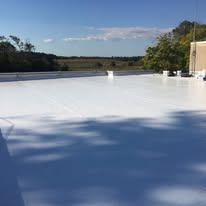
3. Alligatoring or deep surface cracks
Alligatoring is a reptile-skin-like pattern of cracks that can develop in exposed asphalt surfaces on built-up or modified bitumen roofs. Sun and weather gradually degrade the surface. As cracks deepen, they can provide paths for water to reach the layers below.
What to do: Have the roof assessed to establish how far the deterioration extends. Surface wear does not automatically mean the entire roof needs replacing, but a brittle membrane with deep, widespread cracking may be nearing the end of its service life.

4. Lifting or open seams
On single-ply roofs such as TPO, EPDM, and PVC, seams join sections of membrane. Depending on the system, the joints may be heat-welded, glued, or taped. Lifting edges, bubbles along a seam, or a visible gap can compromise the roof’s watertight surface.
Wind uplift puts added stress on seams and roof edges. That makes a Delmarva nor’easter, with sustained wind and wind-driven rain, a real test of any weak joint.
What to do: Arrange a professional assessment if you notice an open or lifting seam. Avoid applying a generic patch or caulk: the correct repair depends on the membrane and its installation, and incompatible materials can create more problems.
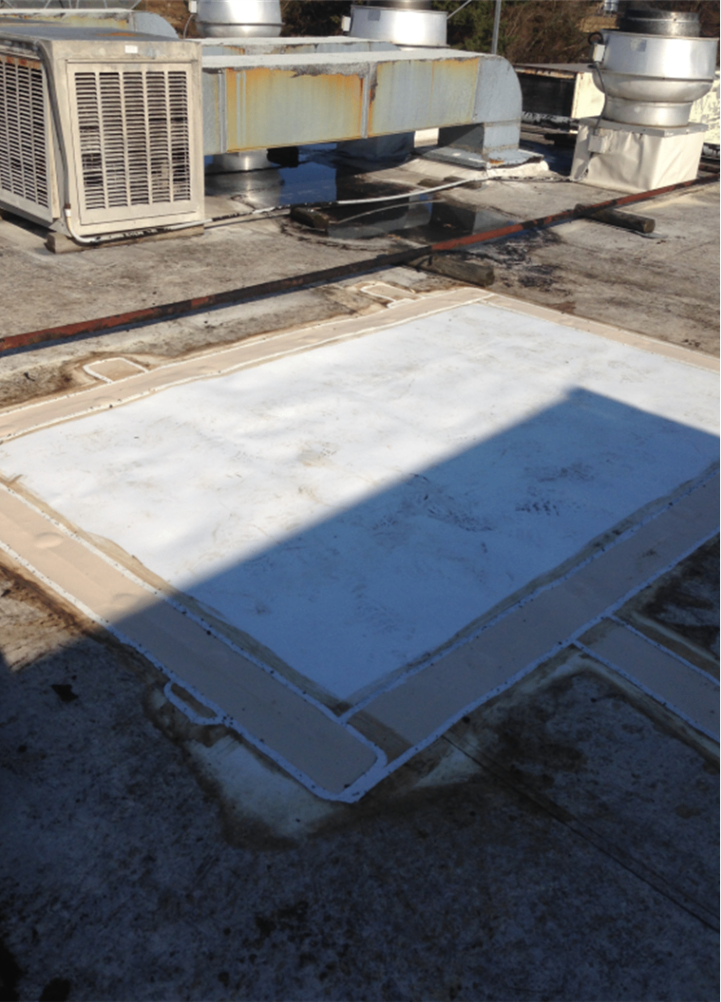
5. Open or lifted flashing around roof details
Flashing helps seal transitions and penetrations: places such as parapet walls, HVAC curbs, drains, vent pipes, and pitch pockets. Look for visible separation, loose or corroded metal, deteriorated sealant, or openings around equipment. These details are especially vulnerable to wind-driven rain.
A leak may begin at a flashing detail even when the surrounding roof surface looks sound. On low-slope roofs, small gaps around equipment and roof edges can let water into the assembly.
What to do: Don’t rely on a bead of sealant as a permanent fix. A roofing professional should identify how the flashing is meant to tie into the membrane and repair it using compatible materials.
6. Soft or spongy areas
A soft spot can mean water has saturated the insulation or compromised the decking beneath the membrane. It may also indicate a structural concern. This is the sign to treat most seriously: a weakened or saturated deck could fail underfoot.
What to do: Stop walking in the area and keep other people away. Don’t probe it with a tool or try to investigate from above. Contact a professional to assess the roof safely; a structural concern may also require an appropriate specialist. If water has reached the deck, repair options can become more extensive, so early assessment matters.
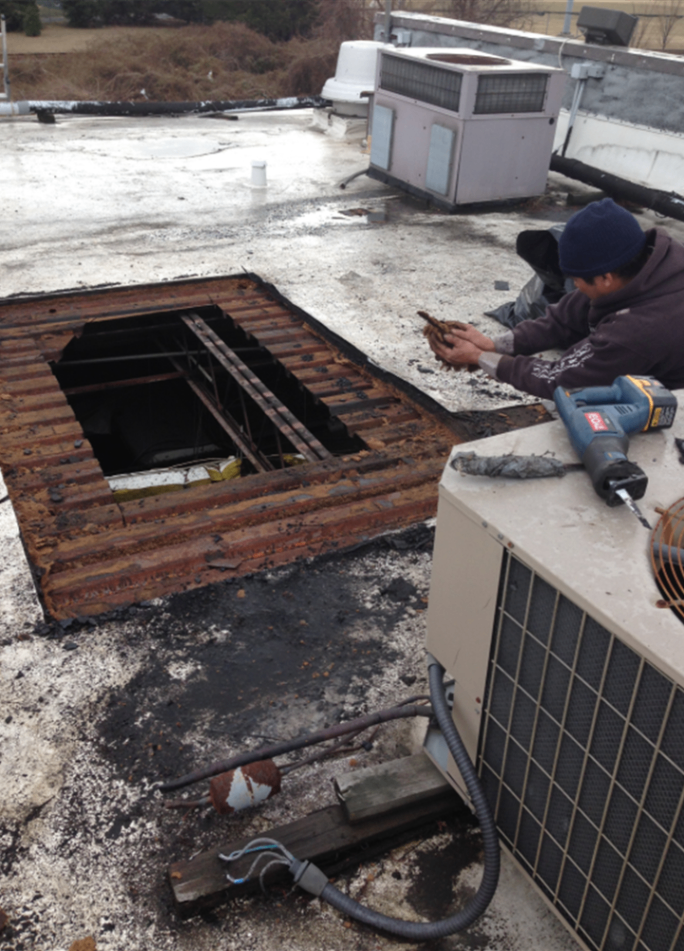
7. Stains, musty odors, or other signs inside
Ceiling or wall stains, peeling paint, musty odors, and mold can all indicate moisture. On a flat roof, water may travel sideways through wet insulation before it appears inside. That means the stain is often not directly below the leak.
What to do: Note when the stain or odor appeared and whether it changes after rain. If you can safely access the space, look for visible dampness without touching suspect electrical fixtures or wet materials. Share what you find with the roofer, but don’t assume the leak is directly above the stain. A professional roof inspection can help trace the source.
What not to do when you spot a problem
- Never climb onto a wet roof, and never walk on a soft area. Low-slope surfaces can be slippery, and a compromised deck may not support your weight.
- Don’t use asphalt-based patching products on EPDM or TPO. Asphalt can chemically damage these membranes, and an incompatible patch may make a proper repair harder.
- Don’t caulk a blister or seal a seam shut without diagnosing it. Trapping moisture or covering a symptom doesn’t resolve the underlying problem.
Catch problems before the next storm
Routine maintenance can keep a small, repairable issue from becoming a larger roof failure. Commercial property owners and facility managers can benefit from scheduled inspections that check drains, seams, flashings, and penetrations and document issues over time. Homeowners should also pay attention to low-slope porch, garage, and addition roofs.
Peninsula Roofing has served Delmarva since 1947, with dedicated commercial and residential teams. Our commercial team works with TPO, EPDM, and PVC membranes, as well as repairs and maintenance. Inspections are performed in person, not by drone, so the roof’s seams, flashing, and surface conditions can be assessed directly. We aim to recommend a cost-effective repair when it makes sense, rather than automatically suggesting full replacement.
If you’ve noticed ponding, a leak, or another warning sign, contact Peninsula Roofing to schedule a free in-person inspection before the next coastal storm. For urgent roof problems, the team is available 24/7.