For many business owners and property managers in Salisbury, MD, the roof is the most expensive asset they rarely think about. Unlike residential roofs with their steep slopes and visible shingles, commercial roofs are often flat, hidden behind parapet walls, and out of the daily line of sight. This “invisible” nature leads to a dangerous cycle of neglect.
At Peninsula Roofing Company, Inc., we’ve been serving the Delmarva area since 1947. Over these 75+ years, our dedicated commercial team has seen it all. We’ve seen small leaks turn into structural failures and minor maintenance lapses void million-dollar warranties. If you want to protect your investment and avoid the common pitfalls that plague commercial roofing in Salisbury, MD, this guide is for you.
Here are the seven most common mistakes we see, and: more importantly: how you can fix them before they cost you a fortune.
1. The “Out of Sight, Out of Mind” Trap
The most common mistake is simply forgetting the roof exists until water starts dripping onto a warehouse floor or an expensive piece of retail inventory. Because commercial roofs in Salisbury are often flat, you can’t see problems from the parking lot. By the time a leak is visible inside the building, the insulation is likely already saturated, and the structural decking may be starting to corrode.
The Fix:
Stop waiting for a leak to tell you there’s a problem. Implement a “Proactive” rather than a “Reactive” mindset. You should be performing comprehensive roof inspections at least twice a year: once in the spring and once in the fall: to identify small issues like punctures, separated seams, or backed-up drains before they escalate.
2. Damage from Unqualified Foot Traffic
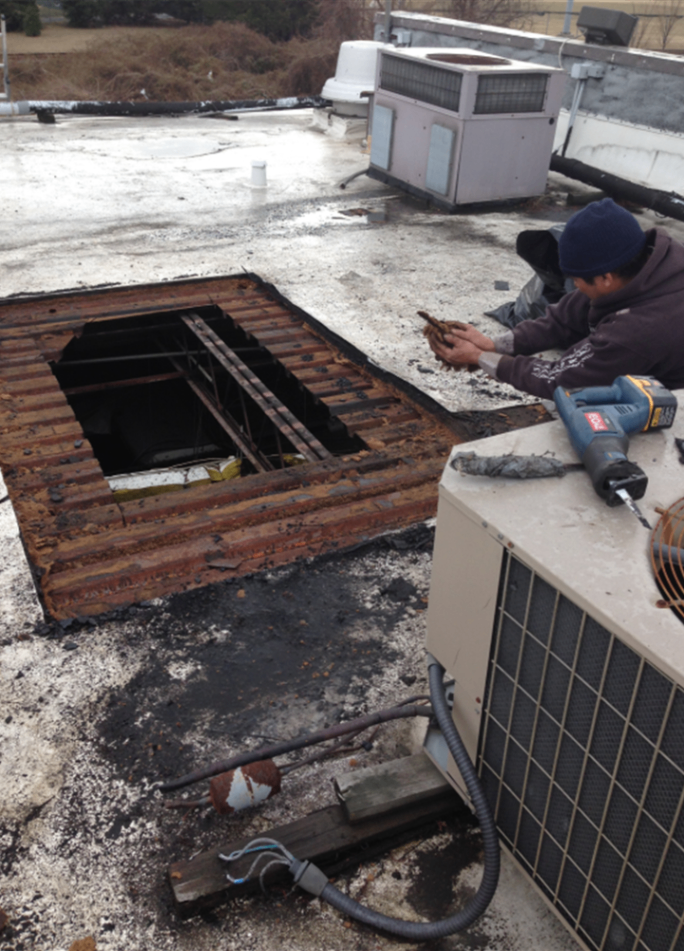
Your roof isn’t just a weather barrier; it’s a mechanical platform. HVAC technicians, solar installers, and satellite providers are constantly walking across your roof membrane to service equipment. While these pros are experts in their respective fields, they aren’t always experts in “roof preservation.” We frequently find dropped screws, heavy toolboxes dragged across TPO membranes, and sharp equipment panels left resting directly on the roof surface.
The Fix:
Establish a roof access log. Require every contractor who goes on your roof to sign in and sign out. Even better, have a representative from a trusted Salisbury roofing company perform a quick “walk-through” after major mechanical work is completed to ensure no accidental damage was left behind. You should also consider installing dedicated “walk pads”: reinforced yellow or gray paths: that guide technicians to the equipment while protecting the membrane.
3. Ignoring “Ponding” Water
In the world of commercial roofing, “ponding” is defined as water that remains on the roof for more than 48 hours after a rainstorm. While modern membranes are highly water-resistant, they are not designed to be submerged indefinitely. Standing water acts as a magnifying glass for UV rays, accelerating the degradation of the membrane. More importantly, water is heavy. Just one inch of standing water weighs about five pounds per square foot. Over time, this weight can cause the roof deck to “deflect” or sag, creating an even deeper pond.
The Fix:
If you notice standing water long after the clouds have cleared, you have a drainage or structural issue. Salisbury roofers can fix this by installing tapered insulation to create a slope toward the drains or by adding additional drains or scuppers in low spots. Never ignore a pond; it’s a neon sign for future structural failure.
4. Using the Wrong Repair Materials
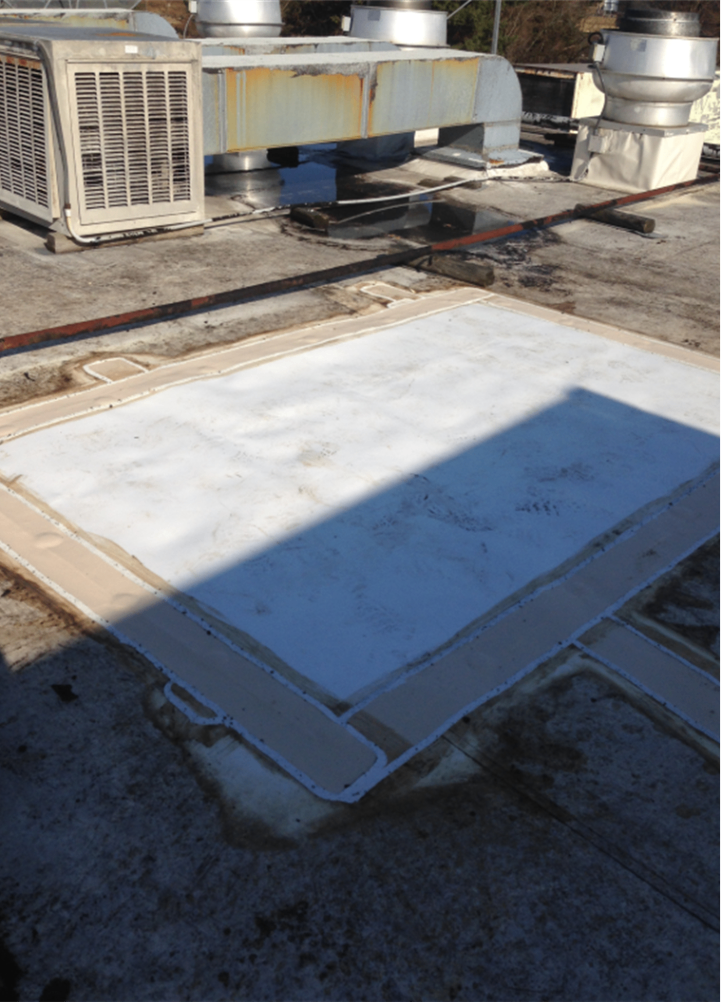
This is a “face-palm” moment for our commercial team. We often see well-intentioned maintenance staff attempt to fix a leak on a high-tech TPO or EPDM membrane using “residential-grade goop”: standard asphalt-based roofing cement or tar found at big-box hardware stores.
Asphalt and certain single-ply membranes are chemically incompatible. The oils in the asphalt can actually eat through the membrane, turning a small puncture into a massive chemical burn that requires a large, expensive patch.
The Fix:
Only use materials specifically designed for your roof type. If you have a TPO roof, it requires heat-welded TPO patches. If you have EPDM (rubber), it requires specific primers and adhesive tapes. If you aren’t 100% sure what your roof is made of, call one of the professional roofing companies in Salisbury, MD to perform the repair. A $200 professional repair is much cheaper than replacing a ruined section of the roof.
5. Clogged Drains and Scuppers
It sounds too simple to be a “major mistake,” but clogged drains are one of the leading causes of commercial roof collapses. In Salisbury, we have plenty of trees and seasonal debris. If your drains or scuppers are blocked by leaves, trash, or bird nests, the roof becomes a swimming pool during a heavy Delmarva downpour.
The Fix:
Maintenance of drains is the highest ROI activity you can perform. Ensure your “drain strainers” (the cages over the holes) are in place and clear of debris. Check your scuppers: the overflow holes in the side of the walls: to make sure they aren’t obstructed. A simple $10 cleaning can prevent a $10,000 structural repair.

6. Skipping Inspections and Voiding Manufacturer Warranties
Most commercial roofs come with a 15, 20, or even 30-year manufacturer warranty. However, many owners don’t realize that these warranties often contain a clause requiring regular professional maintenance. If you try to file a claim for a failed seam ten years from now, the manufacturer will ask for your maintenance records. If you haven’t had a professional inspection in a decade, they can: and will: deny the claim.
The Fix:
Keep a digital or physical “Roof History” file. Include your original warranty documents, photos of the roof, and receipts from every inspection or repair performed by a licensed contractor. Staying compliant with your warranty terms is essentially insurance for your insurance. You can learn more about our maintenance programs on our About Us page.
7. Lack of Long-Term Capital Budgeting
A commercial roof is a 20-to-30-year asset. One of the biggest mistakes property owners make is not planning for its eventual replacement. When the roof finally reaches its “end of life,” owners are often hit with a massive, unbudgeted capital expense that can cripple a business’s cash flow for the year.
The Fix:
Ask your roofing partner for a “Condition Assessment.” At Peninsula Roofing, we can provide an estimated remaining service life for your roof. If we tell you that your roof has five good years left, you can start setting aside the budget now, rather than scrambling for a loan when the big leak finally happens. Planning for replacement allows you to choose the best materials for energy efficiency, such as white silicone coatings that can significantly lower your cooling costs.
Why Experience Matters in Salisbury
Commercial roofing is a science. It requires an understanding of wind uplift, thermal expansion, and chemical compatibility. When you’re looking for roofing companies in Salisbury, MD, you need a partner who understands the local climate and has a proven track record.
Since 1947, Peninsula Roofing Company, Inc. has been the trusted name for local businesses. Whether you’re managing a small retail storefront on Salisbury Blvd or a massive industrial complex, our dedicated commercial team provides the expertise needed to avoid these seven mistakes.
Don’t wait for the next storm to test your roof. Contact us today for a professional assessment and let us help you turn your roof from a liability into a well-managed asset.