

Look, we love a good innovation as much as the next guy. But after 75+ years of fixing roofs in Salisbury and Ocean City, we’ve learned something important: not every “breakthrough” actually breaks through when you’re dealing with salt air, airport flight paths, and the kind of weather that rolls off the Chesapeake Bay.
If you’ve been reading roofing blogs lately, you’ve probably seen headlines about “smart roofs,” drones that can inspect your house in minutes, and solar shingles that pay for themselves. Some of it’s legit. Some of it’s straight-up marketing smoke. And a lot of it just doesn’t work the way it should here on the Eastern Shore.
So let’s cut through the noise and talk about what’s actually happening in 2026, and why the best roofing companies in Salisbury MD still send real people up ladders instead of relying on robots to do the job.
What’s Actually Real (And Worth Paying Attention To)
We’re not luddites. There are some genuinely cool advancements happening in the roofing world right now:
Smart Sensors and Moisture Detection: This one’s legit. Tiny wireless sensors can be embedded under commercial flat roof membranes to detect moisture before it turns into a ceiling disaster. For our big-box retail and warehouse clients, this is a game-changer. Instead of finding out about a leak when someone’s mopping up water in Aisle 7, you get an alert on your phone the second moisture breaches the top layer.
Solar-Integrated Roofing (BIPV): The clunky solar panels of 2015 are being replaced by Building-Integrated Photovoltaics, basically, solar shingles that actually look like a real roof. They’re getting more affordable and more efficient. If your Salisbury home has the right pitch, minimal shade, and a roof deck that can handle the added weight, it’s worth a conversation. But (and this is a big “but”) you need someone who understands structural load and electrical code, not just someone who watched a YouTube video.
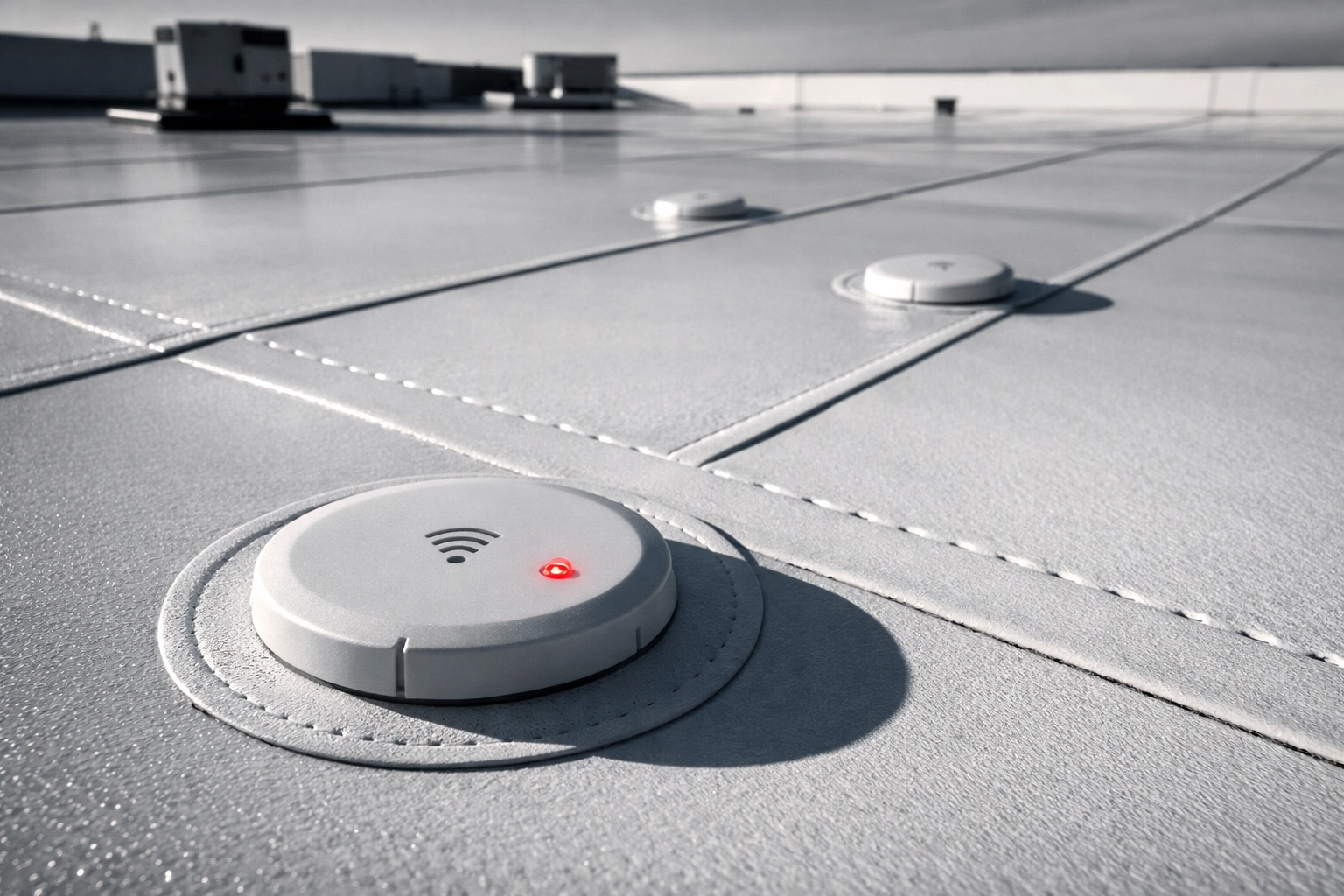
Cool Roof Technology: Reflective coatings and light-colored membranes that bounce heat away from your building aren’t new, but the formulations keep getting better. For commercial flat roofs in Ocean City, where summer sun can turn a rubber membrane into a frying pan, these coatings can genuinely cut your HVAC costs and extend your roof’s lifespan. We’ve seen roofs with proper cool-roof coatings last 60+ years when maintained correctly. As long as your insurance will let you use them to reset the life of your roof.
Self-Healing Materials: Following the old-school “self-healing” quality of coal tar pitch (which we wrote about in another post), new polymer-modified asphalts and single-ply membranes can “heal” small punctures when the sun heats them up. It’s not magic, it’s chemistry, but it works.
So yeah, the tech is real. But here’s where things get tricky.
Why “Silicon Valley Roofing” Doesn’t Always Fit “Eastern Shore Life”
A lot of these innovations are designed and tested in places like California, Texas, or the Research Triangle in North Carolina. Those are great places. But they’re not here.
Here’s what those tech developers don’t always account for:
- Salt Air: Ocean City isn’t just near the ocean, it is the ocean half the time when the wind picks up. Salt corrodes fasteners, eats through cheap flashing, and turns “lifetime” warranties into “5-year disappointments.” A shiny new sensor embedded in your roof membrane doesn’t mean squat if the fastener holding down the membrane rusts out in three years.
- Humidity and Freeze/Thaw: Salisbury gets wet. And then it freezes. And then it thaws. And then it gets wet again. That cycle is brutal on roofing materials. A “self-healing” shingle that works great in Phoenix might crack like an eggshell after two Delmarva winters.
- Local Building Codes: Maryland has its own rules. Worcester County has its own rules. If you’re in a flood zone or a historic district, the rules get even weirder. A roofer from out of state might not know (or care) that your “cutting-edge” metal roof needs a special fire rating because you’re within 500 feet of a marshy area.
This is why experience on this specific chunk of land matters more than a fancy gadget.
The Drone Dilemma: Why We Can’t Just “Fly Over It”
Let’s talk about the elephant in the sky: drones.
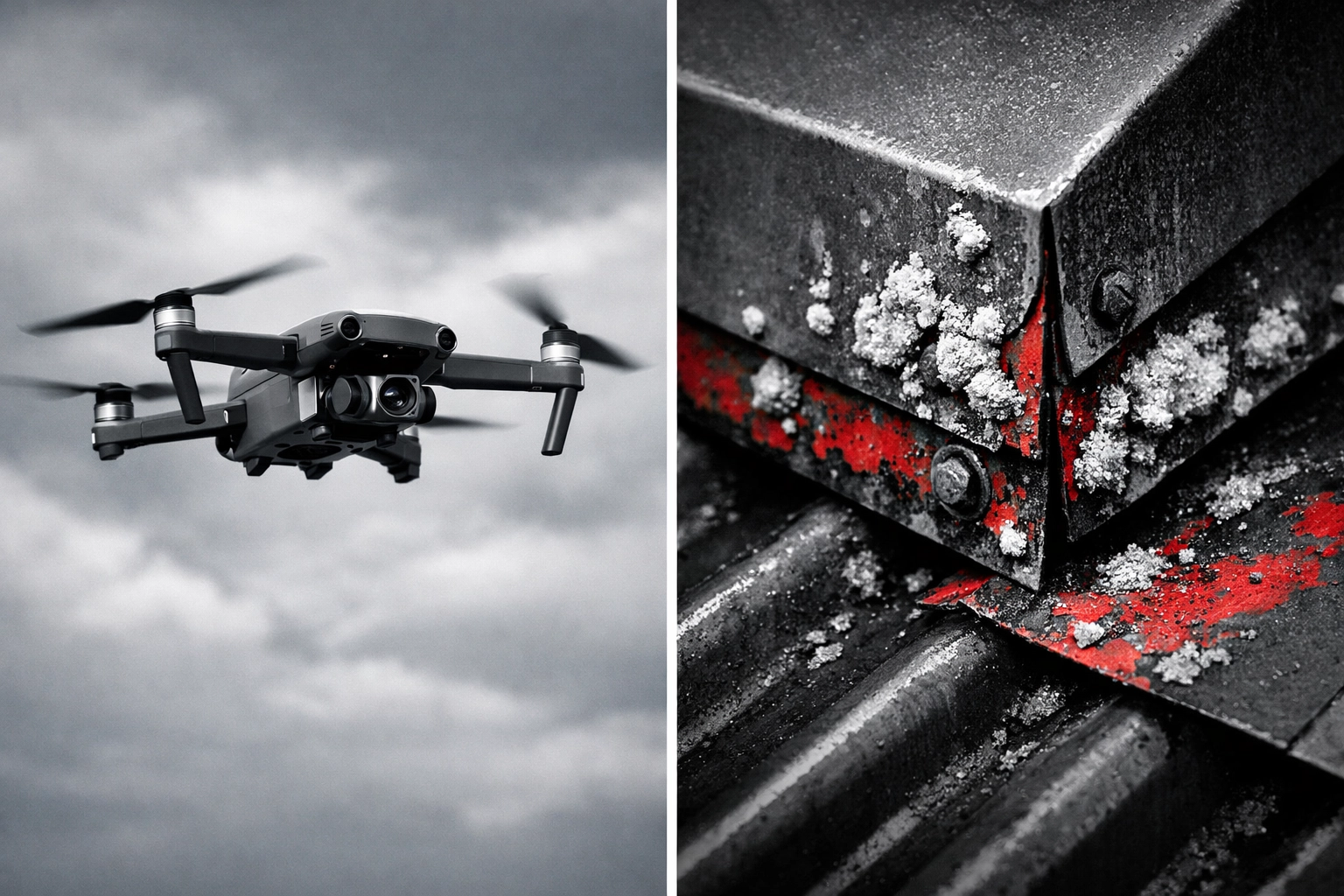
If you’ve been shopping around for Salisbury roofing quotes, you’ve probably heard some companies brag about their “drone inspections.” It sounds great in theory: no one has to climb your roof, you get high-res photos, thermal imaging can spot leaks, and the whole thing takes 20 minutes.
Here’s the problem: We can’t reliably use drones in most of Salisbury or Ocean City. And it’s not because we’re “behind the times.”
The Salisbury Issue: Airport Flight Paths
Salisbury-Ocean City Wicomico Regional Airport (SBY) has controlled airspace that covers a huge chunk of the area. If your home or business falls within that zone, we need special FAA clearance to fly a drone. That’s not a same-day thing. It can take days (or weeks) to get approval, and sometimes we just don’t get it at all.
The Ocean City Issue: Wind, Regulations, and Seagulls
Ocean City has tight drone restrictions, especially near the boardwalk and high-rise condos. Add in the fact that coastal winds regularly gust over 25 mph (which grounds most consumer drones), and you’ve got a recipe for a very expensive paperweight sitting in the truck.
Oh, and the seagulls. Those birds are aggressive. We’ve heard stories from other roofers in OC who’ve had drones dive-bombed mid-flight. Not worth the risk.
The Bottom Line on Drones
We do use drones when it makes sense, on large commercial jobs outside restricted airspace, or when we need thermal imaging on a massive warehouse roof. But for 90% of residential jobs in Salisbury and Ocean City? A guy with a ladder, a harness, and 20 years of experience is faster, safer, and way more accurate.
Why Your Roof Still Needs a Human Pair of Boots
Here’s what a drone can’t do:
- Feel the decking. A 4K camera can’t tell you that the plywood under your shingles is “spongy” because moisture has been sitting there for six months. A technician walking on the roof can feel it instantly.
- Do a pull test on fasteners. On a commercial flat roof, we literally grab the membrane and tug on the fasteners to see if they’re secure. A drone hovering 30 feet up can’t do that.
- Spot corrosion early. Salt-air corrosion on metal flashing starts as a tiny white bloom that you can only see up close. By the time it’s visible from a drone camera, it’s already eating through the metal.
- Make judgment calls. Is that crack in the chimney flashing something we can seal, or does the whole thing need to be replaced? That’s a judgment call that comes from experience, not an algorithm.
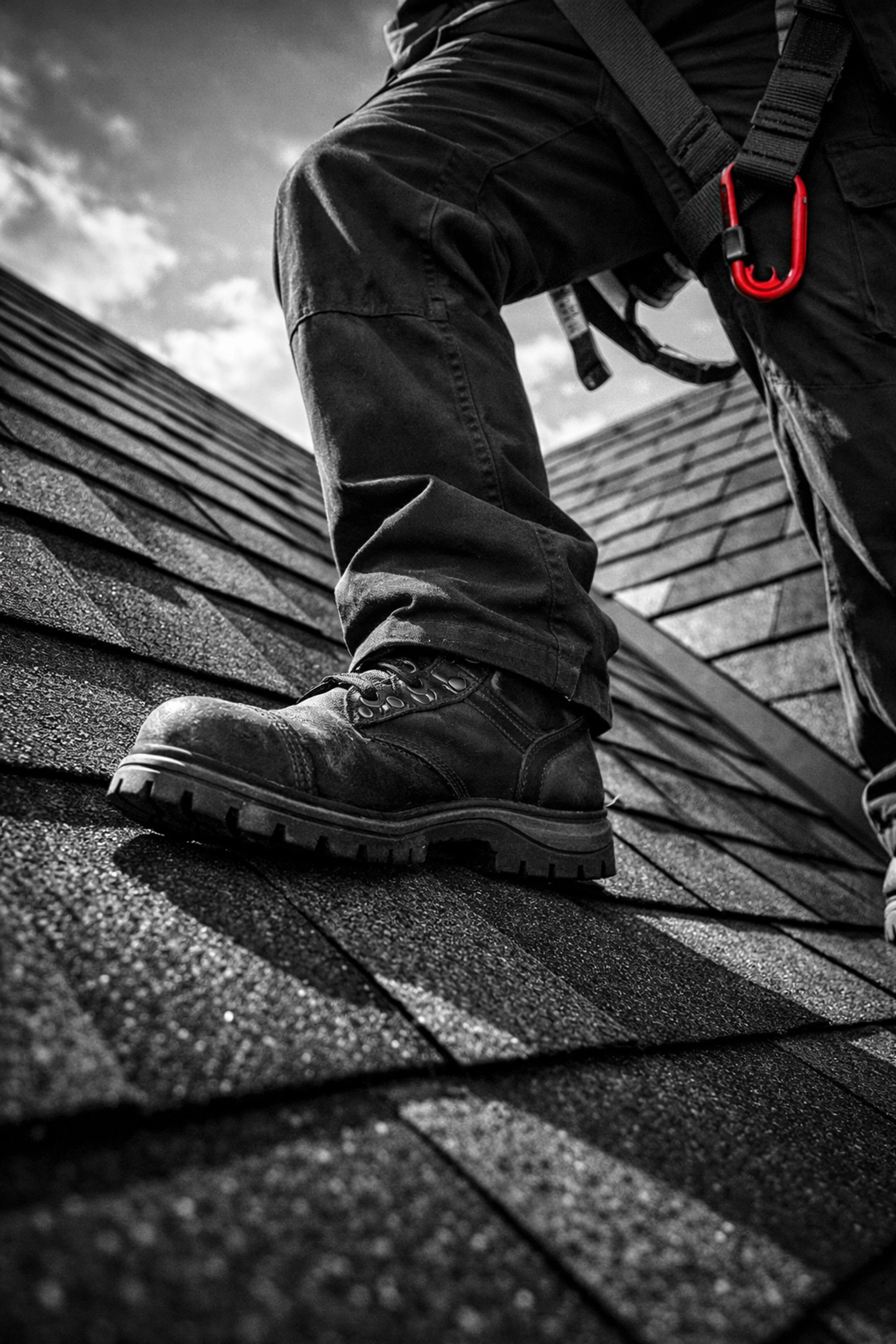
We’ve been doing this since 1947. That’s 75+ years of boots on roofs, hands on decking, and eyes on flashings. We’ve seen every kind of roof failure you can imagine, and plenty you can’t. That kind of pattern recognition doesn’t come from a software update.
The Peninsula Way: Tech Where It Makes Sense, Experience Where It Matters
So where does that leave us in 2026?
We use technology where it actually helps:
- Thermal imaging (when we can hand-carry the camera onto the roof)
- Moisture meters to confirm what we’re seeing
- Digital documentation for insurance claims
- Advanced coatings and materials when they’re proven to hold up in our climate
But we don’t use tech just to look high-tech. If a ladder and a pair of trained eyes are the best tool for the job, that’s what we use.
When you call Peninsula Roofing, you’re not getting a guy who just read a blog post about “smart roofing.” You’re getting roofers in Salisbury MD who know the difference between a roof that’ll last 20 years and one that’ll fail in 5. We know which products hold up to Delmarva salt air. We know the local building codes. And we know how to actually walk your roof without punching through rotted decking.
The Real Question: Does Your Roofer Know Your Roof?
At the end of the day, the best “roofing technology” is still a skilled contractor who knows your specific property, your local weather, and your building’s quirks.
Smart sensors are cool. Solar shingles are neat. Drones are handy (when you can legally fly them). But none of that replaces the value of a human being who can look at your roof and say, “Yeah, that flashing is fine for now, but in two years it’s going to be a problem: let’s budget for it.”
That’s the kind of advice you get from a company that’s been here since Truman was president.
If you need a roof inspection, a repair, or a full replacement in Salisbury or Ocean City, give us a call. We’ll bring the ladders, the experience, and the honest answers.
No drones required.